
Category: Accounting
A lot of GCC businesses don't have a profit problem. They have a timing problem.
The owner sees signed contracts, booked revenue, stock moving, and a healthy pipeline. Then payroll date arrives, a VAT payment is due, suppliers start calling, and the bank balance says something very different. That gap between accounting profit and usable cash is where businesses get trapped. It's also where proper cash flow forecasting stops being a finance exercise and becomes a management discipline.
If you're still checking liquidity by opening internet banking, calling accounts, and asking who collected what this week, you're running reactively. That approach might work while the business is small and simple. It breaks fast in the UAE and GCC, especially when you're dealing with WPS payroll deadlines, VAT timing, project billing, rental collections, multiple branches, or several bank accounts.
An integrated ERP such as Hinawi ERP matters here because forecasting only works when finance, payroll, receivables, payables, and operational data are connected. Otherwise, your forecast is just a spreadsheet argument.
If your team is still managing cash with disconnected sheets and end-of-month reports, visit www.hinawierp.com to explore a practical ERP approach to forecasting, or request a personalised demo.
Chat on WhatsApp +971506228024 Quotation – Demo RequestWhy Cash Flow Forecasting Is Critical for GCC Businesses
A common Abu Dhabi scenario looks like this. A contracting company is busy, invoices are going out, the P&L looks acceptable, and management assumes the business is stable. Then supplier payments bunch together, site costs hit earlier than expected, wages must be funded on time, and one major customer delays settlement. Suddenly the company is profitable on paper and stressed in reality.
That's why cash flow forecasting matters. It tells you when cash will arrive, when it will leave, and whether the business can stay liquid without guesswork. If you want a practical finance discipline rather than a budgeting ritual, start with a rolling forecast, not a static annual file. A useful regional reference point is Hinawi's guide to budgeting and forecasting, because the issue isn't just planning. It's connecting planning to operational transactions.
Profit doesn't pay salaries
Revenue recognition doesn't fund payroll. Completed work doesn't pay a landlord. Approved invoices don't settle bank obligations until the cash is in the account.
That distinction is sharper in GCC businesses with:
- Project billing cycles: Work may be completed before certification, invoicing, and collection.
- Rental concentration: A property business may depend on a few large collections rather than smooth monthly inflows.
- Trading credit exposure: Goods move today, but collection follows customer behaviour, not invoice terms.
- Payroll obligations: WPS timing leaves very little room for “we'll collect next week”.
Practical rule: If management cannot say what the closing cash balance should look like over the next few weeks, the business is not controlling cash. It is reacting to it.
GCC timing risks are operational, not theoretical
In the GCC, timing issues show up in very practical ways. VAT has to be funded when due. Payroll must be released correctly. Rent, utilities, loans, and supplier commitments don't wait for your largest customer to finally pay. For companies operating across the UAE and Saudi Arabia, tax timing became even more important after the July 2020 introduction of VAT in Saudi Arabia, which raised the rate from 5% to 15% according to Ramp's cash flow forecasting discussion. That change reinforced a simple truth. Forecasting must include statutory outflows, not just sales and expenses.
A forecast also forces management discipline. It exposes whether the problem is slow collections, poor payment sequencing, overcommitted capex, or weak visibility across entities.
Forecasting Methods Demystified Direct versus Indirect
Most business owners don't need a textbook explanation. They need to know which forecast answers which decision.
The direct method answers the operational question. Will we have enough cash for payroll, suppliers, rent, VAT, and loan payments on the dates they fall due?
The indirect method answers the financial reporting and strategic question. If the business is profitable, why is cash still under pressure?
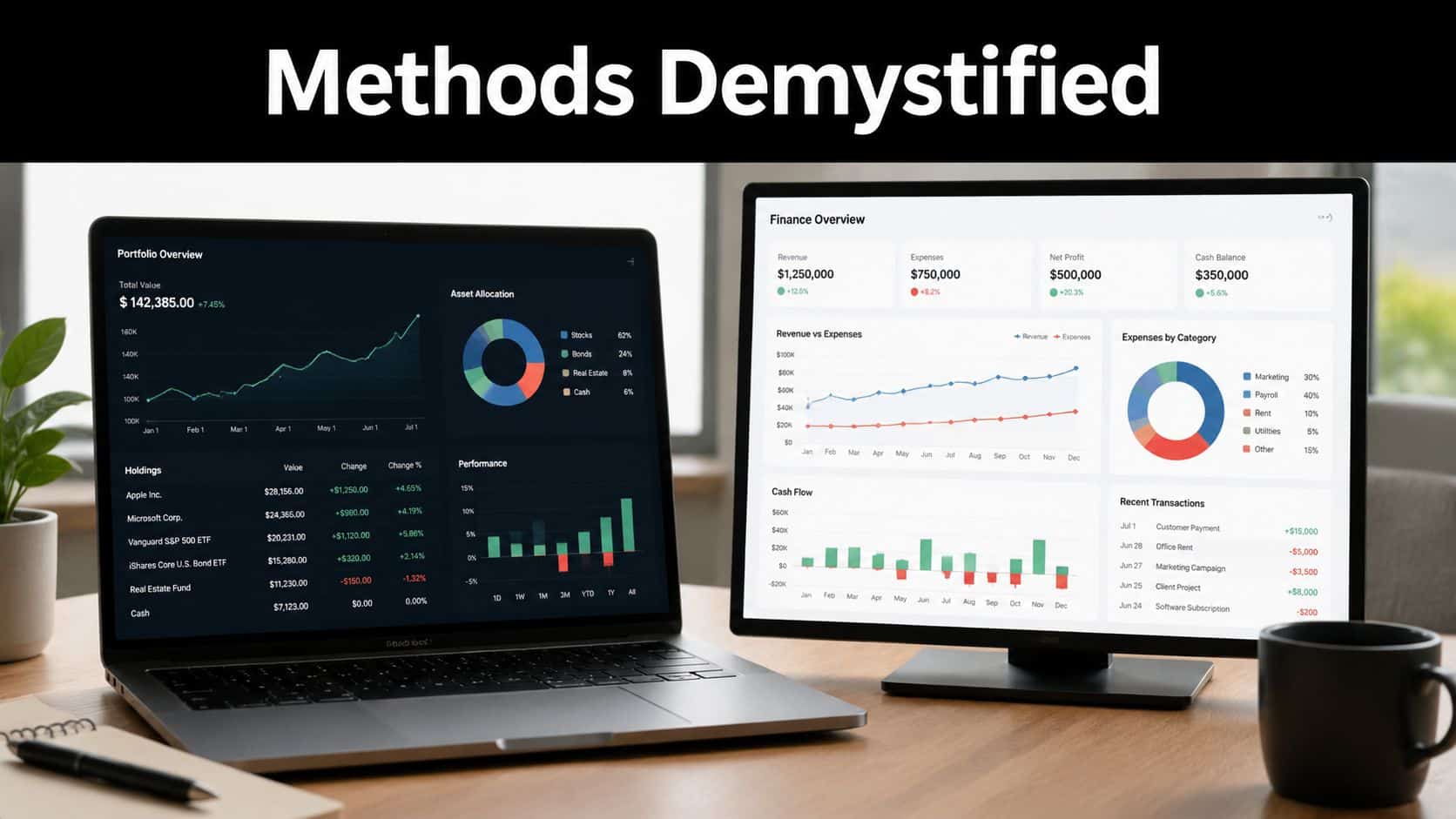
The direct method is the one owners actually need weekly
The direct method lists expected receipts and expected payments by period. It is blunt, practical, and useful. You take customer collections, other expected inflows, and line them up against payroll, suppliers, tax, rent, finance costs, and planned spending.
This is the method that stops surprises.
A short-horizon forecast should focus on when cash becomes usable, not when revenue is recognised. That point is often missed in generic finance content. As noted in this discussion of short-horizon cash timing, many articles focus on monthly inflows and outflows but ignore the operational question of when cash is available. In the UAE and GCC, that matters because VAT, payroll, rent, and project milestones don't care whether your accounting view looks healthy.
The indirect method helps explain the bigger picture
The indirect method starts from profit and adjusts for non-cash and working-capital items. It is useful when management, banks, or investors want to understand why net income doesn't match cash generation.
A real estate company is a simple example. It may carry significant depreciation, which reduces accounting profit without consuming cash. At the same time, receivables may rise, which weakens cash even though revenue looks strong. The indirect method helps explain that mismatch.
A finance team reviewing management packs or a financial reporting example inside ERP systems will often need both views side by side.
Use both methods for different decisions
| Method | Best use | Main question answered |
|---|---|---|
| Direct | Weekly and near-term liquidity control | Do we have enough cash when payments fall due? |
| Indirect | Budget alignment and strategic review | Why does projected profit differ from projected cash? |
Use the direct method for control. Use the indirect method for explanation.
If your business only produces one of them, it is missing half the picture.
If you already know your cash issues are caused by timing gaps between collections, payroll, tax, and supplier payments, visit www.hinawierp.com and ask for a personalised demo focused on forecasting and finance visibility.
Chat on WhatsApp +971506228024 Quotation – Demo RequestKey Metrics and Common Pitfalls in Forecasting
A forecast fails long before the cash runs out. It fails when finance starts with an opening balance it cannot defend, assumes customers will pay on invoice due dates, forgets the VAT quarter until the deadline gets close, or treats payroll as a monthly estimate instead of a dated bank event. In the UAE and wider GCC, those mistakes create avoidable pressure fast.

Watch the metrics that affect liquidity
Track a small set of measures that change cash decisions, not a long dashboard no one uses.
- DSO: Measure how long receivables take to turn into cash. Use customer payment history, not contract terms.
- DPO: Track how long you take to pay suppliers, and where payment discipline is tightening or slipping.
- Collection slippage by week: Identify which receipts move from one week to the next. That is where short-term cash pressure starts.
- Forecast variance: Compare forecast versus actual cash movement by line item and by week.
- Statutory outflow timing: Monitor VAT settlement dates and WPS payroll dates as fixed cash events, not background admin.
For GCC SMEs and asset-heavy businesses, DSO on its own is not enough. A real estate company may show healthy receivables on paper while tenant collections arrive late, service charges remain disputed, and fit-out or maintenance costs hit immediately. A trading company can look profitable while cash gets stuck in inventory and large customer accounts delay payment beyond agreed terms.
This is why transaction-level visibility matters. Teams need current receivables and payables detail, not a static spreadsheet summary. A connected workflow for payables and receivables management in ERP lets finance trace forecast assumptions back to live invoices, due dates, supplier obligations, and collection history.
A forecast can look correct at total level and still fail operationally if one large receipt slips, one WPS run lands earlier than expected, or one VAT payment was never placed in the right week.
The most common forecasting mistakes in UAE and GCC businesses
The recurring errors are predictable.
Using invoice terms instead of customer behavior
Key customers often pay on their own approval cycle. If finance books collections based on net 30 while the customer consistently pays in 45 or 60 days, the forecast is wrong from the start.Pushing VAT into a generic tax line
VAT is a scheduled cash outflow. If your forecast does not place it in the correct filing and payment window, you create a false sense of liquidity.Treating payroll as one monthly number
In a WPS environment, payroll timing is fixed and visible. The forecast must reflect the actual transfer date, not just the total payroll cost.Leaving operations outside the forecast
Inventory buys, equipment repairs, lease renewals, project milestones, seasonal school fee cycles, and property-related maintenance all change cash timing. If operations are excluded, finance is guessing.Ignoring concentration risk
Many SMEs depend on a small number of customers or tenants. One delayed payment can distort the entire month. Your forecast should show that dependency clearly.
Variance analysis is where forecasting becomes reliable
A forecast becomes useful when the finance team reviews what was wrong and fixes the assumptions. Without that discipline, the file turns into a reporting ritual.
Kyriba's analysis of forecast accuracy and variance explains why teams should measure accuracy in detail and compare forecast snapshots over time. That matters because a forecast only improves when you isolate the source of error.
Review variances by category and by timing. Separate collections delays from supplier timing changes, payroll movements, tax payments, financing activity, and posting errors. Then update the underlying rule. If a customer always pays late, change the assumption. If VAT keeps surprising the business, hard-code the calendar. If WPS creates pressure every month, build the forecast around that date.
Hinawi ERP is practical here because it connects the forecast to the underlying finance records inside the same system. That gives GCC business owners what spreadsheets usually fail to provide: one current view of cash exposure, statutory obligations, receivables movement, and supplier timing.
Building Your Forecast A Step-by-Step Guide for SMEs
It is Thursday afternoon. Payroll is due through WPS next week, a major customer has not paid, and the VAT remittance date is close. The owner asks the finance team a simple question: how much usable cash will still be in the bank after all three hit?
A proper forecast answers that before the pressure starts. For a GCC SME, that means a dated cash view built from real collections behavior, statutory deadlines, and committed outflows. If you run projects, manage vehicles or equipment, or collect rent across units, you need a forecast tied to operational reality, not a hopeful spreadsheet.

Step 1 Start with bank reality, not ledger optimism
Use reconciled opening cash. Every forecast built on an unreconciled bank position starts wrong and stays wrong.
If your finance team is still guessing which receipts cleared and which payments are floating, fix that first. A practical reference is this bank reconciliation statement format for ERP-based finance teams. It shows the discipline required before any forecast can be trusted.
Numeric's cash flow forecasting guide supports the same approach. Start from reconciled cash and refresh the short-term forecast on a regular cycle, especially when liquidity is tight.
Step 2 Choose a horizon that matches how you manage cash
Use a 13-week rolling forecast as your base model. It gives enough time to see pressure building without drifting into vague assumptions.
Keep the near term weekly. Monthly buckets hide the exact week when WPS payroll, supplier payments, rent collections, loan instalments, and VAT outflows collide. For UAE and GCC SMEs, that timing detail matters more than polished annual projections.
Step 3 Pull inputs from the real cash drivers
Do not build the file from the general ledger alone. A useful forecast pulls live inputs from the places where cash timing changes:
- Banks: cleared balances, transfers in progress, returned payments
- Accounts receivable: overdue invoices, disputed amounts, customer promises, tenant aging
- Accounts payable: approved bills, negotiated terms, urgent vendor commitments
- Payroll: WPS salary dates, commissions, end-of-service payments where relevant
- Tax: VAT due dates and expected refund timing
- Loans and leases: scheduled repayments
- Capex: vehicles, equipment, fit-out, and other committed spend
- Property or recurring income: rent rolls, vacancy periods, expected collection timing by unit or tenant type
Asset-intensive businesses need this level of detail. A transport company, construction subcontractor, or real estate operator can look profitable on paper and still run short because cash is tied up in assets, retentions, staged billing, or delayed collections.
Step 4 Forecast inflows based on behaviour, not invoice date
Contract terms matter less than customer behaviour. Build receipt assumptions from actual payment patterns.
For project businesses, separate certified revenue from likely cash receipt timing. For real estate, separate billed rent from expected collections by tenant class, lease structure, and past payment behavior. For schools and service businesses, split recurring invoices from delayed accounts and collection follow-up cases.
Forecast by customer segment and by major account. A single large client or anchor tenant can distort the month. If that receipt slips by one week, your entire cash position changes.
If your team already knows these steps but still struggles to maintain the file, the problem is usually system fragmentation. Hinawi ERP gives SMEs one place to pull accounting, payroll, payables, receivables, and operational data into the forecast instead of rebuilding the model manually every week.
Visit www.hinawierp.com to see how an integrated ERP can pull accounting, payroll, and operational data into one forecasting workflow.
Chat on WhatsApp +971506228024 Quotation – Demo RequestStep 5 Schedule outflows by exact payment week
List every meaningful outflow in the week cash will leave the bank. Category totals are not enough.
Include:
- WPS payroll runs
- VAT remittances
- Supplier settlements
- Rent and lease payments
- Loan instalments
- Insurance and licence renewals
- Capex commitments
- Intercompany transfers that affect usable liquidity
This step usually uncovers the main issue in multi-branch or multi-entity businesses. One location may produce revenue while another consumes cash, and the owner only notices after the account tightens. A dated forecast shows the problem before it turns into delayed payroll, supplier pressure, or emergency borrowing.
Step 6 Roll the forecast forward and stress-test it
Update the forecast every week. Replace estimates with actuals, move the horizon forward, and test where the misses came from.
Then run scenarios. Delay a major customer receipt. Add an unexpected maintenance bill. Shift a VAT payment into an already tight week. Increase payroll pressure. The point is simple: cash problems usually come from timing shocks, not from annual budget lines.
As noted earlier, scenario testing improves forecasting because it shows how quickly a manageable position can turn into a liquidity problem. Use at least a base case, a downside case, and a severe but plausible case.
Step 7 Separate usable operating cash from restricted balances
Do not give management false comfort. Some balances are not available for day-to-day operations.
Project retentions, tax-reserved amounts, security deposits, or ring-fenced balances should sit outside your usable cash view. That distinction matters for GCC businesses with project work, property operations, or multiple legal entities. A business can report healthy total cash and still struggle to fund payroll, supplier payments, or statutory dues from its operating accounts.
A good SME forecast does not try to predict everything. It makes the next 13 weeks visible enough for management to act early, protect liquidity, and stop running the business by surprise.
Automating Cash Flow Forecasting with Hinawi ERP
Manual forecasting doesn't fail because finance teams are careless. It fails because the data sits in too many places, updates too slowly, and depends on too much human correction.
A spreadsheet can still be useful for analysis. It is a poor control system for a multi-branch GCC business with receivables, stock, payroll, tax, assets, property income, and several bank accounts.
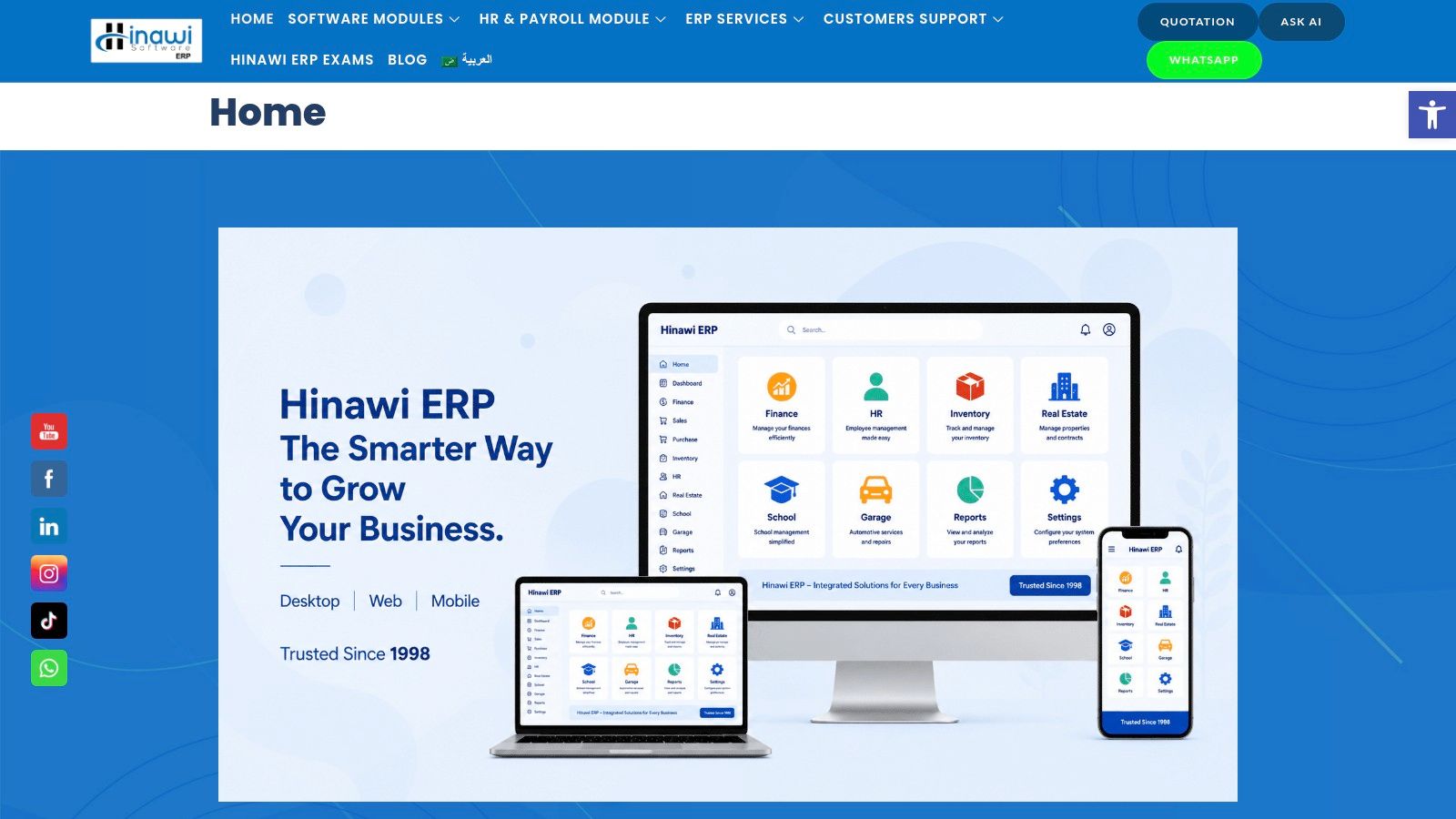
Why integration changes forecast quality
In the UAE, cash flow forecasting became more practical as digital payment infrastructure reduced collection delays. The UAE Central Bank's instant payment platform, Aani, launched in 2023, enables immediate transfer settlements, according to TreviPay's explanation of cash flow forecasting and payment timing. For finance teams, that matters because the closer receipts are to the invoice date, the smaller the working-capital gap. It also means short-horizon forecasts can be refreshed as soon as actual cash hits the ERP.
That only helps if your system can absorb those updates quickly. An integrated ERP should pull actual receipts, current receivables, approved payables, payroll schedules, and tax obligations into one live view.
What automation should do in practice
A serious forecasting setup should let management:
- Refresh from reconciled data: Opening balances must come from current bank and ledger positions.
- Segment cash movement: Separate operating, investing, and financing cash flows for clearer decisions.
- Track timing risk: Show whether the issue is delayed collection, front-loaded supplier payments, or statutory outflows.
- Review by entity or branch: Cash problems often sit in one division, not the entire group.
- Drill into variances: Management should see what changed and why.
At this point, MIS and reporting inside an ERP environment becomes practical rather than cosmetic. The value is not the dashboard itself. The value is the ability to move from summary to underlying transaction without leaving the system.
Why Hinawi ERP fits the GCC operating model
For businesses in the UAE and GCC, Explorer Computer LLC – Hinawi Software ERP is relevant because it connects accounting, HR and payroll, real estate management, fixed assets, manufacturing, garage and maintenance, school management, and CRM in one system. That matters for forecasting because cash doesn't move from the accounting module alone. It moves when tenants pay, when payroll is released, when inventory is purchased, when assets are acquired, and when projects consume cash.
A property company can forecast rental receipts and lease-linked outflows with more discipline. A contractor can align project spending and payroll timing more accurately. A trading company can stop relying on month-end reporting to discover a collection gap it should have seen weeks earlier.
If your business needs live visibility across accounting, VAT timing, payroll, receivables, and branch cash positions, visit www.hinawierp.com or request a personalised walkthrough with the Hinawi ERP team.
Chat on WhatsApp +971506228024 Quotation – Demo RequestTake the Next Step with Hinawi ERP
If your company is still managing liquidity with disconnected spreadsheets, delayed reports, and manual follow-up, the next step is straightforward. Move to an integrated ERP environment built for the way GCC businesses operate.
Hinawi ERP in the UAE has been developed in Abu Dhabi since 1998 and supports Accounting, HR & Payroll, Real Estate Management, Fixed Assets, Manufacturing, Garage & Maintenance, School Management, CRM, and full business automation. For companies in the UAE and GCC, that means forecasting can sit on top of live accounting data instead of isolated files and assumptions.
Hinawi ERP is especially practical for businesses that need:
- VAT and e-Invoicing compliance
- UAE WPS payroll support
- Arabic and English bilingual operation
- Flexible company policy settings
- Real-time accounting integration across all modules
This is relevant for factories, contracting firms, real estate companies, schools, garages, trading businesses, and manufacturers that need tighter control over cash timing, operational spending, and reporting accuracy.
The biggest gain is not just better reporting. It's better management control. You reduce manual work, improve financial accuracy, and give owners and finance teams a live view of where cash is heading, not just where it went.
Visit www.hinawierp.com or request a personalised demo to see how Hinawi ERP can help your business modernise operations and take control of cash flow forecasting across the UAE and GCC.
Speak with Explorer Computer LLC – Hinawi Software ERP if your business in the UAE or GCC needs a practical ERP for forecasting, accounting, payroll, VAT compliance, real estate, manufacturing, maintenance, school operations, or full business automation. Their team can walk you through a personalised demo and show how integrated data helps you reduce manual work, improve reporting accuracy, and manage cash with more confidence.