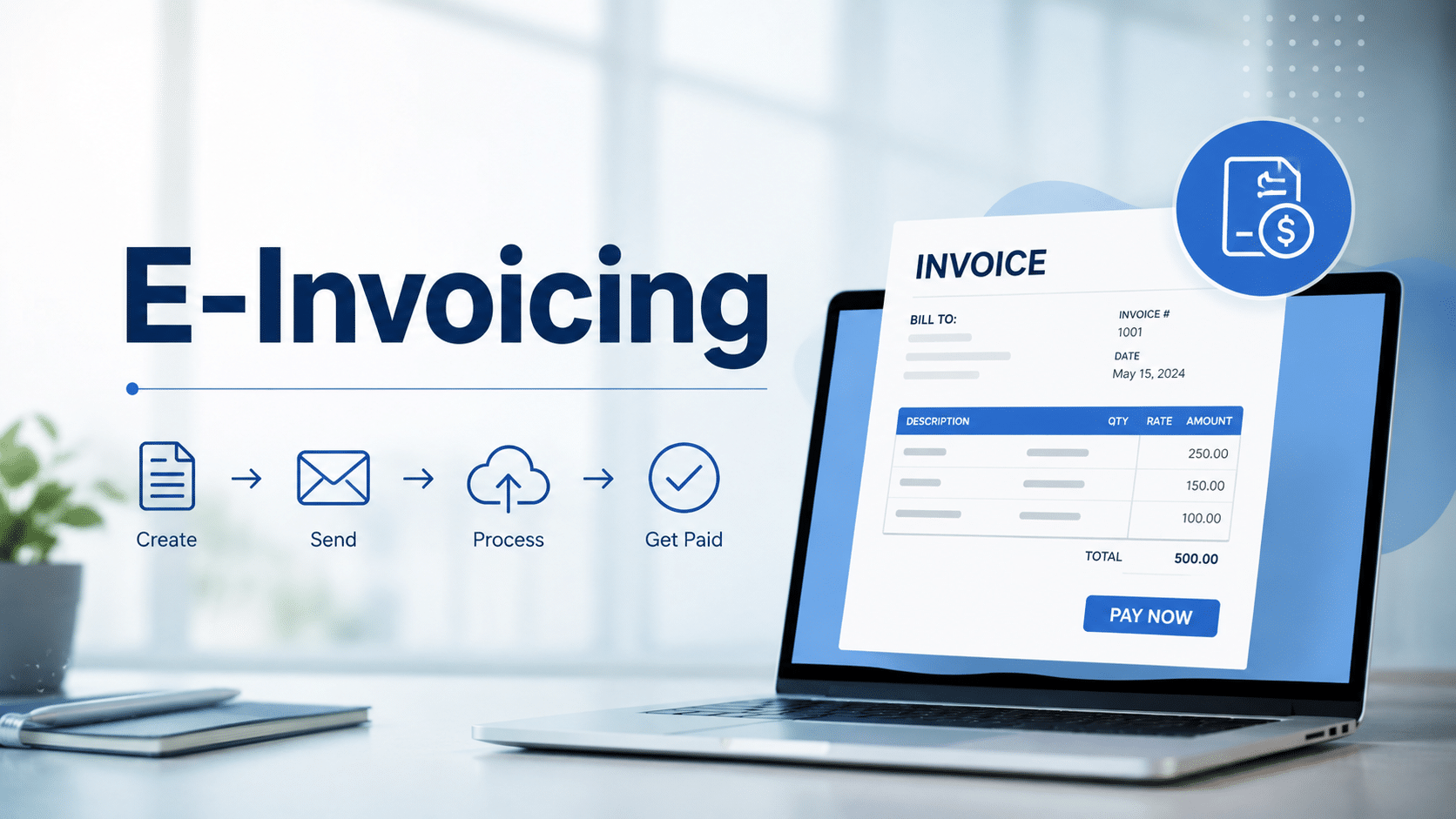
We are committed to maintaining close communication and proactively meeting your evolving needs. As part of our continuous efforts to enhance our services and stay aligned with regulatory developments, we are pleased to inform you that we added e-invoicing in Saudi Arabia and Jordan to Hinawi ERP, which is in full compliance with the official requirements in each country.
In addition to our commitment to enhancing services, we recognize the challenges businesses face in adapting to new technologies. Therefore, we offer extensive training and support to ensure that our clients can seamlessly transition to e-invoicing. This includes providing resources such as webinars, user guides, and one-on-one consultations to familiarize users with the e-invoicing features in Hinawi ERP.
What is E-Invoicing in Saudi Arabia?
It is the process of issuing, storing, and sharing invoices in an electronic format, adhering to the Zakat, Tax, and Customs Authority (ZATCA) requirements. E-invoicing aims to modernize the invoicing process, ensuring efficiency and compliance for businesses operating within the region. By moving away from traditional paper invoices, companies can significantly reduce processing times and minimize the risk of errors.
What is the purpose of E-Invoicing?
To combat commercial concealment and tax fraud by providing an automated transaction record.
To increase financial transparency, allowing for clearer financial reporting and auditing.
To simplify tax collection and tracking, enabling authorities to monitor compliance more effectively.
Main Components of an E-Invoice:
Invoice number: A unique identifier assigned to each invoice.
Issue date: The date when the invoice is generated.
Seller and buyer names: Essential for identifying the parties involved in the transaction.
Tax Registration Number (TRN): A mandatory identifier for tax purposes.
Item or service details: A breakdown of what is being billed.
Total amount before and after VAT: Crucial for transparency in pricing.
VAT rate and amount (15%): Clearly displayed to comply with taxation laws.
QR Code or Digital signature (Phase 2): Enhances security and verification of the invoice.
How does it work in simple steps?
Invoice creation: Using an approved accounting system like Hinawi ERP, businesses can create invoices that automatically comply with ZATCA requirements.
Digital signature (Phase 2): The invoice is digitally signed using a certificate, ensuring its authenticity.
Submission to ZATCA: The system connects to ZATCA’s platform and sends invoice data automatically, streamlining compliance.
Approval or rejection: The invoice receives a reference number upon approval, which is essential for record-keeping.
Invoice sharing: The invoice, complete with QR code, is shared with the customer, enabling quick verification.
Important Notes:
The accounting software must be ZATCA-approved to ensure compliance with regulations.
Invoices cannot be modified once issued, maintaining integrity in the invoicing process.
E-Invoicing is mandatory for all VAT-registered taxpayers, emphasizing its importance in the business landscape.
What is E-Invoicing in Jordan?
It is the process of issuing and documenting invoices electronically through a government-approved system by the Income and Sales Tax Department (ISTD). This initiative aims to enhance tax control and increase transparency, ensuring that businesses comply with tax regulations while facilitating a smoother transaction process.