
Category: Fixed Assets
Your finance team closes the month. Sales look acceptable. Profit doesn't look alarming. But one question still hangs over the business. Are the assets on your balance sheet earning their keep?
That question matters more in the UAE and GCC than many managers admit. Companies here often carry heavy investments in buildings, fit-outs, machinery, fleets, warehouses, leasehold improvements, and inventory. In that environment, a business can look busy while still using capital badly. The income statement won't always expose that problem early. The balance sheet will.
That's why the asset turnover ratio deserves a place on every serious management dashboard. It tells you whether your assets are producing enough sales, not whether your team is merely occupied. For firms in the UAE, this isn't a niche concern. The country had about 548,000 active businesses on the mainland and in free zones by 2023, and UAE non-oil GDP grew by 4.0% in 2023, reflecting broad activity across trading, logistics, real estate, and services where asset efficiency matters directly to operating performance, as noted in The Forage's explanation of asset turnover ratio.
If you run a property company in Dubai, a factory in Abu Dhabi, or a trading business with multiple warehouses, this metric is practical. It helps you decide whether to buy, dispose, lease, stock, expand, or wait. And if you're using Hinawi ERP properly, you can pull the data without wrestling with spreadsheets.
Chat on WhatsApp +971506228024 Quotation – Demo RequestIntroduction Are Your Assets Working Hard Enough
A Dubai business owner can make the wrong call when looking only at profit. Revenue is coming in. The team is active. New equipment has been purchased. Another warehouse has been taken. On paper, expansion looks like progress. In reality, assets may be growing faster than sales.
That's where management discipline starts. If your company keeps adding property, vehicles, machinery, or stock without extracting stronger sales from them, operational efficiency is slipping. You may still report revenue, but capital is getting tied up in low-productivity assets.
A strong business doesn't just own assets. It converts them into sales efficiently.
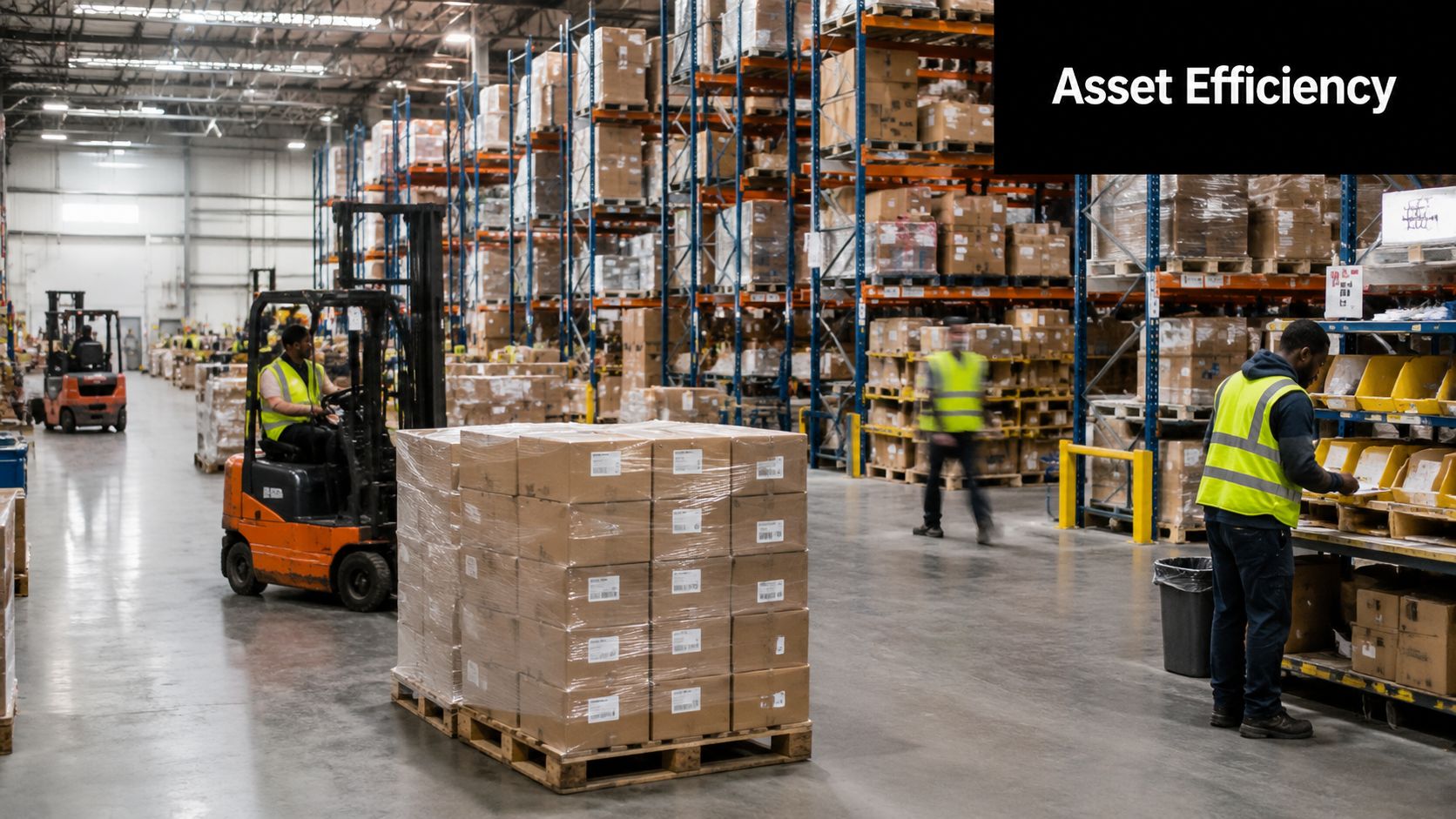
This is especially relevant in the Gulf. Asset-heavy sectors are common, and balance-sheet decisions shape operational results every day. A real estate firm with vacant units, a manufacturer with idle machines, or a distributor carrying slow-moving inventory all face the same issue. They've invested in assets that aren't generating enough commercial return.
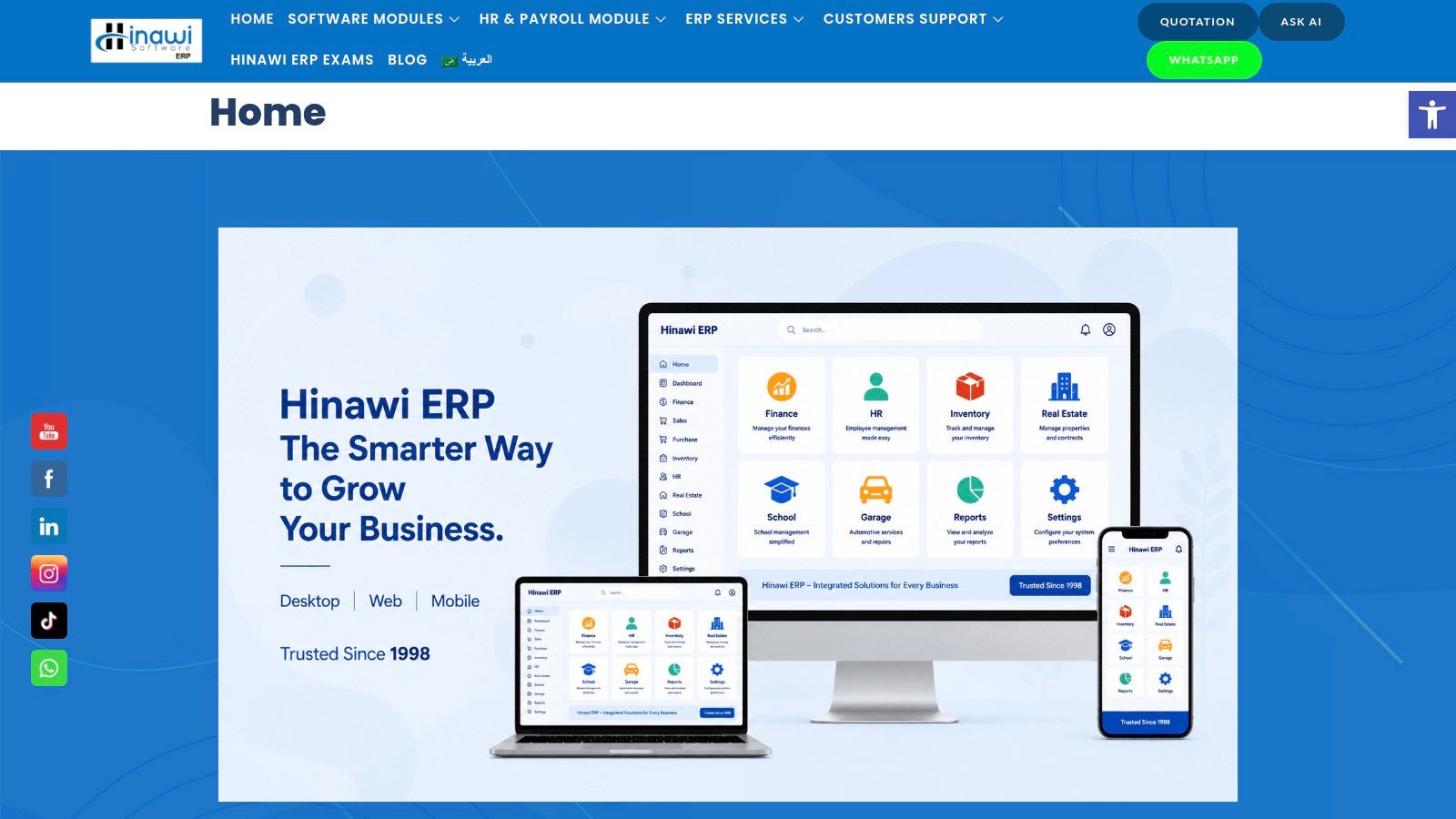
Hinawi ERP becomes useful at this point because the discussion stops being theoretical. Once accounting, fixed assets, inventory, and operational modules flow into one reporting structure, you can see whether sales growth is supported by disciplined asset use or masked by balance-sheet expansion.
What Is the Asset Turnover Ratio
The asset turnover ratio is a simple efficiency test. It asks one direct question. How much sales revenue are you generating from the assets you control?
The formula you should use
The ratio is calculated as net sales ÷ average total assets. Average total assets usually means the mean of beginning and ending balance-sheet assets. That matters because a company can report the same sales figure but show a different ratio if it expanded its asset base faster than revenue, which is common in manufacturing, logistics, real estate, and fleet-heavy operations, as explained by Wall Street Prep's asset turnover ratio guide.
That formula is not complicated. Misusing it is.
If you use only year-end assets, you can distort the picture. If you include gross sales without adjusting for returns and allowances where relevant, you weaken the value of the ratio. If your underlying ERP data is inconsistent, the ratio becomes decorative rather than useful.
What each part means
A clean reading depends on two figures:
- Net sales means operating revenue after returns and allowances where applicable.
- Average total assets means the average asset base used during the period, not just the closing balance.
Think of it this way. If your company invests one dirham in assets, how many dirhams of sales does that dirham help generate? That's the commercial question behind the formula.
A high ratio usually means assets are being used efficiently. A weak ratio usually points to one of three management problems:
- Idle fixed assets such as underused machinery, empty units, or excess vehicles
- Overbuilt capacity where the business invested ahead of realistic sales demand
- Poor working capital discipline where inventory or receivables are soaking up asset value without enough revenue support
Why decision-makers should care
Many executives focus on profit margin first. That's a mistake in asset-heavy businesses. Profit can look acceptable for a period even when asset efficiency is deteriorating. The ratio exposes whether operational scale is creating real output or just consuming capital.
If you're a CFO, this ratio helps capital allocation. If you're an operations manager, it exposes utilisation issues. If you're an owner, it tells you whether growth is productive or expensive.
Chat on WhatsApp +971506228024 Quotation – Demo RequestCalculating the Asset Turnover Ratio Step by Step
You don't need a complicated model to calculate this ratio. You need clean accounts and the discipline to use the same method every reporting period.
A simple working example
Use this structure:
- Find net sales from your income statement.
- Take total assets at the beginning of the period from the balance sheet.
- Take total assets at the end of the period from the balance sheet.
- Calculate average total assets by adding beginning and ending assets, then dividing by two.
- Divide net sales by average total assets.
Here is a practical example using sample numbers.
| Item | Amount |
|---|---|
| Net sales | AED 10,000,000 |
| Beginning total assets | AED 4,500,000 |
| Ending total assets | AED 5,500,000 |
| Average total assets | AED 5,000,000 |
| Asset turnover ratio | 2.0 |
The calculation is straightforward:
AED 10,000,000 ÷ AED 5,000,000 = 2.0
That means the business generated AED 2 in sales for every AED 1 invested in assets.
Where companies usually get it wrong
The arithmetic isn't the problem. Data extraction is.
In many UAE companies, finance teams still build this manually from spreadsheets, fixed asset registers, and partial stock reports. That creates timing issues, omitted balances, and inconsistent classifications. If your asset records aren't aligned with your general ledger, the ratio becomes unreliable.
A proper ERP process solves that. If your fixed asset register, depreciation records, and accounting entries are controlled inside one system such as Hinawi ERP Fixed Assets, you can calculate the ratio using reported numbers instead of patched files.
Practical rule: Calculate the ratio monthly for management use and review the trend, not just the annual figure.
Interpreting the Ratio in Key UAE and GCC Sectors
A ratio has no meaning without context. Comparing a property company in Dubai with a retail distributor in Sharjah is sloppy analysis. Capital intensity differs too much.

A higher asset turnover ratio means each dirham of assets is generating more revenue, while a lower ratio often points to underutilised assets or overinvestment in long-lived assets. The correct benchmark is always within the same industry. A commonly used example is 2:1, meaning the business generates $2 in revenue per $1 of assets, as explained in Allianz Trade's interpretation of asset turnover ratio.
Real estate and contracting
Real estate businesses often hold substantial assets for long periods. Land, buildings, fit-outs, leased properties, and project-related balances create a large asset base. That naturally pulls the ratio down compared with trading businesses.
That doesn't mean low is acceptable by default. It means you need to ask better questions:
- Are rental assets occupied and billing on time?
- Are units sitting vacant while costs continue?
- Are project assets tied up before revenue recognition catches up?
- Are receivables delaying the commercial return on asset deployment?
For these firms, the ratio is less about speed and more about disciplined utilisation. Vacant space, delayed handovers, and unmanaged maintenance all damage efficiency.
Manufacturing and industrial operations
Factories in Abu Dhabi, Saudi industrial zones, and other GCC production sites usually carry expensive plant and equipment. Asset turnover is heavily shaped by capacity utilisation.
A manufacturer with strong equipment availability, stable production planning, and controlled inventory will usually interpret this ratio more effectively than one that keeps buying machinery to solve scheduling failures. If the business expands its asset base before sales absorb the added capacity, the ratio weakens.
A manufacturing team should examine the ratio alongside production bottlenecks, machine downtime, job costing accuracy, and stock movement. That's where systems such as Hinawi manufacturing ERP for UAE businesses become operationally relevant, because they connect production activity to financial impact.
Trading, retail, and distribution
In trading businesses, inventory discipline often determines the ratio. A strong sales team can still disappoint financially if stock sits too long across warehouses. The business appears active, but the asset base keeps swelling.
Use this quick interpretation table.
| Sector | What usually drives the ratio | What weakens it |
|---|---|---|
| Real estate | Occupancy, billing, asset utilisation | Vacant units, delayed collections, idle properties |
| Manufacturing | Capacity use, production flow, sales volume | Idle machinery, overexpansion, excess raw materials |
| Trading and retail | Inventory movement, sales conversion | Overstocking, slow-moving items, poor branch-level control |
The ratio should force operational conversations. If it doesn't change how managers act, it's just another report.
Chat on WhatsApp +971506228024 Quotation – Demo RequestExtracting Data Seamlessly with Hinawi ERP
Most companies don't struggle with the formula. They struggle with the data trail.
Pull the numbers from the right modules
Inside an integrated ERP, the asset turnover ratio should be based on posted, reconciled records. The workflow is simple:
- Open the Accounting module and generate the income statement for the selected period.
- Identify net sales from the operating revenue lines used by your company.
- Generate the balance sheet for the opening date of the period.
- Generate the balance sheet again for the closing date of the period.
- Take total assets from both reports and calculate the average.
That's the clean version. It works because the financial statements are pulling from a live accounting structure rather than disconnected files.
Why integration changes the quality of the ratio
When fixed assets, inventory, receivables, and operational transactions all post into accounting in real time, the ratio becomes trustworthy. That's where Hinawi ERP UAE system information matters for finance teams evaluating process design.
A property company can post lease billing and track asset-related balances without maintaining separate shadow records. A manufacturer can record inventory movement and production impact without waiting for month-end adjustments. A maintenance-heavy business can monitor whether equipment and related costs are still commercially justified.
Explorer Computer LLC – Hinawi Software ERP is relevant here because it integrates Accounting, Fixed Assets, Manufacturing, Real Estate Management, HR & Payroll, CRM, and other operational areas in one environment. That setup lets managers extract net sales and total asset balances from the same financial truth instead of debating which spreadsheet is current.
A practical reporting routine
Don't calculate this ratio once a year and forget it. Use a routine:
- Monthly review for internal management
- Quarterly trend analysis for board or owner review
- Segment review by branch, division, property group, or business unit where practical
- Exception follow-up when the ratio drops after a major capital purchase or inventory build-up
If your system can't support that cadence, your reporting process is too weak for an asset-heavy business.
Actionable Strategies to Improve Your Asset Turnover Ratio
A weak asset turnover ratio is a management problem, not an accounting curiosity. Fixing it usually means doing fewer things badly and a few important things well.
Cut asset waste before chasing more sales
Most companies react in the wrong order. They push the sales team harder while leaving idle assets untouched. That's lazy management.
Start with the asset base itself.
- Dispose of underused assets. Sell, scrap, reassign, or lease out equipment, vehicles, and property that aren't supporting revenue.
- Delay non-essential capital spending. Don't buy capacity because it feels strategic. Buy when demand and operational planning justify it.
- Review branch and site usage. Some companies maintain offices, warehouses, or yards out of habit rather than need.
A low ratio often improves faster when you shrink ineffective assets than when you push for additional turnover.
Old assets sitting idle are not a sign of strength. They are carrying cost with no commercial reward.
Tighten inventory discipline
For traders, distributors, garages, and manufacturers, inventory is often the fastest lever.
Use the ratio as a pressure test on stock policy. If warehouses are full but sales per dirham of assets are weak, you likely have poor forecasting, weak purchasing control, or tolerance for slow-moving items.
Work on these areas:
- Identify slow-moving and obsolete stock before it expands the asset base
- Reduce duplicate items across branches where similar products sit in multiple stores
- Match purchasing to actual demand patterns instead of optimistic estimates
- Link stock reporting to financial review so operations can't treat inventory as separate from capital use
If you want a related operational lens, review how inventory turnover ratio analysis complements asset efficiency reporting.
Improve receivables and billing execution
Not every efficiency issue sits in plant or stock. Sometimes sales are recorded, but collections and billing discipline are weak. That keeps assets inflated through receivables and delayed cash conversion.
For GCC businesses, common problems include disputed invoices, delayed contract billing, incomplete documentation, and fragmented follow-up between operations and finance. You don't fix that with more reminders alone. You fix it with ownership, approval discipline, and clean workflows.
Prioritise:
- Immediate invoicing after delivery or milestone completion
- Clear ageing review by customer and account manager
- Escalation on disputed balances
- Operational sign-off controls so finance isn't chasing missing support
Raise utilisation of existing fixed assets
Manufacturers and contracting firms often buy new equipment before using current assets properly. That destroys the ratio.
Check whether your teams are scheduling work efficiently, maintaining equipment properly, and avoiding unnecessary downtime. In real estate, the equivalent is occupancy, lease renewal discipline, and turnaround speed between tenants. In fleet-intensive businesses, it's route planning and productive usage.
The principle is simple. Extract more revenue from current assets before adding new ones.
Chat on WhatsApp +971506228024 Quotation – Demo RequestCommon Pitfalls and Reporting Best Practices
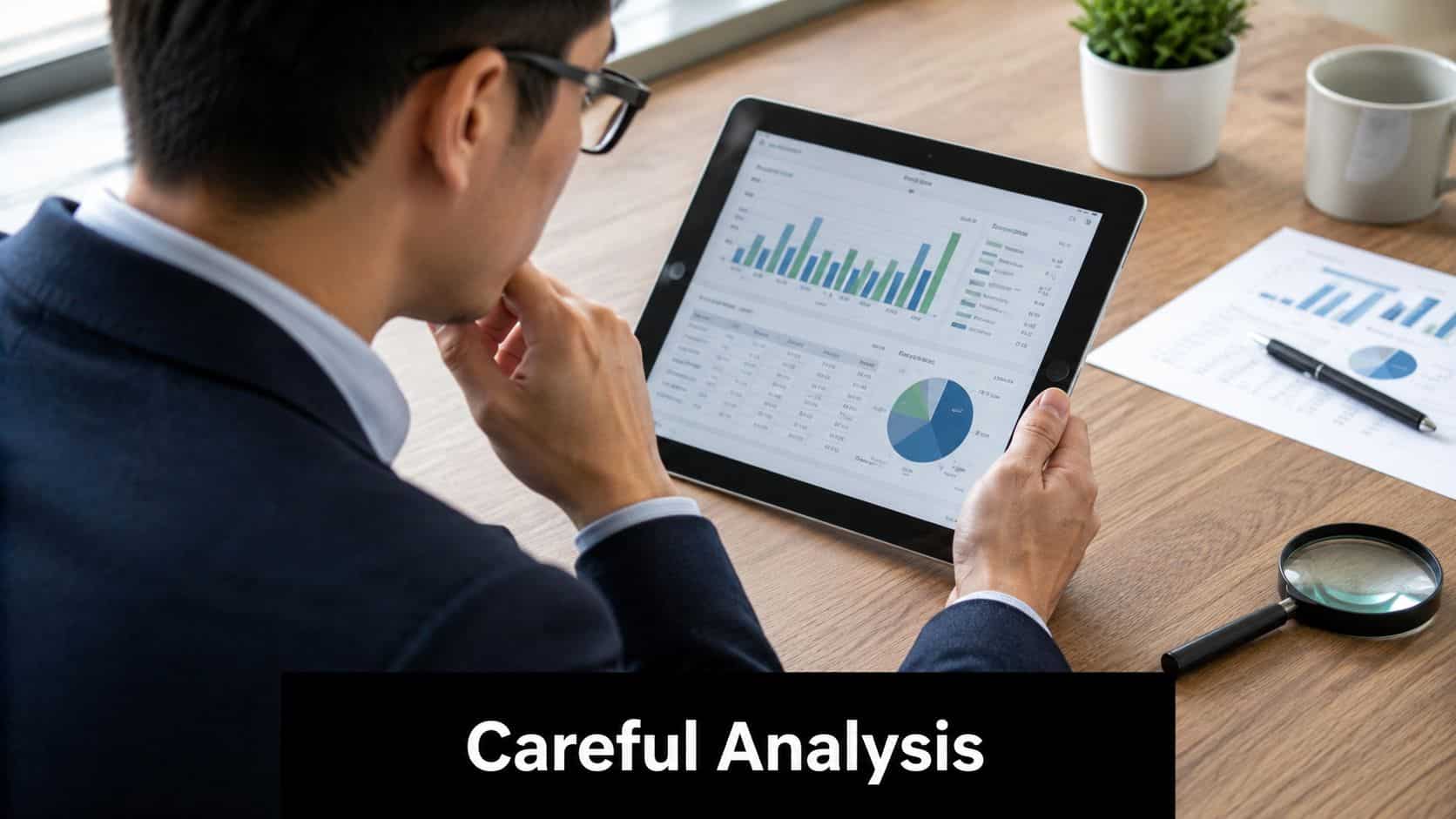
Asset turnover ratio is useful, but many managers abuse it by treating one number as final truth.
The mistakes that distort the picture
First, don't compare across unrelated industries. A manufacturing business, a school, and a property company are not supposed to look similar on this ratio.
Second, don't celebrate a very high ratio too quickly. In some cases, it can reflect an ageing asset base that has been heavily depreciated, not superior operating quality. If a company has delayed reinvestment for too long, the ratio may look efficient while operational risk is rising.
Third, don't review the number in isolation. A ratio can improve because assets were reduced, but if service quality, production reliability, or revenue durability suffers, the apparent gain is misleading.
Build a dashboard that management will actually use
The best reporting format is not a static finance memo. It's a simple management dashboard with trend visibility.
Include:
- Current period ratio for immediate visibility
- Trend line over time so management can spot deterioration or improvement
- Segment comparison across branches, properties, factories, or divisions
- Commentary field explaining major asset additions, disposals, or abnormal sales shifts
A reporting environment such as Hinawi MIS and reporting tools is useful because finance leadership needs more than ledger output. They need decision-ready reporting.
Management insight: Review asset turnover ratio alongside margin, utilisation, and working capital indicators. Efficiency without context can mislead.
What good reporting looks like in practice
For an Abu Dhabi CFO, a useful monthly report is concise. It shows the ratio, identifies which business units moved it, and explains why. If a warehouse expansion reduced the ratio, management should see whether sales are expected to catch up or whether the investment was premature.
For a real estate owner, the report should connect the ratio to occupancy and receivables. For a factory manager, it should connect to production flow and machine use. For a trading business, it should point directly to stock build-up and slow-moving lines.
That's when the metric becomes operational. Until then, it's just finance theatre.
Take the Next Step with Hinawi ERP
Understanding the asset turnover ratio is useful. Acting on it requires a system that gives you reliable figures, clean workflows, and management visibility without manual patchwork.
Hinawi ERP has been developed in Abu Dhabi since 1998 and supports companies across the UAE and GCC with a fully integrated business platform. It brings together Accounting, HR & Payroll, Real Estate Management, Fixed Assets, Manufacturing, Garage & Maintenance, School Management, CRM, and complete business automation in one connected system. For asset-heavy businesses, that matters because financial reporting should reflect operational reality in real time.
For companies in the UAE and GCC, the practical value is clear:
- VAT and e-Invoicing compliance supports regulated financial operations.
- UAE WPS payroll support helps payroll teams stay accurate and compliant.
- Arabic and English bilingual operation makes adoption easier across mixed teams.
- Flexible company policy settings allow the system to match how your business works.
- Real-time accounting integration across all modules reduces manual posting and reconciliation delays.
- Suitable for factories, contracting companies, real estate businesses, schools, garages, trading companies, and manufacturers that need one system across multiple functions.
If you want to improve asset efficiency, reduce manual work, strengthen reporting accuracy, and gain better control over management decisions, this is the right time to modernise the process. Visit Hinawi ERP official website or request a personalised demo to see how your business can measure and improve operational efficiency with better data and tighter system control.
For companies and business owners across the UAE and GCC, Explorer Computer LLC – Hinawi Software ERP offers a practical path to stronger financial control and better operational visibility. If your team is still relying on spreadsheets for fixed assets, payroll, inventory, VAT reporting, or management accounts, speak with the Hinawi ERP team for consultation or request a personalised demo.