
Category: Accounting
You're probably seeing the same problem I see in client meetings. A business owner sets up in a UAE free zone, hears “tax-free” often enough, then assumes every sale, transfer, invoice, and payroll process will stay simple. A few months later, finance discovers VAT on services, operations discovers stock movement rules don't match what sales promised, and management realises the accounting system can't separate designated-zone goods transactions from mainland activity.
That confusion is expensive.
The phrase designated free zones in UAE sounds like a branding label. It isn't. It's an operational and tax distinction that affects how you structure inventory, invoices, intercompany movements, reporting, and internal controls. If your business trades goods, stores stock, serves mainland customers, or runs payroll across multiple entities, you need process discipline from day one. You also need systems that can enforce those rules, not just document them after the fact.
A lot of companies wait too long to connect setup decisions with ERP design. That's a mistake. Your tax position depends on transaction handling, and transaction handling depends on your software, approvals, warehouse records, and finance controls.
If you're comparing structures, this guide on Dubai mainland licence cost considerations is also useful because the free zone versus mainland decision should never be made on marketing language alone.
Want to see this process inside a real ERP? Visit www.hinawierp.com or request a personalised demo.
Chat on WhatsApp +971506228024 Quotation – Demo RequestUnderstanding the UAE Business Landscape Free Zone vs Designated Zone
A common scenario goes like this. A trading company registers in a free zone, leases warehouse space, imports stock, and starts selling across the UAE and abroad. Management assumes the free zone status solves the tax question. It doesn't. The finance team later finds out that being in a free zone and being in a designated zone are not the same thing for VAT.
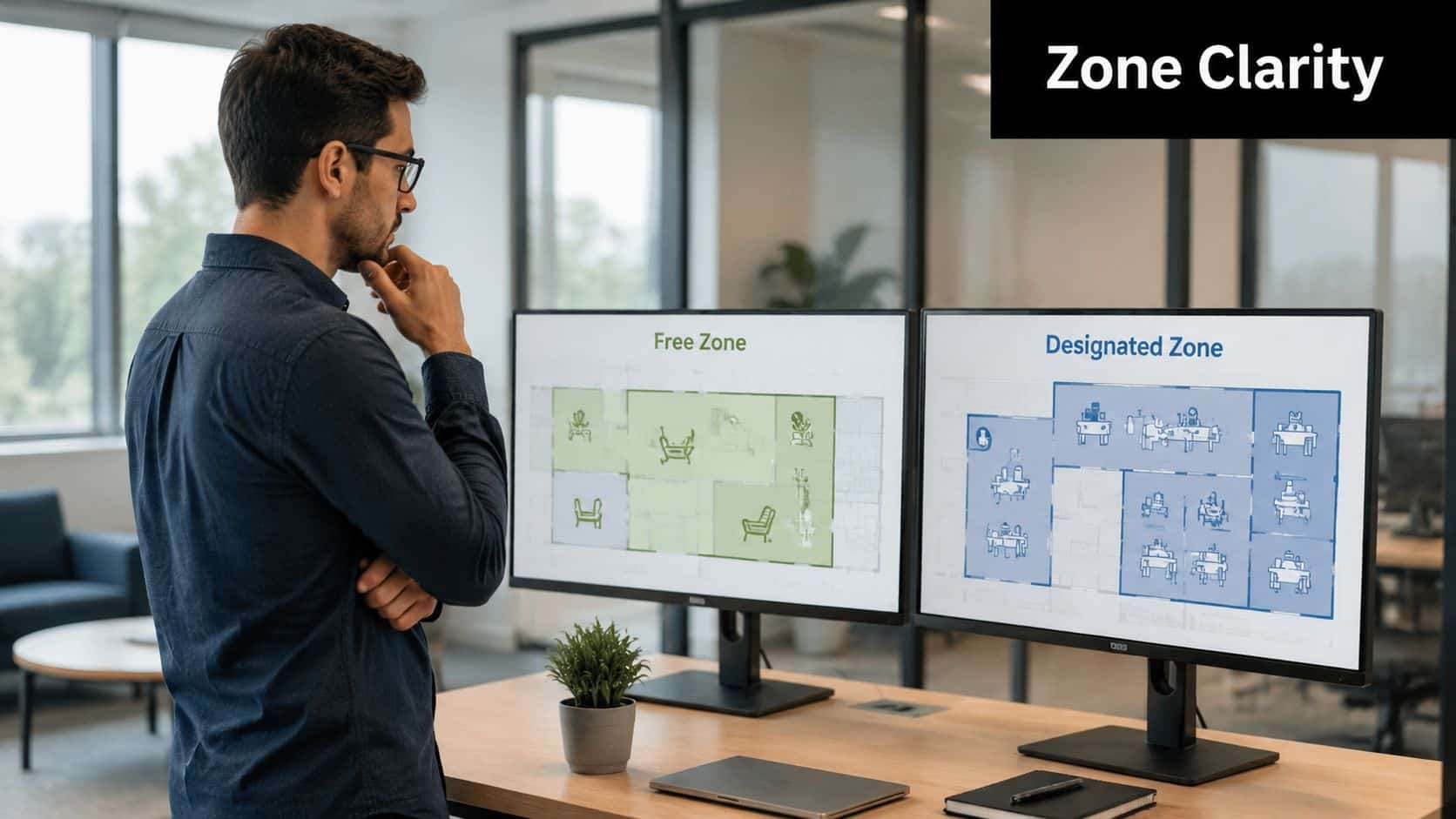
The term free zone is too broad
The UAE built its free-zone model early and deliberately. The model began with Jebel Ali Free Zone in 1985, and today the country has more than 40 free zones, with official material stating that these zones allow foreign investors full ownership, as outlined in this overview of the UAE free-zone framework.
That history matters because free zones were created as business ecosystems with distinct licensing and ownership rules. Designated zone status came into sharper focus later because of VAT treatment, not because it created a new ownership benefit.
Why business owners get this wrong
The confusion comes from outdated sales language. People still talk as if all free zones deliver the same tax result. They don't. A standard free zone company may enjoy ownership and setup advantages, but designated free zones in UAE create a narrower and more technical consequence. Certain qualifying goods transactions may receive special VAT treatment. That doesn't mean all transactions are exempt. It certainly doesn't mean services are exempt.
Practical rule: If your finance manager can't tell the difference between a free-zone licence and a designated-zone VAT treatment, you're exposed already.
What this means in practice
Management should stop asking, “Are we in a free zone?” and start asking better questions:
- Where are the goods physically stored: Tax treatment depends on movement and location.
- What exactly are we supplying: Goods and services don't follow the same VAT logic.
- Who is the customer: Mainland, designated zone, and overseas transactions don't behave the same way.
- Can the ERP classify transactions correctly: If not, your VAT return becomes a manual repair exercise.
That's why companies that set up properly align legal structure, warehousing, accounting rules, and operational software at the start, not after the first filing problem.
What Technically Makes a Free Zone Designated
A company signs a warehouse lease inside a free zone, assumes the VAT position is sorted, and only discovers the underlying problem during an audit or return review. The issue is rarely the trade licence. The issue is whether the site and the operating model meet the legal conditions for designated-zone treatment.

Infrastructure and control determine the status
A designated zone is a free zone area that satisfies specific VAT conditions set by the UAE tax framework. The area must be physically separated, entry and exit must be controlled, and the movement of goods must be monitored under procedures that resemble customs control. Storage, handling, and processing also need documented procedures that can stand up to inspection.
This is an operational test.
Branding does not matter. Sales brochures do not matter. Even being located inside a well-known free zone does not settle the question if the exact facility, warehouse process, and stock controls do not support the required treatment.
What your business must be able to prove
Management should focus on evidence, not labels. If your business wants designated-zone VAT treatment for goods, you need records that show how goods entered, where they were stored, what happened to them, and how they left.
That usually means the following:
- Physical separation: The site is a defined area, not a loosely described location on a licence.
- Access control: Entry and exit are restricted and recorded.
- Goods movement tracking: Transfers, receipts, dispatches, and stock adjustments are traceable.
- Documented warehouse procedures: Repacking, processing, assembly, and storage steps are logged and approved.
- System-level audit trail: Your ERP should link inventory moves, commercial documents, and tax treatment in one record set.
If your warehouse team tracks stock in spreadsheets and finance rebuilds VAT logic at month-end, your setup is weak. That gap is exactly where errors start. It is also why businesses preparing for UAE e-invoicing requirements and digital tax reporting need transaction controls in the system long before enforcement pressure increases.
The common mistake with well-known zones
JAFZA, DAFZA, and major logistics clusters are regularly mentioned in designated-zone discussions. That does not give every company inside them automatic protection. You still need to verify the current status of the exact area you operate from and match your internal processes to that reality.
I see the same problem repeatedly. A business has a valid licence, a real warehouse, and active import or re-export activity, yet the accounting treatment is still wrong because stock transfers are not coded properly, supporting documents are incomplete, or services are mixed into goods invoices without the right tax logic.
A designated zone only works if your business can prove physical control, inventory traceability, and document discipline.
Want to see how Explorer Computer LLC – Hinawi Software ERP handles stock movement, approvals, and tax-linked documentation inside a live system?
Chat on WhatsApp +971506228024 Quotation – Demo RequestManaging Tax in Designated Zones VAT Corporate Tax and E-Invoicing
A company can store goods inside a designated zone, issue invoices from a free zone entity, and still create a tax problem on day one. The usual cause is simple. The business treats "designated" as a blanket tax status instead of a transaction rule.
That mistake shows up fast in pricing, invoice design, revenue classification, and stock movement records.
VAT depends on what moved, where it moved, and how you documented it
VAT treatment in a designated zone is tied to the actual transaction. Goods can receive different treatment from services. A transfer between designated zones can be treated differently from a sale into the mainland. If your invoice combines goods, installation, and support under one line without clear tax logic, you create avoidable exposure.
The practical rule is straightforward. Classify the transaction before the invoice is issued, not after month-end.
A manufacturer, distributor, or trader should be able to answer these questions immediately:
- Is this movement a stock transfer, a sale, or a return?
- Are we dealing with goods, services, or both?
- Is the counterparty in a designated zone, another free zone, or the mainland?
- Do the transport and warehouse documents support the tax treatment?
- Does the invoice tax code match the commercial reality?
If the answer sits in someone's memory or in an Excel correction file, your controls are weak.
Corporate tax follows a different test
Many owners still assume favourable VAT treatment means the income also qualifies for 0% corporate tax. That is wrong.
Corporate tax depends on the nature of the income and whether the company meets the conditions for qualifying free zone status. Revenue must be classified properly. Mainland activity, mixed income streams, and poorly tagged intercompany transactions can push income into non-qualifying treatment. Once that happens, the cost is not only tax. It also affects forecasting, margins, and board reporting.
Your finance team should track revenue by activity, customer type, jurisdiction, and legal basis for treatment. Anything less is guesswork dressed up as accounting.
The real risk sits inside the system
Most tax errors in designated zones are operational errors first. The invoice was raised against the wrong item type. The warehouse transfer was posted as a sale. The service element was buried inside a goods invoice. The ERP allowed users to pick a customer and bypass tax rules entirely.
That is why system design matters more than slogans about tax savings.
Transaction treatment checklist
| Transaction Type | VAT Focus | Corporate Tax Focus |
|---|---|---|
| Goods movement between designated zones | Check whether the movement meets the conditions and is fully documented | Review whether the resulting income is qualifying income |
| Service invoice from a designated-zone entity | Standard VAT treatment usually applies | Test whether the income remains qualifying or becomes non-qualifying |
| Goods supplied to the mainland | VAT liability can arise based on the facts of supply | Confirm whether the income affects free zone qualifying status |
| Mixed invoice with goods and services | Separate lines and tax logic clearly | Classify each income stream correctly for reporting |
E-invoicing will expose weak classification
E-invoicing will not fix bad process. It will expose it faster.
If your invoice structure, tax codes, item master, and approval flow are inconsistent, digital reporting will make those weaknesses obvious. Start by reviewing your invoicing setup against the practical requirements outlined in this guide to e-invoicing in the UAE.
Your ERP should separate, at minimum:
- goods and services
- mainland and designated-zone counterparties
- stock transfers and taxable sales
- qualifying and non-qualifying income indicators
- tax codes by transaction type, not by customer name alone
If accountants are fixing VAT treatment after invoices are posted, the accounting team is compensating for a bad system.
If you want to review how Explorer Computer LLC – Hinawi Software ERP handles tax codes, stock movement, and invoice controls in live workflows, use the options below.
Chat on WhatsApp +971506228024 Quotation – Demo RequestOperational Compliance WPS Payroll and Business Licensing
Tax compliance gets the attention. Operational compliance creates the daily risk.
A company can have the right legal structure and still run badly. Payroll delays, incomplete employee records, weak document approval, mismatched licence activity, and poor warehouse control all create unnecessary exposure. In a designated zone operation, these issues pile up quickly because tax, customs-style controls, HR administration, and finance reporting intersect.
Scale makes weak processes dangerous
Dubai's free zones are not a side story in the economy. Trade volume in Dubai free zones rose from AED 394 billion in 2018 to AED 464 billion in 2020, and the same market report says free zones contributed 72.2% of Dubai's non-oil economy in 2021, with projected contribution to GDP reaching AED 250 billion by 2030, according to this overview of UAE free-zone economic activity.
Large trade environments punish loose administration. The more stock movements, staff records, invoices, and branch transactions you handle, the more costly manual controls become.
WPS is not optional
Some owners still talk about payroll as if it sits outside the main compliance stack. It doesn't. Salary processing, bank file preparation, leave settlement, final settlement, and employee master data all need to be accurate and timely. If your current process relies on spreadsheets plus a basic accounting package, that's a weak control environment.
For companies reviewing payroll process design, this guide to WPS payroll in UAE ERP workflows is relevant because payroll compliance should connect directly to finance and employee records.
Licensing and operations need one control model
Each zone authority has its own forms, portals, and procedural style. But the recurring issues are usually the same:
- Activity mismatch: The actual business model drifts away from the licensed activity.
- Lease and facility confusion: Warehouse use, office use, and storage arrangements aren't reflected clearly in records.
- Document fragmentation: HR keeps one set of records, finance another, and operations a third.
- Renewal risk: Approvals, contracts, and supporting documents are stored in personal inboxes instead of a controlled system.
A realistic example is a trading company operating from a Dubai logistics area while running payroll from disconnected software. HR calculates salaries in one file, finance re-enters the journals manually, and the bank transfer format has to be corrected each month. Payroll delay follows. Reconciliation follows. Management blames staff. The core issue is process design.
Good compliance isn't a tax department achievement. It's a company-wide operating discipline.
Your Setup Checklist for a Designated Zone Company
A typical failure looks like this. The company gets licensed quickly, rents a warehouse, starts buying stock, then discovers its invoice flow, VAT treatment, payroll setup, and approval controls were never designed together. By the time the first audit request or bank query arrives, the fixes are expensive.

Choose the zone based on operating reality
Start with goods flow, people flow, and system flow. Setup cost matters, but bad design costs more than licence fees.
- Commercial fit: Pick a zone that supports your revenue model, whether that is trading, manufacturing, assembly, storage, or services.
- Facility fit: Office-only entities have very different control needs from companies using warehouses, yards, or industrial units.
- Movement fit: If stock will move between designated zones, to the mainland, or overseas, define those routes before incorporation.
- System fit: If your business depends on stock accuracy and transfer controls, review these warehouse process requirements in the UAE before you finalise the setup.
Follow this setup order
Define the business model and legal form
Decide what you will sell, where title transfers, where goods will sit, and who will contract with customers. Then choose the entity structure.Match the licensed activity to the actual operation
Do not copy a generic activity list from another company. Your licence should reflect actual trading, storage, processing, or service activity.Set shareholder authority and governance rules
Signing powers, manager authority, and approval limits should match daily operations, not just incorporation paperwork.Choose the facility with tax and process impact in mind
A warehouse changes inventory controls, customs handling, staffing, insurance, and document requirements. Treat it as an operating decision.Build the finance and compliance structure before transactions start
Set up the chart of accounts, tax codes, customer classes, supplier classes, and approval matrix before the first purchase order or sales invoice.Complete post-licence registrations in one controlled plan
Bank account opening, immigration file setup, visa processing, VAT assessment, payroll configuration, and document retention should be managed as one project.
Configure controls before go-live
This is the point many founders get wrong. They launch first and try to clean up later.
At minimum, configure these controls before the company starts trading:
- Item and service masters: Keep goods, services, consumables, and assets separate from day one.
- Counterparty classification: Distinguish mainland customers, designated-zone counterparties, overseas parties, and related entities clearly.
- Tax determination rules: Apply tax logic based on transaction type, item type, and source and destination location.
- Inventory locations: Set warehouses, bins, and transfer paths properly if goods movement affects tax treatment and stock valuation.
- Approval workflows: Control stock transfers, manual journals, vendor bills, payroll adjustments, and credit notes with traceable approvals.
- Document retention: Store licences, lease documents, customs records, contracts, and employee files in one controlled system.
If your setup relies on manual files, disconnected payroll, and after-the-fact tax reviews, fix that before go-live. A designated zone company needs operating control from day one.
Chat on WhatsApp +971506228024 Quotation – Demo RequestWhy Your ERP System is a Strategic Necessity
Basic accounting software is not enough for designated-zone operations. It may record invoices and payments, but it usually won't control transaction logic at the level your business needs.
The rules are too specific for manual workarounds
The VAT treatment in UAE designated zones is transaction-specific. Qualifying goods movements between zones can be outside the scope of VAT, but services and movements to the mainland are not. That means ERP and logistics workflows must apply different tax rules to different transactions automatically, as noted earlier in the linked VAT reference.
That single point creates multiple system requirements:
- Inventory tracking by location
- Tax logic by item and movement type
- Revenue classification for corporate tax analysis
- Payroll posting into real-time finance
- Bilingual reporting for local operations
- Audit-ready documentation across modules
What a proper ERP should handle
A suitable system for this environment should connect accounting, inventory, HR, payroll, fixed assets, approvals, and reporting in one control model. That's the difference between bookkeeping software and an operating platform.
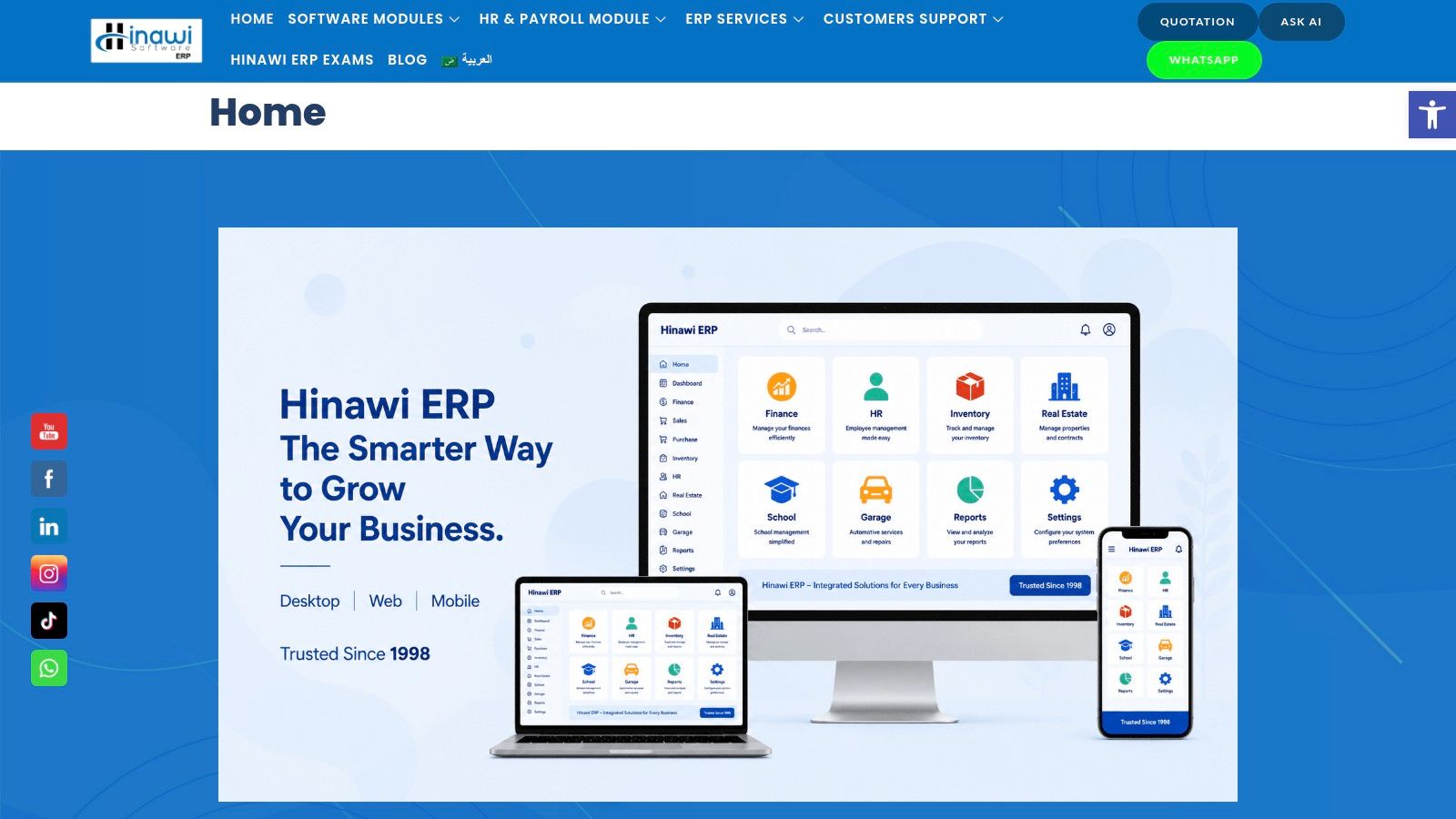
One example is Hinawi ERP, developed in Abu Dhabi, which supports accounting, HR and payroll, inventory, manufacturing, fixed assets, real estate, school management, garage operations, CRM, bilingual workflows, and UAE compliance processes in an integrated structure. In designated-zone businesses, that kind of integration matters because a payroll run, stock transfer, service invoice, or inter-warehouse movement should update financial records immediately and consistently.
You can't manage designated-zone compliance with disconnected systems and monthly clean-up work. The control has to sit inside the transaction itself.
When management wants cleaner VAT reporting, fewer payroll errors, tighter inventory visibility, and better audit readiness, the answer usually isn't more manual checking. It's a better system design.
Take the Next Step with Hinawi ERP
A typical failure pattern looks like this. Stock moves between locations inside a designated zone, payroll runs in a separate system, finance posts tax adjustments at month-end, and management assumes the numbers are under control. Then VAT treatment is reviewed, WPS files do not match payroll postings, and the audit trail breaks across departments.
An ERP should stop that problem at the transaction level. If your team still depends on spreadsheets, disconnected payroll tools, and manual tax checks, fix the system before the next filing cycle creates a bigger mess.
Hinawi ERP has been developed in Abu Dhabi since 1998 and is used by UAE and GCC businesses that need one system for accounting, HR and payroll, inventory, fixed assets, manufacturing, real estate, CRM, school management, garage operations, and bilingual reporting. If you want to assess whether the platform fits your control and compliance needs, review Hinawi ERP UAE business software.
What matters in practice is simple:
- Tax control inside daily operations: item movement, invoicing, and accounting entries should follow the correct logic without month-end rework
- WPS and payroll alignment: salary calculations, payroll approvals, and finance postings should match from the start
- Arabic and English workflows: teams need bilingual documents, screens, and reports that support local operations
- Approval rules by function: finance, HR, purchasing, inventory, and management should work under clear controls
- Real-time financial visibility: operational activity should post into accounts immediately, with no duplicate entry and no waiting for manual consolidation
Hinawi ERP suits companies with moving parts. Factories, contractors, traders, real estate operators, schools, garages, and multi-entity businesses usually feel the gap fastest because errors in one module quickly affect tax, payroll, and reporting elsewhere.
If you want a practical ERP discussion instead of a generic software pitch, speak with Explorer Computer LLC – Hinawi Software ERP. Their Abu Dhabi team works with UAE and GCC businesses that need integrated accounting, WPS payroll, VAT support, bilingual operation, and tighter operational control across multiple departments.