
If your business's taxable supplies over a rolling 12-month period reach AED 375,000, VAT registration becomes mandatory in the UAE. If you reach AED 187,500, you can register voluntarily and start recovering input VAT.
A lot of UAE businesses realise they have a VAT problem too late. The sales team closes more deals, projects start billing faster, imports increase, and finance is still watching annual revenue in a spreadsheet that doesn't separate taxable income from exempt income. That's how companies miss the actual uae vat registration threshold.
I see this often with contracting firms, real estate businesses, traders, and manufacturers. The issue usually isn't ignorance of VAT. It's operational weakness. The business has data in too many places, nobody is monitoring the rolling turnover properly, and the ERP or accounting setup isn't configured to flag the threshold before registration becomes urgent.
That's why owners and finance managers need to treat VAT threshold tracking as a live control, not a year-end accounting task. If your system can't show taxable turnover clearly, your compliance risk is already higher than it should be. A structured ERP process, backed by reliable reports and forecasting such as budgeting and forecasting tools, makes this manageable.
Chat on WhatsApp +971506228024 Quotation – Demo RequestIs Your UAE Business Approaching the VAT Registration Threshold
Growth creates tax obligations whether you're ready or not. A company in Abu Dhabi might begin the year with modest monthly billing, then win a few new contracts and suddenly find that its taxable turnover is climbing much faster than expected.
That's where many businesses make the wrong assumption. They look at booked revenue, or only at the current financial year, or at bank receipts. None of those views alone is enough to manage the uae vat registration threshold properly.
What business owners should monitor every month
You need a clear monthly review of turnover that focuses on VAT treatment, not just profitability. Finance should know which income lines are taxable, which are zero-rated, and which are exempt. If your team can't answer that quickly, you're running blind.
Use this simple monthly discipline:
- Review taxable sales only: Don't rely on gross turnover without classifying revenue.
- Include imports in the threshold review: Import-heavy businesses often overlook this point.
- Check the rolling position: A fast-growing company can cross the threshold mid-year.
- Forecast the next period: Signed deals and scheduled billings matter for early action.
Practical rule: If your business is close to the threshold, stop relying on memory and spreadsheets. Put one person in charge of the review and document it every month.
Why this matters operationally
In real businesses, threshold mistakes usually come from poor process design. Sales issues invoices. Operations delivers projects. Accounts posts entries later. Management assumes someone else is watching VAT exposure. Nobody is.
An ERP setup solves that by linking invoicing, project billing, imports, and accounting in one place. That gives owners a live compliance view instead of a delayed accounting summary.
Defining Mandatory vs Voluntary Registration Thresholds
The UAE VAT system started on 1 January 2018, with a 5% standard VAT rate, and the Federal Tax Authority requires a UAE-based business to register once taxable supplies and imports exceed AED 375,000 per annum. Businesses above AED 187,500 may register voluntarily, while non-UAE businesses making taxable supplies in the UAE must register regardless of value if no other person is obliged to account for the tax, as set out by the UAE government VAT guidance.

The distinction is simple, but the business decision behind it isn't. Mandatory registration means you no longer have a choice. Once the threshold is exceeded, the obligation exists and the business must act. Voluntary registration is different. It's a strategic move.
When voluntary registration makes sense
For start-ups, SMEs, and project-based businesses, voluntary registration can be useful when the business is already incurring recoverable VAT on costs. If you're paying VAT on rent, software, subcontractors, materials, or equipment, waiting too long to register can leave money trapped in costs that affect cash flow and margins.
Voluntary registration is often worth serious consideration when:
- You have substantial setup costs: Early-stage businesses usually carry VAT on expenses before revenue stabilises.
- You deal with VAT-registered customers: Many B2B customers expect proper VAT invoicing and clean tax documentation.
- You want disciplined accounting early: Registration forces stronger controls over invoicing, purchases, and recordkeeping.
When mandatory registration should trigger immediate action
Some owners still ask whether they can “wait a bit” after crossing the threshold. That is the wrong mindset. Once the legal condition exists, delay creates exposure. It also creates practical cleanup work later, especially if invoices were issued without proper VAT treatment.
Registering late is rarely just a tax problem. It becomes an invoicing problem, a customer communication problem, and an accounting correction problem.
The right decision is straightforward. If you're under the voluntary threshold, monitor. If you're above the voluntary threshold, assess whether early registration improves your position. If you're at or above the mandatory threshold, move immediately.
Chat on WhatsApp +971506228024 Quotation – Demo RequestHow to Correctly Calculate Your Taxable Turnover
Most threshold errors happen here. Businesses use total revenue when they should be calculating taxable supplies and imports. That shortcut creates false comfort.
UAE VAT applies to taxable supplies and imports, not total revenue. Businesses can have standard-rated, zero-rated, and exempt supplies. PwC notes the 5% standard rate, 0% treatment for exports, and exemptions for areas such as financial services and bare land in its UAE indirect tax summary. For any business with mixed income streams, invoice-level classification is essential.
What should be counted
The threshold calculation should be built from transaction data, not broad management accounts. That matters especially if your business handles exports, service work, lease income, or sector-specific exemptions.
Here is the practical view finance teams should follow.
| Revenue Type | Included in Threshold Calculation? | Example |
|---|---|---|
| Standard-rated supplies | Yes | Local sale of goods or taxable services |
| Zero-rated supplies | Yes | Export sales qualifying for zero-rating |
| Imports | Yes | Imported goods or transactions relevant to the threshold review |
| Reverse-charge supplies | Yes | Relevant reverse-charge transactions considered in threshold assessment |
| Exempt supplies | No | Exempt income such as qualifying exempt categories |
The common mistake in mixed businesses
A real estate or contracting business may have several types of income in the same ledger. One line may be taxable, another zero-rated, another exempt. If accounts staff post everything to a generic revenue bucket, management gets a misleading threshold position.
That's why your chart of accounts and invoice tax codes must be aligned. If they aren't, VAT threshold reporting will always require manual correction.
Don't ask finance to “check VAT at month end” if the underlying transaction coding is weak. Fix the coding first.
Use a rolling view, not a financial year shortcut
Threshold monitoring should sit inside your monthly controls and reporting calendar. Finance teams that already maintain strong cut-off processes and accounting periods usually handle this better, especially when they understand the impact of each fiscal year setting in ERP and accounting systems.
For practical control, I recommend these steps:
- Tag every revenue stream correctly at source: Don't leave VAT classification for later.
- Review mixed contracts line by line: One contract can contain both taxable and exempt elements.
- Separate management reporting from VAT reporting: They are related, but not identical.
- Reconcile imports and revenue coding monthly: Import activity can move the threshold position faster than expected.
Tally Solutions also gives a worked example showing AED 625,000 in turnover exceeding the AED 375,000 mandatory threshold, and notes that the trigger is 2.67 times the AED 140,000 gap between voluntary and mandatory levels in that example set out in its UAE VAT turnover threshold explanation. The point is not the arithmetic alone. The point is that businesses need a repeatable threshold method, not guesswork.
Chat on WhatsApp +971506228024 Quotation – Demo RequestSpecial Cases Non-Residents Real Estate and VAT Groups
Not every business fits the standard pattern. Consequently, many owners receive bad advice because a simple resident-business threshold rule is applied to a more complex structure.
The Ministry of Finance states that a resident business must register when taxable supplies exceed AED 375,000 annually, but a non-UAE business making taxable supplies in the UAE faces no threshold at all if no other person is required to account for the tax. That means registration can become mandatory from the first dirham under those conditions, as noted by the UAE Ministry of Finance VAT guidance.

Non-resident businesses
A foreign company supplying taxable goods or services in the UAE can't assume the local threshold protects it. If no other party is responsible for accounting for the tax, the obligation can arise immediately. That catches overseas sellers and service providers off guard because they often compare UAE rules to threshold regimes in other countries.
Real estate businesses
Real estate is where sloppy threshold analysis becomes expensive. A property business may have taxable commercial activity alongside exempt residential income. If the business treats everything as generic rent or sales revenue, the threshold review becomes unreliable.
For companies handling leases, units, and contract billing across multiple entities, a specialised property workflow matters. A structured system such as a real estate ERP process for tenancy, billing, and accounting helps finance teams separate taxable and exempt activity from the start instead of rebuilding the position later.
VAT groups and operational reality
Group structures add another layer. Related entities may operate under shared ownership and shared operations, but finance still needs clarity on whether the threshold should be reviewed at entity level or group level, depending on the registration structure in place. If the corporate setup changes, the VAT logic should also be reviewed.
A common Abu Dhabi scenario proves the point. A contracting business may bill progress claims through one entity, hold plant and equipment in another, and manage property income in a third. If the ERP data is fragmented, management doesn't get a true VAT picture. If the system is integrated, project revenue, asset use, imports, and lease activity can be analysed together before filing risk appears.
Chat on WhatsApp +971506228024 Quotation – Demo RequestIn businesses with multiple entities or mixed income, VAT mistakes usually start in operations and only show up in tax when it's already late.
Your Step-by-Step VAT Registration Guide
Once the threshold position is clear, stop delaying and get the registration done properly. Most filing delays come from poor preparation, not from the portal itself.
What to prepare before you start
Get your documents organised first. In practice, businesses usually need a complete set of commercial and identification records, plus financial support for the registration basis.
Prepare a working file that includes:
- Trade licence and company registration records: Make sure the details match current legal documents.
- Passport and Emirates ID documents: Include authorised signatories where applicable.
- Bank account details: Keep the company banking information ready and consistent.
- Business activity summary: The description should match what the company does.
- Turnover support and taxable supply records: Your figures must reconcile with your accounting records.
- Import and export support where relevant: This matters for trading and cross-border businesses.
A practical registration sequence
Use a straightforward sequence and keep one responsible person in charge.
- Create the tax portal account
- Set up or confirm the taxable person profile
- Complete the VAT registration application carefully
- Upload supporting documents in a consistent format
- Review all fields before submission
- Track portal messages and reply quickly if more information is requested
What businesses get wrong
The biggest mistakes are simple. The turnover figure doesn't match the attached records. The business activity description is vague. The authorised signatory documents don't line up with the company file. Then the application stalls.
If you want the process to move smoothly, reconcile your accounting data before you submit. Don't treat registration as a form-filling task. Treat it as a regulated application supported by evidence.
Penalties for Late Registration and Compliance Best Practices
Late registration is avoidable. When it happens, it usually means the business had weak internal controls, weak reporting, or no clear owner of the threshold review.
The registration threshold is not a one-time check. ERP logic should track cumulative taxable turnover on a rolling 12-month basis, and the threshold test can trigger a mandatory filing requirement within the 30-day window after the threshold is exceeded or expected to be exceeded, as explained in the earlier linked Tally guidance. That deadline is where many businesses fail.
Best practices that actually work
The right compliance habits are operational, not theoretical.
- Assign responsibility clearly: One finance lead should own threshold monitoring and escalation.
- Review monthly without exception: Don't wait for quarterly reporting.
- Keep supporting records clean: Tax positions should tie back to invoices, imports, and ledger entries.
- Escalate expected threshold breaches early: Signed contracts and committed supply pipelines matter.
- Audit your tax codes inside the ERP: Wrong coding creates bad threshold reports.
Think beyond registration
Registration is only the start. After registration, the business needs consistent VAT invoicing, proper purchase coding, disciplined reconciliations, and reliable return preparation. If your accounting team is still correcting transaction tax treatment manually every month, your control environment is weak.
Good VAT compliance isn't about working harder at month end. It's about structuring transactions correctly from day one.
Some businesses also need to consider de-registration later if their activity changes and turnover drops. That should be handled carefully, with proper review of eligibility and timing, not as a casual administrative clean-up.
Chat on WhatsApp +971506228024 Quotation – Demo RequestAutomating Threshold Tracking with Your ERP System
Manual VAT threshold tracking breaks down once the business has volume, multiple branches, imports, mixed tax treatments, or project billing. At that point, your ERP should do more than record transactions. It should actively support compliance.
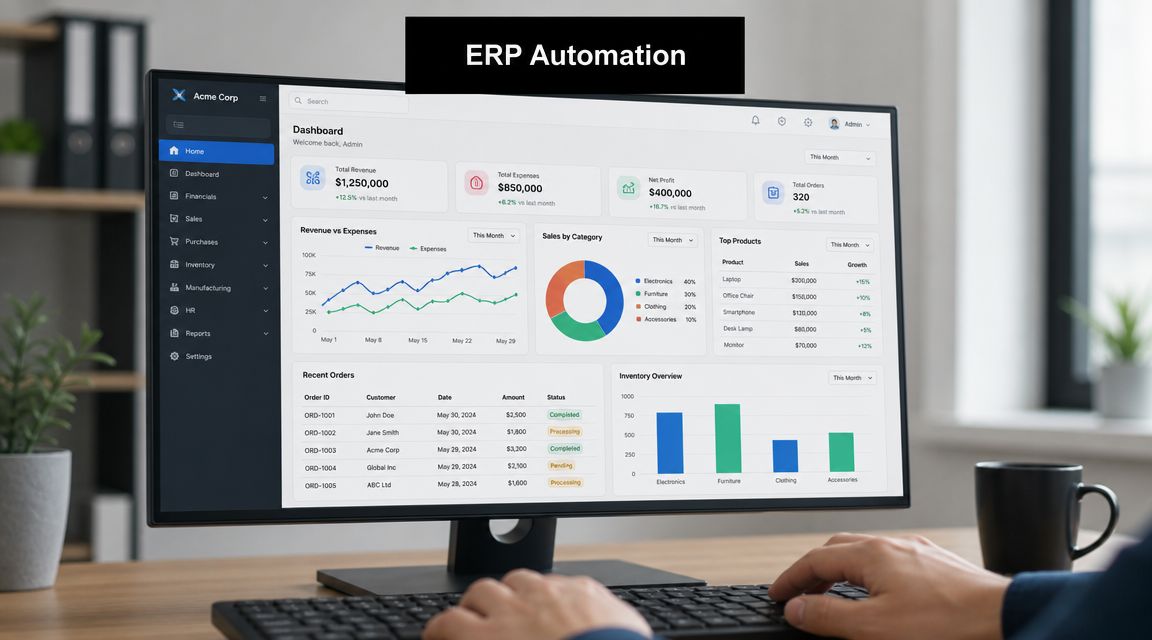
What your ERP should be configured to do
A proper setup should track taxable turnover on a rolling basis, classify revenue correctly, and flag thresholds before they become urgent. If the software only gives you a trial balance and sales report, that's not enough.
Your ERP should be configured for:
- Tax code discipline: Every invoice line should carry the correct VAT treatment.
- Rolling turnover reporting: Finance should see the current threshold position at any time.
- Threshold alerts: The system should notify responsible staff before action is required.
- Import visibility: Imported transactions should sit inside the compliance view, not outside it.
- Entity and branch analysis: Group structures need segmented reporting.
The practical ERP setup I recommend
Set up a VAT control dashboard for finance and management. Include taxable turnover trends, zero-rated turnover, exempt turnover, import-related values, and exception reports for uncoded or wrongly coded transactions. Then assign alert levels for internal review before registration becomes mandatory.
This is also where integration matters. If sales, procurement, inventory, projects, and accounting are disconnected, threshold reporting will always depend on manual reconciliation. If they're connected, finance can review a live position instead of rebuilding one.
For businesses comparing systems, a workflow such as VAT handling in Hinawi and QuickBooks environments is useful because it shows how ERP structure affects compliance quality in day-to-day accounting.
I'll keep this practical. In the UAE market, Hinawi ERP is one example of a system businesses use to connect accounting, operational modules, and VAT controls in one environment. That matters for companies with payroll, inventory, property, projects, or manufacturing activity because the threshold issue usually starts in those operational modules before it reaches finance.
Why owners should care
This is not just an accountant's concern. If your ERP can't show your VAT exposure clearly, management is making decisions on incomplete information. That affects pricing, invoicing, cash planning, and audit readiness.
The best control is simple. Build VAT threshold logic into the same system your people already use every day.
Take the Next Step with Hinawi ERP
Companies in the UAE and GCC don't need more disconnected software. They need one reliable system that helps them stay compliant while running operations properly.
Hinawi ERP has been developed in Abu Dhabi since 1998 and supports integrated business management across Accounting, HR & Payroll, Real Estate Management, Fixed Assets, Manufacturing, Garage & Maintenance, School Management, CRM, and wider business automation. For businesses dealing with the uae vat registration threshold and broader tax obligations, that matters because real-time accounting integration across modules gives finance a cleaner view of taxable activity.
It also supports VAT and e-Invoicing compliance, UAE WPS payroll support, Arabic and English bilingual operation, and flexible company policy settings. That makes it relevant for factories, contracting companies, real estate firms, schools, garages, trading companies, and manufacturers that need stronger control over finance and operations.
If your business still depends on spreadsheets, delayed reconciliations, and disconnected workflows, the risk isn't only inefficiency. It's poor financial visibility. A structured platform such as the Hinawi web ERP business management system can help reduce manual work, improve accounting accuracy, and give management better oversight across departments.
Visit Hinawi ERP's official website or request a personalised demo if you want to modernise operations and tighten compliance across your organisation.
Chat on WhatsApp +971506228024 Quotation – Demo RequestIf your company in the UAE or GCC needs a practical way to manage VAT thresholds, accounting accuracy, payroll, property operations, manufacturing, maintenance, or full business automation, speak with Explorer Computer LLC – Hinawi Software ERP. Their team can help you review your current process, identify control gaps, and arrange a personalised ERP consultation or demo.
Category: Accounting