
Category: HR & Payroll
Payroll day in a UAE company often looks the same. One Excel file has attendance adjustments, another has overtime, a third has deductions, and someone in HR is manually fixing row formulas while finance waits for the final numbers. It works until it doesn’t.
The problem isn’t the spreadsheet itself. It’s the false sense of control. A pay slip isn’t just a summary of salary. In the UAE, it sits inside a compliance process tied to employment records, payroll accuracy, and WPS obligations. If your format is incomplete, inconsistent, or disconnected from the actual payroll and bank transfer process, you’re creating risk every month.
That risk gets worse as the company grows. More branches, more staff categories, more allowances, more deductions, more audits, more pressure from management to close payroll faster. Manual payslip handling doesn’t scale cleanly.
A better approach is to treat pay slip formats as part of a controlled payroll system, not a document design exercise. That’s where an ERP-led process changes everything. A system like Hinawi ERP can pull payroll data directly from HR records, calculate the right values under company policy, and generate consistent outputs without the monthly spreadsheet scramble. If you need a quick refresher on the wider payroll process, Hinawi’s overview of what payroll includes is a useful reference.
If you’re still issuing payslips from Excel, the issue isn’t convenience. It’s exposure.
Chat on WhatsApp +971506228024 Quotation – Demo RequestIntroduction Why Your Pay Slip Format Matters in the UAE
An HR manager in Dubai doesn’t usually worry about pay slip formats at the start of the month. That concern arrives near payroll cut-off, when one employee’s allowance changed, another employee took unpaid leave, and someone else is asking why the bank amount doesn’t match the printed slip.
That’s when the weakness of manual payroll shows up. The format looks acceptable on paper, but the process behind it is fragile. One copied formula, one missed employee field, one outdated template, and the payslip becomes unreliable. In the UAE, that’s not an administrative inconvenience. It’s a compliance problem.
The pay slip is a control document
A professional pay slip should do more than show gross and net pay. It should reflect the employee’s approved payroll record, connect to the contract terms, and support the company’s salary transfer process. If those pieces live in separate files, you’re relying on human discipline instead of system control.
Practical rule: If HR has to type the same employee data more than once into different payroll files, the process is already too risky.
For UAE employers, the pay slip has to support payroll transparency and operational accuracy. For private sector businesses, it also needs to align with WPS expectations and the records that may be requested during reviews or internal checks.
Why manual formats fail under pressure
Excel payslips don’t fail because Excel is bad. They fail because payroll has too many moving parts. A single monthly cycle may include:
- Contract-based pay items such as basic salary and fixed allowances
- Variable items like overtime, commissions, adjustments, and reimbursements
- Deductions including loans, advances, penalties, or unpaid leave
- Employee-specific details that must remain consistent across payroll records
Once that complexity increases, the format becomes inseparable from the system that generates it. That’s why mature companies move away from standalone templates and into HR-led payroll platforms such as Hinawi ERP, where employee records and payroll outputs are generated from one controlled database.
The Anatomy of a Professional Pay Slip Format
Before talking about UAE-specific compliance, it helps to define what a sound pay slip format should include in any business environment. Think of it as a detailed financial receipt for the employee’s work during a specific period.
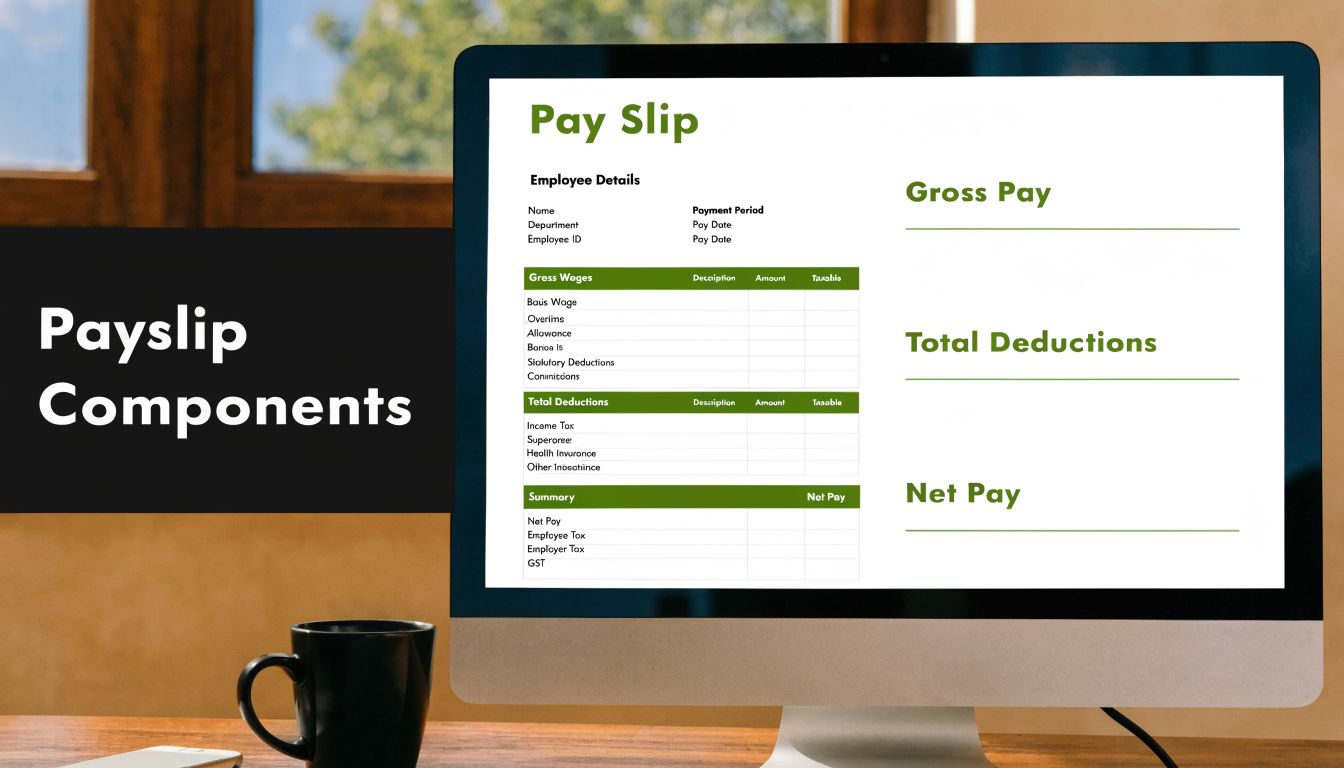
A proper payslip isn’t just a salary total. It has structure. It explains how the figure was built, what reduced it, and what was paid.
For HR teams managing employee records, the format also needs to stay linked to clean master data. That’s why employee administration and payroll should never sit too far apart. Systems that connect both functions, such as those used in employee management workflows, produce more reliable payslips because they pull from a single record set.
Three pillars every pay slip format needs
The universal structure is simple, even if the company rules behind it are not.
Earnings
This section lists what the employee earned for the pay period. It usually includes basic salary, fixed allowances, overtime, incentives, or any approved variable additions.Deductions
This shows what was taken out before the final payment. Typical entries include salary advances, loans, unpaid leave deductions, or internal recoveries.Net pay
This is the final amount payable after all additions and deductions have been processed.
What good formatting looks like
A professional layout should make each part obvious at a glance. HR shouldn’t need to explain where an amount came from. Employees shouldn’t need to guess whether a value is fixed or variable.
Use this simple checklist:
- Clear header information with employee name, payroll period, and department or designation where applicable
- Separated earnings and deductions blocks so values aren’t mixed in one list
- Visible totals for gross earnings, total deductions, and net pay
- Consistent naming for salary components across months
- Readable alignment so figures can be checked quickly by HR, finance, and the employee
Chat on WhatsApp +971506228024 Quotation – Demo RequestA messy payslip usually reflects a messy payroll process.
Where generic templates start to break
Most downloadable templates stop at presentation. They look neat, but they don’t enforce logic. They won’t validate contract fields, track payroll policy rules, or ensure that what appears on the payslip matches the approved payroll run.
That’s the point many HR managers miss. The format is only the visible layer. True quality comes from the system that fills it.
Mandatory Fields for UAE & GCC WPS-Compliant Pay Slips
Generic pay slip formats become dangerous. They usually cover salary basics but ignore the fields and structure that UAE private sector employers need for WPS-linked payroll control.
The compliance gap is not theoretical. Non-compliance fines reached AED 5,000 per violation in 2025 MoHRE reports, and a 2025 UAE payroll survey by Bayzat indicated that 42% of SMEs struggle with WPS formatting errors according to the analysis published at payslip template guidance for UAE formatting gaps.
What your pay slip format must support
A WPS-aware pay slip format should be built around traceability, not appearance. The slip must connect the employee identity, the contract-linked payroll structure, and the actual salary transfer data.
At minimum, HR should expect the format to handle:
- Employee identity details such as the employee’s full name and Emirates ID
- Employment record references including passport number and contract number where required in the payroll control process
- Salary structure breakdown showing fixed and variable pay components accurately
- Transfer-aligned values that reflect the exact wage amount processed through the wage protection workflow
- End-of-service related calculations where payroll outputs need to reflect final settlement logic
- Digital submission readiness so the payroll data can support required system output rather than remain trapped in a manual sheet
If your current payslip has only employee name, basic salary, total deductions, and net salary, it may look acceptable internally, but it’s too thin for a UAE private sector control environment.
Basic pay slip versus WPS-compliant pay slip
| Feature | Basic/Generic Pay Slip | UAE WPS-Compliant Pay Slip |
|---|---|---|
| Employee identification | Usually limited to name or staff ID | Includes stronger identity fields such as Emirates ID and related employment references |
| Contract linkage | Often missing | Built to align with contract number and approved salary structure |
| Salary detail | Gross, deductions, net | Fixed pay, variable pay, transfer-linked salary detail |
| WPS readiness | Not designed for it | Structured to support WPS payroll workflows |
| End-of-service visibility | Often excluded | Can include final settlement and service-related calculations |
| Digital compliance use | Static file only | Better suited for integrated payroll and submission processes |
Why SMEs get caught
Most payroll problems don’t come from deliberate negligence. They come from recycled templates. HR inherits an old Excel file, updates a few headers, adds some formulae, and assumes the output is good enough.
It isn’t. A pay slip used in a UAE private sector company should be treated as part of a regulated payroll trail. That means format discipline, field consistency, and direct alignment with payroll records. If your team is still checking WPS-related fields manually before each run, you’re depending on memory instead of process control. For teams reviewing field requirements and payroll issue resolution, this kind of discipline belongs inside a proper payroll help and control workflow.
Generic templates are cheap at the start and expensive at audit time.
Best Practices for Modern Bilingual and Digital Pay Slips
A compliant pay slip is only the baseline. Strong companies in the UAE and wider GCC go further. They make the payslip readable, secure, and connected to the rest of the business system.
That matters because payroll doesn’t sit alone. Reimbursements, branch operations, employee records, accounting entries, and reporting all affect what finally appears on the slip.
Use bilingual formatting as an operational tool
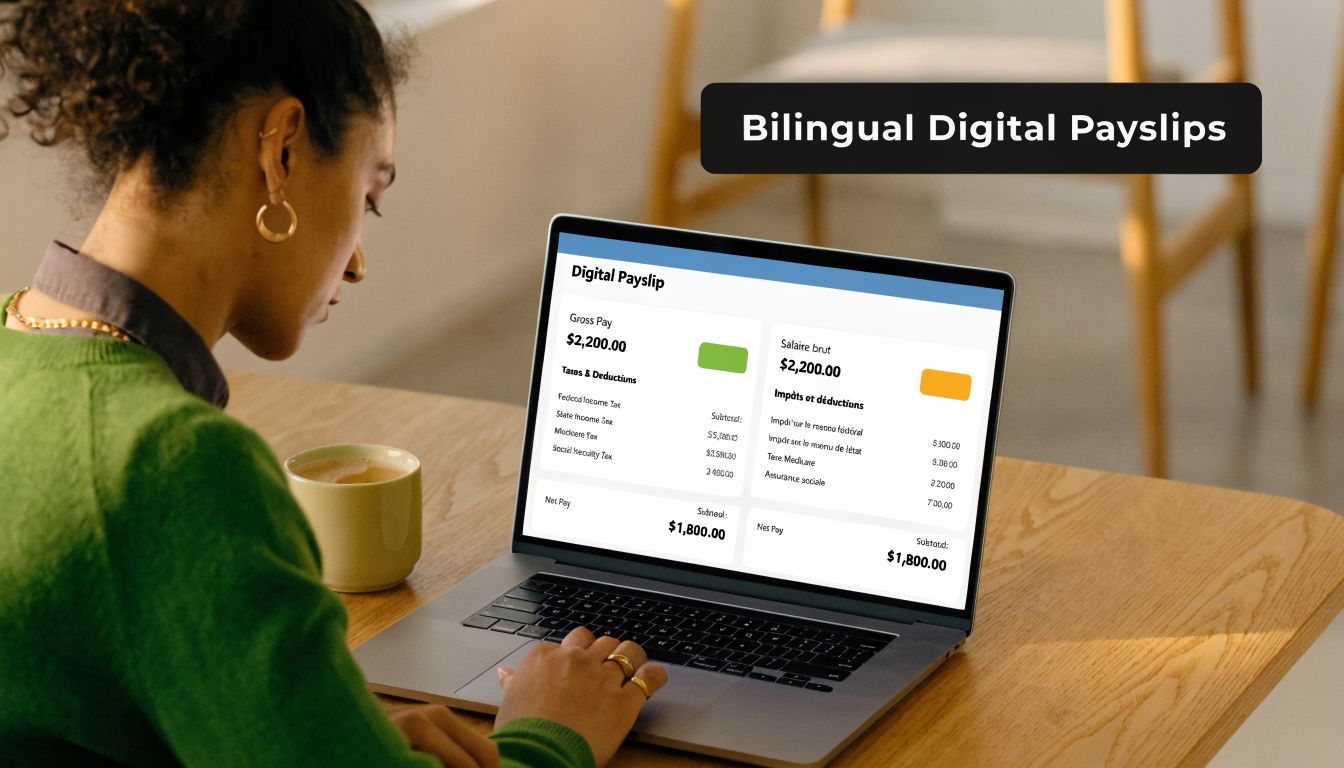
In GCC businesses, bilingual pay slip formats are practical, not decorative. A slip that works in Arabic and English reduces misunderstandings, improves employee clarity, and helps HR answer fewer repetitive payroll questions.
The verified market gap is clear. Existing template content largely misses bilingual Arabic and English layouts, even though this is a practical requirement for a workforce that is heavily expatriate in many UAE businesses, as noted in the same UAE-focused template analysis cited earlier. The point isn’t aesthetics. It’s accuracy and comprehension.
A better bilingual format should:
- Keep field names consistent across both languages
- Preserve the same payroll logic regardless of display language
- Avoid manual translation by generating both versions from one payroll record
- Support self-service delivery so employees can retrieve their own documents securely
Stop emailing static PDF files without controls
Many companies still generate payslips, convert them to PDF, and email them one by one. That’s labour-heavy and difficult to govern. It also creates version confusion when corrections happen after the first issue.
A more controlled method is digital delivery through an employee portal or ERP-based access layer. HR can release approved payslips, employees can retrieve them when needed, and management retains one version of the truth.
Operational advice: The best pay slip format is the one employees can read clearly and HR can reproduce exactly without rework.
Connect payroll to VAT and e-invoicing logic where needed
This issue becomes more important in trading, contracting, and multi-branch companies that process employee reimbursements or inter-branch expense allocations. Post-2025 e-invoicing mandates, integrating UAE VAT at 5% into payroll for reimbursements became a key challenge, and the Federal Tax Authority reported 28% of payroll-VAT mismatch penalties in H2 2025. ERP-automated formats with audit trails can cut compliance time by 80% for businesses in the UAE, Qatar, and KSA according to the payroll template analysis at salary slip template notes on VAT and audit-trail automation.
That matters because many reimbursements touch accounting and tax records before they touch payroll. If HR runs one set of values and finance records another, mismatches follow.
Chat on WhatsApp +971506228024 Quotation – Demo RequestAnalyzing Sample Pay Slip Templates
Most sample pay slip templates look fine at first glance. They have a logo, employee name, earnings lines, deductions lines, and a final net amount. For a very small company, that may seem enough.
It isn’t enough for a company that wants dependable payroll control.
What an ideal layout includes
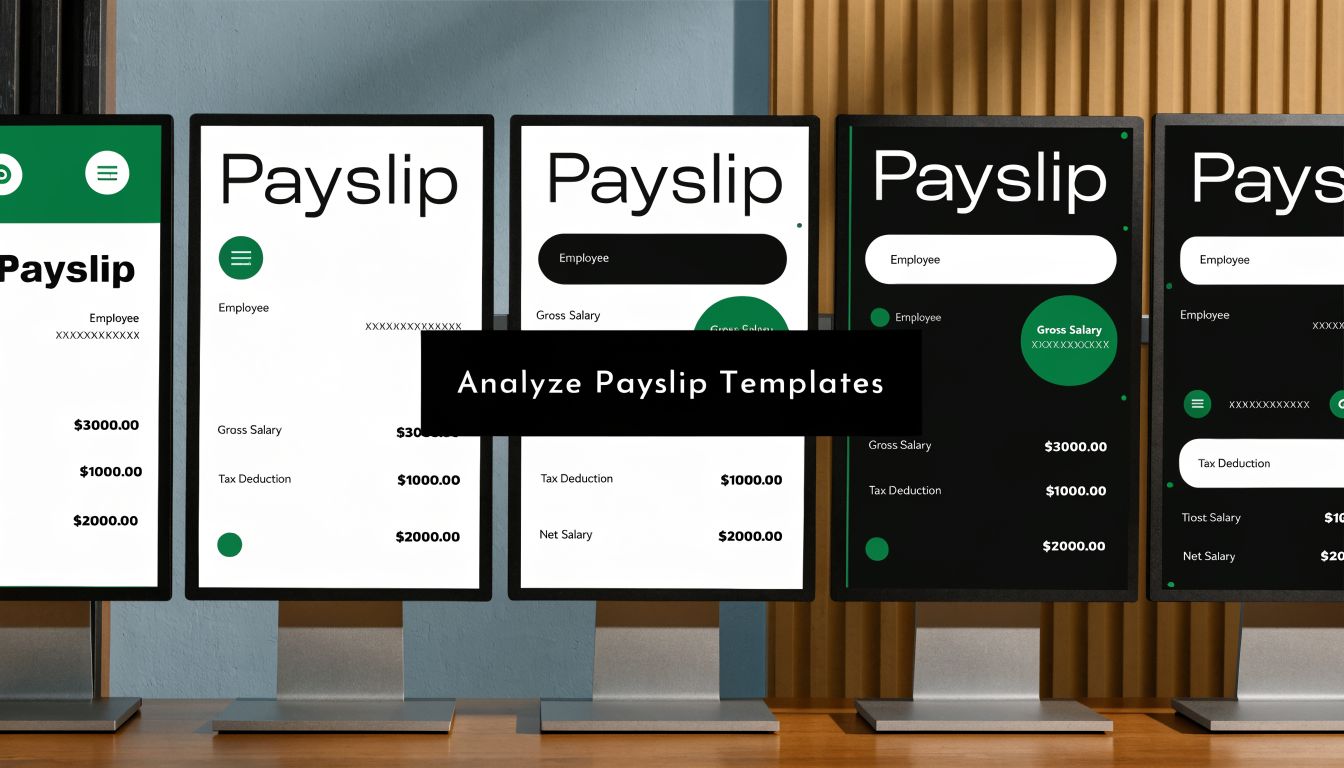
A professional template usually has five visible blocks:
Header block
Company name, employee name, payroll period, and employee reference details.Earnings table
Basic salary, allowances, overtime, bonus, or approved additions.Deductions table
Loans, advances, unpaid leave, recoveries, or other approved deductions.Summary block
Gross pay, total deductions, and net pay.Payment confirmation area
A field or section that confirms how the salary was processed or transferred.
That layout is sensible. The problem is that a static file can’t guarantee the data behind those blocks is correct.
Why templates stop being reliable
Templates don’t know whether a deduction was approved. They don’t know if an allowance changed mid-month. They don’t know if the employee’s contract was amended. Someone has to know all of that and enter it correctly.
That’s why experienced HR managers eventually shift their focus from template design to system reporting. A stronger setup uses a database-driven payroll engine to generate the format automatically from approved records. When management wants historical slips, payroll variance checks, or employee summaries, the system should deliver those directly. That’s the core value behind structured HRMS reporting and payroll visibility.
A payslip template should be the output of payroll control, not the place where payroll control happens.
How to Automate Pay Slip Formats in Hinawi ERP
Automation starts with one decision. Stop treating the payslip as a separate document. Treat it as the final output of an integrated HR and payroll process.
That changes how implementation works. You don’t begin with fonts and columns. You begin with records, rules, approvals, and outputs.
Step one maps fields from HR into payroll
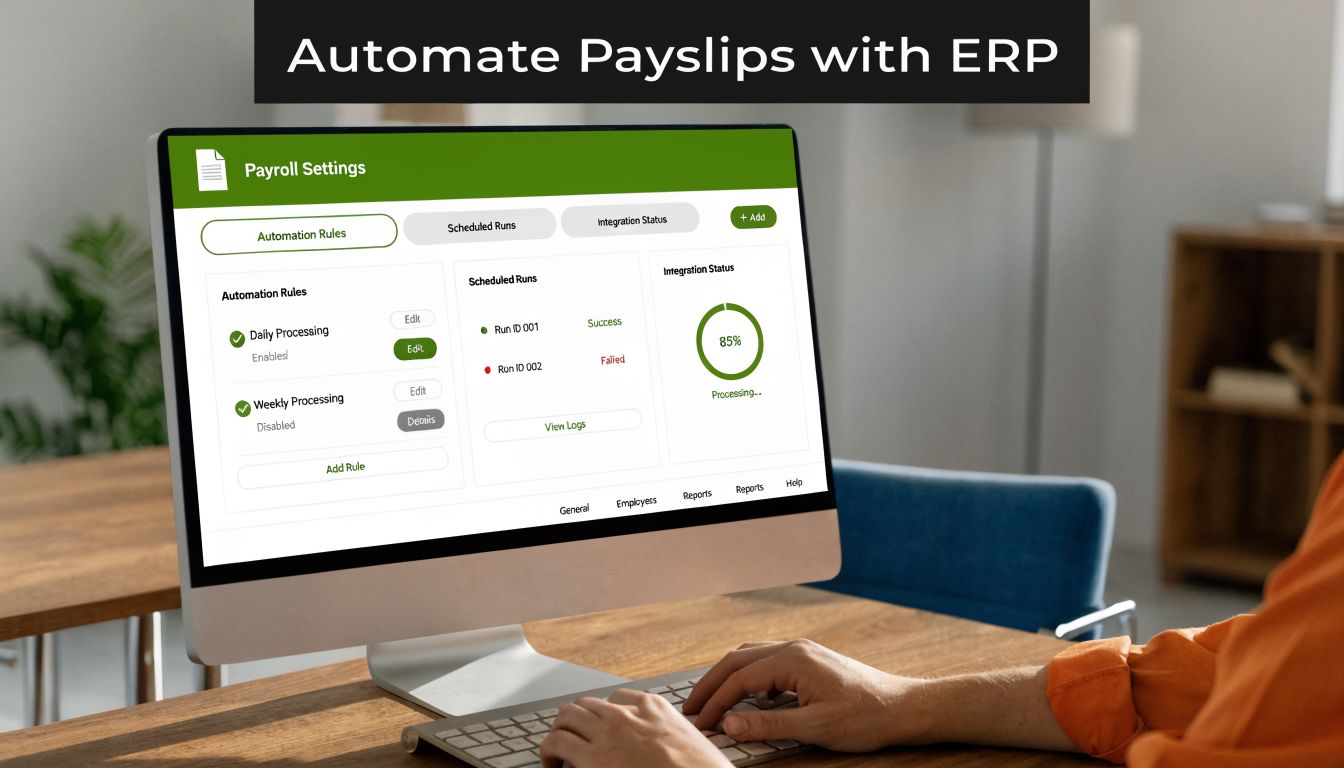
In Hinawi ERP, the first priority is field mapping. Employee master data, contract details, salary structure, leave records, and organisational settings need to sit in the right places before payroll is run.
Once that’s configured, the payslip format pulls from controlled sources instead of hand-entered cells. That means HR isn’t retyping employee identity data, payroll grades, or allowance lines every month.
Step two automates company policy calculations
Payroll gets complicated when policy rules vary by employee group. Overtime rules may differ by category. Unpaid leave treatment may differ by contract terms. Final settlement calculations require consistency.
A good ERP setup handles those rules inside the payroll engine. Hinawi ERP allows organisations to define salary components and company policies so the payslip output reflects approved payroll logic. That reduces manual interpretation and makes monthly payroll more repeatable.
Use these implementation principles:
- Clean your master data first so old employee records don’t contaminate the new format
- Define pay components clearly and avoid duplicate labels for similar items
- Lock approval flow before payslip generation so unapproved edits don’t appear in final output
- Test edge cases such as unpaid leave, advances, overtime, and final settlement scenarios
- Standardise bilingual labels once, inside the system, instead of translating each month
Step three produces payroll outputs from one platform
A significant gain comes at the end of the process. HR should be able to run payroll, generate employee payslips, produce internal summaries, and prepare related payroll outputs from one place.
That’s where ERP automation earns its value. It removes duplicate effort between HR and finance and gives management a cleaner audit trail.
Chat on WhatsApp +971506228024 Quotation – Demo RequestWhat implementation should look like in practice
For a UAE HR manager, the target operating model is straightforward:
- HR maintains employee records in one place
- Payroll rules apply automatically based on company policy and approved data
- Payslips generate in a standard format without manual redesign each cycle
- Finance receives aligned figures because payroll and accounting are connected
- Management gets reporting visibility without waiting for spreadsheet consolidation
If your payroll team still needs extra Excel files after the payroll run to “finalise” payslips, the automation isn’t complete.
Take the Next Step with Hinawi ERP
Manual payslip preparation isn’t a minor inefficiency. In the UAE and GCC, it creates compliance exposure, weak audit trails, avoidable payroll mistakes, and unnecessary pressure on HR and finance teams.
Hinawi ERP is built for companies that want to move beyond disconnected payroll files and into a controlled business system. Developed in Abu Dhabi since 1998, it provides a fully integrated ERP platform covering Accounting, HR & Payroll, Real Estate Management, Fixed Assets, Manufacturing, Garage & Maintenance, School Management, CRM, and broader business automation.
For payroll-driven organisations, the value is practical. You get UAE WPS payroll support, VAT and e-Invoicing compliance, Arabic and English bilingual operation, flexible company policy settings, and real-time accounting integration across modules. That matters whether you run a factory, a contracting business, a real estate company, a school, a garage, or a trading operation with multiple branches.
Hinawi ERP fits companies that need control, not just software. It helps reduce manual work, improve financial accuracy, and give management a clearer view of what’s happening across the business. If your current payroll process still depends on manual formatting, duplicated entry, and month-end fixes, now is the time to replace it with a proper system. You can explore the platform and request a personalised consultation through Hinawi ERP product information and demo options.
Chat on WhatsApp +971506228024 Quotation – Demo RequestExplorer Computer LLC – Hinawi Software ERP supports businesses across the UAE and GCC that want stronger payroll, accounting, HR, and operational control. If your team is ready to replace risky manual payslips with an integrated system developed in Abu Dhabi since 1998, visit Explorer Computer LLC – Hinawi Software ERP or request a personalised demo to see how the platform handles WPS payroll, VAT and e-Invoicing, bilingual operations, and full business automation in one system.