Category: Accounting
Your finance manager is waiting for customer payments. Your HR team is preparing payroll files. Your sales staff are following up on quotations. Then email stops. The website doesn't load. Customer portal logins fail. Nobody blames the domain name at first, because most business owners in Dubai still treat it like a technical detail instead of a core business asset.
That's a mistake.
A domain sits underneath your website, company email, login pages, supplier communication, document workflows, and often the public trust around your brand. If it expires, the damage spreads fast. It's not limited to a homepage outage. It can interrupt customer communication, delay approvals, block online forms, and create confusion around invoices, tenancy communication, payroll notices, and support requests.
For UAE and GCC companies, this risk is even more serious because digital operations are tightly connected to compliance and day-to-day execution. If your accounting team depends on domain-based email for invoice delivery, or your operational teams rely on cloud systems, one missed renewal can become a business continuity problem by midday. The same discipline you apply when you protect financial systems and business data should apply to your domain portfolio.
A proper domain name expiry check is one of the simplest controls you can put in place. It's low effort, high impact, and overdue in many businesses.
If you already run an integrated operation and want tighter control over financial processes, payroll, assets, and compliance workflows, Hinawi ERP is worth a serious look for UAE and GCC companies.
Chat on WhatsApp +971506228024 Quotation – Demo RequestIntroduction The Hidden Risk of an Expired Domain
A common failure pattern looks ordinary at the start. A company registered its domain years ago through a web designer, a former employee, or a junior administrator. Renewal notices went to an old mailbox. The company card on file expired. Nobody noticed because the website had been stable for months.
Then the domain expired.
By the time management got involved, the website was already unavailable, mailbox delivery had become unreliable, and customer-facing systems tied to that domain were at risk. For a trading company, that means missed sales and supplier confusion. For a real estate firm, it can affect tenant communication and enquiry forms. For a payroll-heavy business, internal coordination slows down at exactly the wrong time.
Practical rule: If losing your domain would stop communication, billing, approvals, or customer access, that domain is not an IT detail. It is a business-critical asset.
Most owners focus on servers, laptops, backups, and ERP access. They should. But the domain deserves the same level of control because it sits in front of multiple systems at once. One lapse can affect website access, branded email, and subdomains used for portals or integrations.
A domain name expiry check isn't just about finding a date on a screen. It's about confirming ownership, checking renewal readiness, and preventing service interruption before it starts. That's the practical mindset business owners in Dubai need.
Why Domain Expiry is a Critical Business Risk in the UAE

For UAE companies, domain expiry is not a cosmetic problem. It's an operational risk with direct effects on compliance, communication, and customer service.
The local issue is simple. .ae domains are initially registered for 1 to 2 years, and renewal is allowed from 90 days before expiry up to 30 days after expiry if the domain has not been deleted, creating a renewal window of up to 120 days around the expiry date according to this explanation of AE server registration terms. That's a useful window, but only if someone is actively monitoring it.
Where the business damage actually happens
When a domain expires, businesses don't just lose a web address. They can lose continuity across several functions:
- Customer communication: Branded email becomes unreliable or stops working.
- Finance operations: Invoice delivery, approvals, and account communication can be disrupted.
- VAT and e-invoicing workflows: If your notifications, document access, or user communication depend on the domain, delays follow.
- HR and payroll coordination: Payroll notices, employee communication, and approvals can be interrupted.
- Real estate and service portals: Tenant access, support forms, booking pages, and enquiry systems may fail.
For many businesses, one domain supports the main website, mailboxes, and multiple service endpoints. That concentration makes expiry more dangerous than many owners realise.
UAE companies need a continuity mindset
In the UAE, this issue belongs in management, not just in IT. Your registrar account, your renewal contacts, and your payment method are part of business continuity controls. If nobody at management level reviews them, you're depending on luck.
That's why I advise clients to treat domain governance the same way they treat software licences, insurance renewals, and finance approvals. Assign ownership. Review it on schedule. Keep evidence of who controls what.
If your business already relies on outsourced support, cloud systems, or multiple integrated applications, tie domain ownership checks into your broader IT support and business continuity processes.
Expiry monitoring is not a technical convenience. In the UAE, it's a practical control tied to renewal timing, deletion risk, and uninterrupted operations.
Businesses that wait until the website goes down are already late.
If your company is trying to centralise controls across accounting, payroll, operations, and digital assets, Hinawi ERP can help you move away from scattered manual tracking.
Chat on WhatsApp +971506228024 Quotation – Demo RequestCore Methods for Your Domain Name Expiry Check
A proper domain name expiry check should start with the source that controls the asset. Don't guess from the website. Don't rely on rumours inside the company. Verify it from the registrar or registry-backed records.
Check the registrar dashboard first
This is the best place to start if your company owns the domain and has account access.
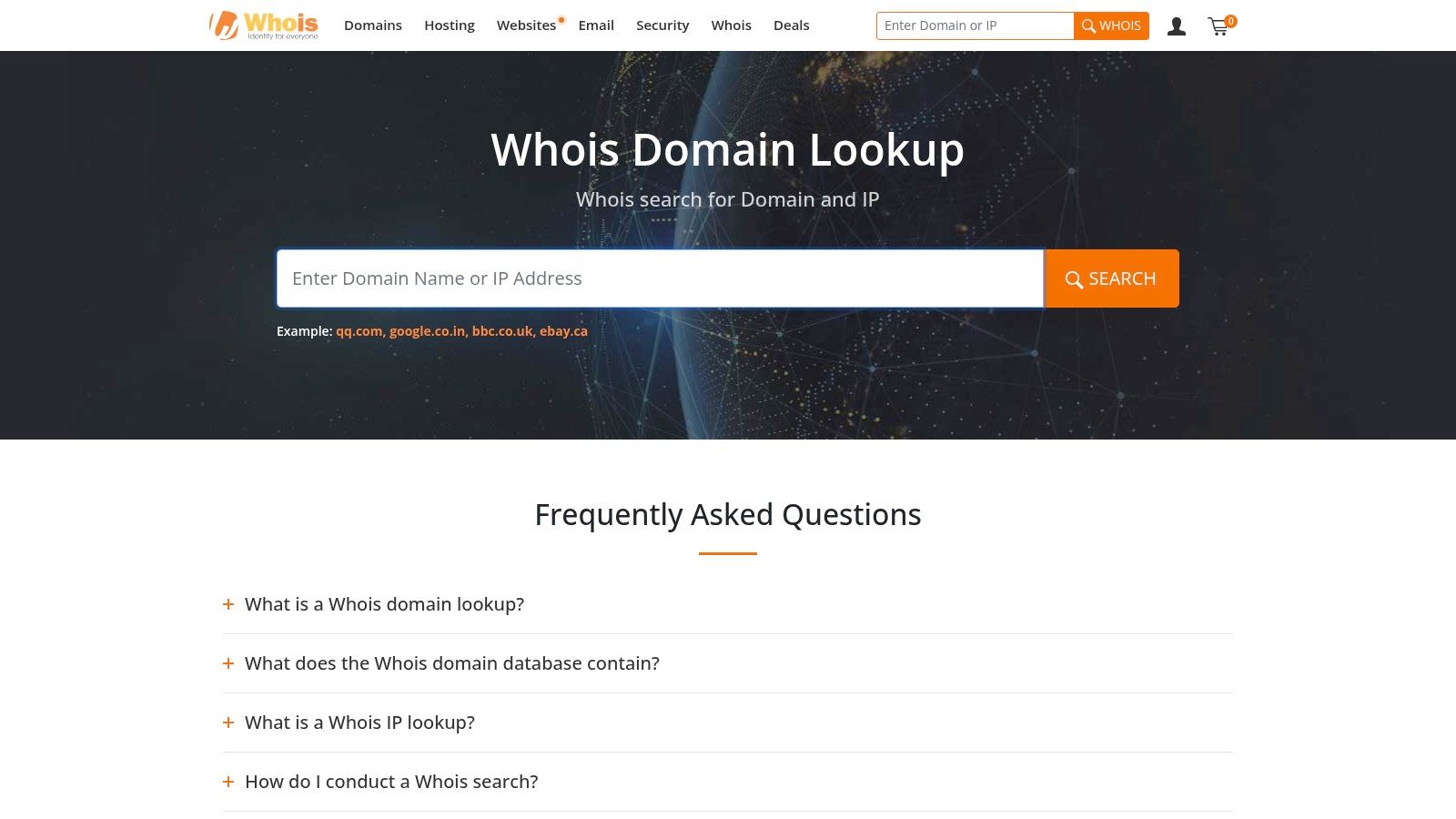
According to guidance on using a domain expiry checker, the most reliable operational method is the registrar control panel or a registry-backed WHOIS lookup, because WHOIS returns the registry expiry date in real time and registrar dashboards usually add expiration warnings plus auto-renewal status. The practical workflow is straightforward. Enter the exact domain, retrieve the registry expiry date, convert the timestamp from UTC if needed, and then cross-check auto-renew status and payment validity in the registrar console.
Use this checklist inside the registrar account:
- Find the exact domain record. Check the spelling carefully, especially if you manage multiple brands or country-specific domains.
- Read the expiry date. Don't confuse renewal reminders with the actual registry expiry record.
- Confirm auto-renew status. If auto-renew is off, switch it on unless your company has a documented reason not to.
- Check payment validity. Many renewal failures happen because the card on file expired or the approval failed.
- Review account contacts. Old employee addresses should not be the only recipients of renewal alerts.
Use a WHOIS or registry-backed lookup when access is unclear
If you don't know where the domain is registered, or your company inherited the domain from an agency or former staff member, use a WHOIS-style lookup. This matters because domain expiry checking is a WHOIS or registry-data lookup, not a guess based on what the website looks like.
A public lookup is useful when:
- Ownership is unclear: You need to confirm where the domain is registered.
- Access is fragmented: Different domains sit with different providers.
- You're auditing assets: The company has multiple websites, branches, or legacy domains.
- A supplier controlled setup: You need independent visibility before chasing credentials.
Here's what to look for in the result:
| Field | What it means | Why it matters |
|---|---|---|
| Registry expiry date | The official expiry date in registry records | This is the date you care about most |
| Registrar | The company managing registration | You'll need this for access and renewal action |
| Last updated | Recent changes to registration details | Helpful when reviewing transfers or recent edits |
| Status details | Domain state information | Useful if the domain is already in trouble |
For companies that operate across finance, HR, customer service, and online systems, I also recommend connecting domain oversight into broader third-party integration governance. If your domain supports external portals, email gateways, or connected business tools, it should be on the same control list as other critical integrations.
Use bulk or automated checking for multi-domain businesses
A single-family business with one website can survive with a simple monthly review. A group company can't.
If your organisation manages multiple domains for branches, brands, campaigns, portals, or regional operations, one-off checks aren't enough. You need a repeatable monitoring process. That can include a registrar dashboard, portfolio tracking, reminder scheduling, and management visibility.
Check the domain from the system of record, then verify the renewal method. A date without an action path is not control.
Reserve technical methods for technical teams
Some IT teams use command-line tools or internal scripts. That's fine, but it's not where management should start. Technical methods are useful for inventory and audit support, not as a replacement for registrar-level confirmation.
Business owners and finance managers should insist on two things:
- A current list of every domain the company relies on.
- A named person responsible for checking and renewing each one.
If that list doesn't exist, the business is exposed whether the domain expires this month or next year.
If you want to discuss how stronger operational controls fit into a wider ERP and automation strategy, Hinawi ERP offers a practical path for UAE and GCC companies managing finance, HR, assets, and compliance together.
Chat on WhatsApp +971506228024 Quotation – Demo RequestInterpreting the Data What Happens After Expiry

Most companies stop at the date. That's not enough.
The expiry date tells you when the registration term ends. It does not tell you how disruption will unfold afterwards, or how long recovery remains possible. That distinction matters because businesses usually act only after something breaks.
Read the record correctly
When you review a WHOIS or registrar record, focus on a few practical items:
- Registry expiry date: The core date for registration end.
- Creation date: Useful for asset history, not renewal urgency.
- Registrar details: Needed if account ownership is confused.
- Update date: Helpful during audits and transfer disputes.
Privacy controls may limit some fields, but the business question remains the same. Do we know the actual expiry date, who controls the account, and whether renewal can happen immediately?
Expiry is the start of the risk window
This is the part many articles miss. A domain doesn't always disappear the minute it expires. The post-expiry lifecycle can move through several stages, and service disruption may begin before permanent loss of control.
GoDaddy's standard expiration timeline shows that a domain can still be renewed on the expiration day, may be parked around day 5, can enter redemption around day 18, and may remain recoverable until about day 72. That's why a date alone is not enough for operational decision-making.
Here's the practical interpretation:
| Stage | Business meaning |
|---|---|
| Expiry day | You may still be able to renew, but you are already in a danger zone |
| Early post-expiry period | Website or service behaviour may change, and disruption can begin |
| Redemption phase | Recovery is still possible, but the process becomes harder and more stressful |
| Final loss window | Control may be lost completely if nobody acts fast enough |
The real question isn't “When does the domain expire?” It's “How long until our website, email, and customer access start failing?”
For UAE businesses that run websites, branded email, and customer portals on one domain, that timeline is a business risk map. If your tenancy communication, sales enquiries, invoice delivery, or service forms all depend on the same domain, every day of delay increases the chance of visible disruption.
That's why I tell companies to protect the asset before the date becomes urgent. Backup discipline matters, but so does control of the public-facing identity that users rely on. If you're reviewing continuity procedures, include domains alongside your data protection and system recovery planning.
Proactive Domain Management Best Practices for Businesses
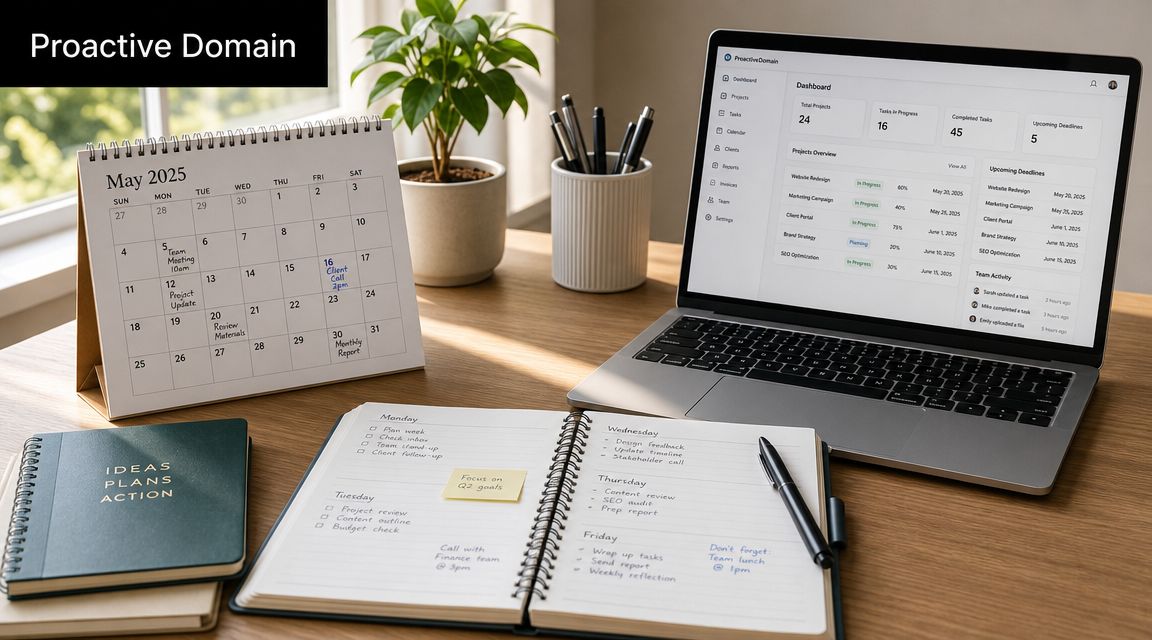
A domain name expiry check is useful. A domain management policy is better.
Most companies don't fail because they lacked the ability to check a date. They fail because nobody owned the process, nobody reviewed it regularly, and nobody connected the domain to business continuity. In the UAE and GCC, that gap becomes more serious when one domain supports bilingual websites, branch communication, customer email, and internal approvals.
Build a control system, not a reminder habit
Recent guidance discussed in this domain monitoring article highlights a point many businesses overlook. Effective monitoring is about centralised dashboards, reminders, bulk tracking, and automated monitoring rather than one-off lookups. The same guidance also notes that WHOIS timestamps are commonly shown in UTC, so teams need to convert them correctly when coordinating renewals across Abu Dhabi, Dubai, and other GCC offices.
That sounds technical, but the management implication is simple. Don't rely on one person checking one domain occasionally.
Use this operating model instead:
- Keep a central domain register: List every active domain, brand variation, portal domain, and legacy name the business still depends on.
- Assign clear ownership: One accountable manager should own the register, even if IT or an agency handles execution.
- Use shared alerts: Renewal notices should go to more than one company mailbox.
- Review payment methods: Corporate cards and approval routes must be current.
- Track timezone handling: If a renewal deadline is shown in UTC, convert it correctly and document the local action time.
Remove single points of failure
The most common domain problem in established businesses is not technical weakness. It's administrative fragility.
A web agency set up the domain. A former staff member used a personal email. The finance card changed. The renewal notice went to an unattended inbox. These are management failures, not hosting failures.
I recommend a short internal audit with these questions:
- Who legally and operationally controls the registrar account?
- Which company email addresses receive renewal alerts?
- Can finance approve payment without delay?
- Does management know which systems depend on each domain?
- Are inactive-looking domains tied to redirects, email, or old integrations?
If the answer to any of these is uncertain, the control is weak.
Match domain controls to business operations
Different sectors in the UAE should prioritise different dependencies.
- Accounting-driven businesses: Protect email continuity for invoices, approvals, statements, and VAT-related communication.
- HR and payroll-heavy companies: Protect employee communication channels and time-sensitive payroll coordination.
- Real estate firms: Protect property enquiry forms, tenant notices, owner portals, and contract communication.
- Factories and trading companies: Protect supplier contact points, customer order communication, and portal access.
- Schools and service providers: Protect parent communication, notices, and login-based service access.
Owner's test: If this domain failed during a busy working day, which department would call first? That department tells you how critical the domain really is.
Practical policy recommendations
Here is the policy set I'd put in place for any serious company in Dubai or the wider GCC:
| Control | Recommendation |
|---|---|
| Auto-renew | Enable it for every critical domain unless there is a documented governance reason not to |
| Registrar access | Store access in controlled company records, not personal memory |
| Contact emails | Use monitored corporate addresses with more than one recipient |
| Payment method | Use an active company-controlled method, reviewed regularly |
| Portfolio review | Review all domains on a scheduled basis, not only when a reminder arrives |
| Dependency mapping | Note which websites, mailboxes, portals, and services rely on each domain |
This is also where a broader business system helps. Companies already centralising contracts, approvals, financial records, and operational workflows are in a better position to manage digital asset controls properly. The discipline is the same. Central record. Assigned owner. Review cycle. Escalation path.
If your current operation still depends on spreadsheets, scattered reminders, and verbal ownership, fix that before growth makes the problem worse.
For businesses ready to move from manual tracking to integrated operational control, Hinawi ERP gives UAE and GCC management teams a practical system for visibility, accountability, and automation.
Chat on WhatsApp +971506228024 Quotation – Demo RequestTake the Next Step with Hinawi ERP
A domain expiry problem usually exposes a larger management problem. The business relied on scattered ownership, manual reminders, outdated contact details, and poor control over critical assets. That same weakness often appears elsewhere in finance, HR, real estate operations, maintenance, inventory, and compliance workflows.
An integrated ERP becomes practical, not theoretical.
Hinawi ERP has been developed since 1998 in Abu Dhabi and is built for companies in the UAE and GCC that need tighter operational control. It supports Accounting, HR & Payroll, Real Estate Management, Fixed Assets, Manufacturing, Garage & Maintenance, School Management, CRM, and complete business automation within one integrated environment. It also supports VAT and e-Invoicing compliance, UAE WPS payroll, Arabic and English bilingual operation, flexible company policy settings, and real-time accounting integration across all modules.
For a factory, that means better control over costing, approvals, and stock-linked accounting. For a contracting company, it means stronger visibility across operations and finance. For a real estate business, it means cleaner coordination of contracts, collections, and reporting. For schools, garages, manufacturers, and trading companies, it means less manual work and better management control.
If your business wants fewer operational blind spots, fewer manual follow-ups, and stronger control over critical assets and workflows, speak to the Hinawi team. You can learn more about Hinawi Online ERP and anywhere access for business operations and see how an integrated system can support your next stage of growth.
Chat on WhatsApp +971506228024 Quotation – Demo RequestExplorer Computer LLC – Hinawi Software ERP helps companies across the UAE and GCC modernise operations with a fully integrated ERP platform developed in Abu Dhabi since 1998. If you need stronger control over accounting, HR & payroll, WPS, VAT and e-invoicing, real estate management, fixed assets, manufacturing, garage operations, school management, CRM, and end-to-end automation, visit Explorer Computer LLC – Hinawi Software ERP or request a personalised demo to discuss your requirements with the team.