
Category: Accounting
If you run a contracting company in Abu Dhabi, a trading business in Dubai, or a manufacturing operation with warehouses across the UAE, you’re probably in the same position as many finance leaders right now. Your invoicing process works, but only because your team keeps fixing it manually. One system creates the invoice, another spreadsheet tracks tax details, someone checks customer records by hand, and accounts staff chase mismatches at month-end.
That setup won’t survive the UAE’s e-invoicing model.
The shift to e-invoicing in uae is not a cosmetic change. It affects how invoices are created, validated, transmitted, and reported. If your business relies on PDF invoices, paper workflows, disconnected branches, or a legacy ERP that was never built for structured invoice exchange, you already have a systems problem, not just a tax problem.
This also isn’t happening in isolation. The UAE moved from VAT in 2018 to corporate tax in 2023, and now into digital invoice control through the Ministry of Finance and the Federal Tax Authority. That sequence matters. It shows the direction clearly. The government wants cleaner data, stronger auditability, and less room for informal processes.
The good news is simple. If you treat this as an operations project rather than a last-minute tax task, you can come out stronger. Companies that clean their data, tighten internal controls, and connect invoicing properly will reduce friction across finance, procurement, sales, and audit preparation.
If you wait, your team will panic, your vendor choices will narrow, and your implementation quality will drop.
Take action early.
Chat on WhatsApp +971506228024 Quotation – Demo RequestThe Dawn of Digital Invoicing in the UAE
A lot of business owners first hear about e-invoicing and assume it’s just another reporting requirement. That’s the wrong reading. This change reaches into sales invoicing, accounts receivable, vendor billing, customer master data, tax codes, ERP configuration, and document controls.
For many UAE businesses, the weak point isn’t willingness. It’s fragmentation. A real estate group may issue tenant invoices from one application, track deposits in another, and reconcile VAT manually. A manufacturer may have branch-level stock issues that create invoice mismatches. A contractor may raise progress billings from project records that don’t align cleanly with finance data.
Those businesses aren’t unusual. They’re normal.
Practical rule: If your invoice depends on manual edits before sending, your e-invoicing readiness is poor.
The UAE’s direction is logical. After VAT and corporate tax, digital invoice exchange is the next step in tighter tax administration and cleaner business reporting. That’s why management shouldn’t delegate this entirely to the accounts department. The decision belongs at leadership level because the impact is operational.
What changes for business owners
The old question was whether an invoice had been issued.
The new question is whether the invoice data is structured correctly, passed through the right channels, accepted in the proper format, and ready for tax oversight. That difference is massive for businesses with fixed assets, project billing, multi-warehouse inventory, or branch operations.
Three groups need to pay attention immediately:
- Finance leaders who own VAT accuracy and audit response
- Operations managers whose workflow creates billing triggers
- IT and ERP teams who must connect internal data to compliant exchange processes
Why this should be treated as an upgrade
A clean e-invoicing transition forces you to fix old weaknesses. Duplicate customer records, missing TRN details, inconsistent item coding, weak approval trails, and branch-level invoice variations all become visible.
That’s uncomfortable, but useful.
A business that uses this transition to standardise data and automate invoice generation will be easier to manage afterwards. A business that tries to patch the old process will spend more time correcting errors, arguing with customers, and firefighting compliance issues.
Understanding the UAE E-invoicing Mandate
A UAE business owner closes the month, sends invoices, and assumes the job is done. Under the e-invoicing mandate, that mindset will cause avoidable problems. The legal requirement is shifting invoicing from a document you issue to a data record your system must generate correctly, transmit correctly, and retain correctly.
The mandate now has a defined legal base through Ministerial Decisions No. 243 and 244 of 2025, with a phased rollout of the Electronic Invoicing System scheduled to start on July 1, 2026, as outlined in Basware’s summary of the UAE e-invoicing mandate.

Treat this as the next stage of tax control in the UAE. VAT established transaction-level discipline. Corporate tax pushed businesses to tighten records and reporting. E-invoicing goes further by forcing invoice data, tax treatment, customer details, and approval logic to work together inside a controlled process.
Who is in scope
The published direction points first to B2B and B2G transactions. That reaches far beyond large enterprises. SMEs with recurring billing, project invoicing, service contracts, or multi-entity operations should assume this will affect them and start preparing now.
Free Zone businesses should not assume they sit outside the requirement. Tax incentives and Free Zone status do not automatically remove transactional reporting obligations. If you issue taxable invoices, intercompany invoices, project certificates, service recharges, or mixed domestic and cross-border bills, review your position carefully.
Non-resident businesses also need attention here. If a non-resident entity has UAE VAT obligations, invoices UAE customers, or works through local agents, branches, or project structures, the invoicing model must be checked early. Leaving this to the last minute usually creates ERP rework, document mismatches, and customer disputes.
Voluntary adoption is expected to be available from July 1, 2026 under the same phased programme already noted above.
If you want the wider policy context, review this overview of new tax developments in the UAE and then map e-invoicing against your current VAT and corporate tax processes.
What the government is trying to achieve
The government’s objective is straightforward. It wants invoices exchanged in a digital, standardised, auditable format that improves traceability and VAT oversight.
For business owners, the practical message is blunt. Informal billing habits will become expensive. Manual corrections after issue, inconsistent TRN capture, project teams using different invoice templates, and finance staff fixing tax codes at month-end are all signs of a weak process.
That weakness shows up fastest in asset-intensive SMEs.
A real estate company may bill rent, utilities, fit-out recovery, deposits, and contract adjustments across different properties. A manufacturer may invoice goods, freight, and service elements with different tax treatments tied to item master data. A contractor may issue progress bills, apply retention, manage variations, and reconcile milestone approvals against project costing. These are not edge cases. They are standard operating models in the UAE, and they need structured invoice logic before the mandate takes effect.
What this means in practice
You need to stop viewing invoicing as a finance-only task. It is a business process that starts with master data and ends with compliant transmission.
Check five areas first:
- Customer and supplier master data, especially TRN, legal names, addresses, and branch-level records
- Item and service coding, including tax treatment by product, contract type, or charge category
- ERP invoice logic, especially for credit notes, partial billing, retention, advances, and recurring invoices
- Approval workflows and audit trails, so post-issue edits do not become your normal process
- Entity structure, especially where Free Zone entities, mainland entities, and non-resident businesses interact
If your current system still depends on manual Excel uploads, PDF edits, or branch-specific invoice formats, fix that now. Businesses in real estate, manufacturing, contracting, and trading usually discover that the actual problem is not the final invoice. It is inconsistent source data, fragmented approval rules, and billing logic that was never designed for regulated digital exchange.
After the legal mandate, the core business question is simple. Can your system produce compliant invoice data every time, across every entity and transaction type, without manual repair?
Chat on WhatsApp +971506228024 Quotation – Demo RequestThe Technical Framework and Data Standards
A UAE business can issue a commercially correct invoice and still fail e-invoicing compliance. That gap will catch asset-intensive SMEs first, especially those running milestone billing, retention, service charges, mixed VAT treatments, or invoices generated from separate site, leasing, and finance systems.
The UAE model is built around an Accredited Service Provider network, not direct PDF exchange between seller and buyer. The framework uses a 4-Corner exchange model, which is set to be introduced on April 21, 2026. In practice, tax reporting to the FTA sits alongside that exchange flow, which is why some guidance refers to a five-corner structure.

The exchange model businesses need to understand
Your ERP or billing system creates the invoice data. Your ASP validates, converts, and transmits it through the approved network. The buyer receives the invoice through its side of the same framework, while the relevant tax data is reported through the mandated architecture.
That changes the control point.
Your invoice is no longer judged by how it looks on screen or whether the customer accepts the PDF. It is judged by whether the underlying data is complete, correctly structured, and accepted by the exchange process. For real estate groups, contractors, and manufacturers, old workarounds break under these demands. Split systems, branch-specific invoice templates, and manual tax overrides do not survive structured exchange.
Free Zone businesses should pay close attention here. Group entities often assume one invoice design can serve mainland and Free Zone operations equally. That is poor practice. You need legal entity level mapping, tax treatment controls, and buyer data rules that reflect the actual transaction. Non-resident businesses face the same problem from another angle. They often outsource invoicing locally without fixing the source data model first.
PDF is not enough
The UAE framework requires PINT AE XML aligned to UBL 2.1, and PDF or image-based invoices do not meet the structured e-invoicing requirement, according to KPMG’s summary of the FTA technical guidance on mandatory e-invoicing fields.
Treat the PDF as a display copy only.
If your team says the business already sends invoices digitally, ask the only question that matters. Can your system generate the required XML with the right tax logic, party identifiers, totals, and line-level data every time, without manual editing?
What the mandatory fields mean in day-to-day operations
The required data covers invoice identification, supplier and buyer details, tax information, totals, and line items. On paper, that sounds manageable. In live environments, it exposes every weakness in your master data and billing process.
The common failure points are predictable:
- Customer records missing registration details, address structure, or entity-level identifiers
- Item and service masters with inconsistent VAT coding across divisions or projects
- Branch and project billing setups that do not map cleanly to the legal supplier
- Progress billing, retention, and variation invoices that work commercially but fail structured validation
- Multi-currency transactions where exchange handling and tax totals are not standardised
- Intercompany and related-party billing where one group rule has been applied to very different entities
A valid accounting entry is not automatically a valid e-invoice.
That distinction matters most for businesses with high-value assets and long billing cycles. A contractor may invoice by project certificate. A property company may invoice rent, common area charges, utilities, and deposits through separate modules. A manufacturer may ship from one entity, bill from another, and adjust pricing after dispatch. If those events are not mapped into one controlled invoice data model, your ASP will only expose the problem. It will not fix it.
A simple proforma invoice sample for UAE businesses shows how traditional invoicing has focused on visible layout. E-invoicing shifts the priority to machine-readable accuracy, field by field.
The right technical mindset
Do not hand this over to IT and hope for the best.
This is a finance-led data control project with ERP implications. Your tax setup, chart of accounts, item master, customer onboarding, approval logic, and document numbering all feed the final invoice data. If those inputs are inconsistent, the XML output will be inconsistent too.
My recommendation is straightforward. Start with invoice source mapping, not software demos. Identify every invoice type, every legal entity, every billing trigger, and every manual touchpoint. Then decide whether your current ERP can produce compliant data cleanly or whether you need process redesign before ASP onboarding. That is the difference between a controlled rollout and a rushed compliance patch.
Phased Rollout and Critical Timelines
A manufacturing SME closes year-end and discovers its invoicing logic still differs across plants, branches, and project teams. A property company realises lease billing, service charges, and deposits still sit in separate systems. A contractor finds retention releases and variation claims are handled through manual workarounds. That is how businesses miss e-invoicing deadlines long before the formal go-live date arrives.
The UAE rollout is expected to follow two phases. Based on the timetable outlined in Comarch’s summary of the UAE rollout timetable, businesses with annual revenue of AED 50 million or above would need to appoint an Accredited Service Provider by July 31, 2026, with mandatory go-live expected on January 1, 2027. Businesses with annual revenue below AED 50 million would need to appoint an ASP by March 31, 2027 and would be expected to go live on July 1, 2027.
UAE E-invoicing Compliance Timeline
| Phase | Business Size (Annual Revenue) | Appoint ASP by | Mandatory Go-Live Date |
|---|---|---|---|
| Phase 1 | AED 50 million or above | July 31, 2026 | January 1, 2027 |
| Phase 2 | Below AED 50 million | March 31, 2027 | July 1, 2027 |
Treat those dates as project anchors, not comfort points.
The common failure is simple. Management sees a future compliance date and delays the hard internal decisions. That is a mistake, especially for asset-intensive SMEs where billing events depend on handover certificates, milestone approvals, lease schedules, utility allocations, progress valuations, and post-delivery adjustments.
Free Zone groups need to be stricter than mainland-only businesses. Non-resident businesses should do the same. Entity scope, branch structure, VAT registration setup, and cross-border invoicing flows can create extra design work that does not appear in a basic legal summary. If you leave those questions unresolved until ASP selection, you will force your ERP, tax, and operations teams into rushed compromises.
Use this period to make management decisions in the right order:
- Confirm which entities fall into scope based on revenue, registration position, and operating structure
- Settle invoice ownership for every billing scenario, including projects, rentals, service charges, staged billing, credit notes, and intercompany cases
- Decide how Free Zone and non-resident transactions will be classified before integration design starts
- Choose your ASP only after your internal process map is clear
- Reserve time for testing edge cases, not only standard sales invoices
One more recommendation. Review regional invoice control models now, even if they come from another Gulf market. A practical reference is this guide to e-invoicing QR code rules in KSA. The UAE model is different, but the implementation lesson is the same. Compliance fails when businesses treat invoice output as a formatting issue instead of a controlled data process.
Management advice: the deadline that matters most is the date by which your internal data rules, approval paths, entity scope, and exception handling are fully decided.
For real estate, manufacturing, and contracting SMEs, that date arrives much earlier than the regulatory milestone.
Your Step-by-Step Implementation Roadmap
Most e-invoicing projects fail because companies treat them as software installation exercises. They’re not. They’re process correction programmes with a technology layer.
A workable roadmap starts with internal honesty. If your invoice data is weak, your compliance output will be weak. If your departments don’t agree on billing rules, the software won’t save you.
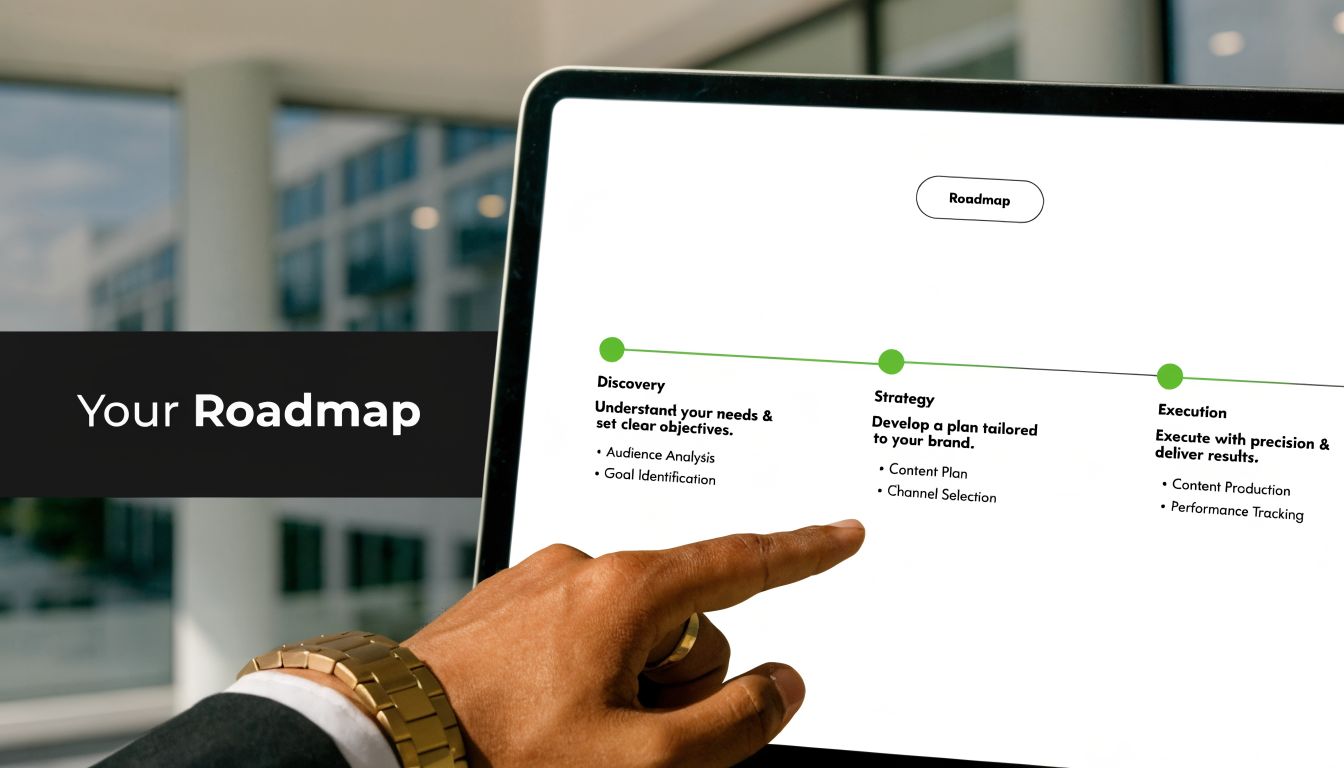
Step one begins with process mapping
List every way your business creates an invoice. Don’t stop at normal sales invoices. Include project billing, recurring lease invoices, service charges, retention releases, debit adjustments handled through re-invoicing logic, credit notes, and intercompany flows where relevant.
Then identify who owns each part of the process.
A contractor may discover that commercial teams control billing triggers while finance controls tax treatment. A real estate firm may find tenant contract data sits outside finance. A manufacturing company may realise item-level inconsistencies originate in inventory setup, not accounting.
Step two focuses on data quality
Before touching integration, clean the master data that drives invoices.
Start with:
- Customer identifiers and registration details
- Supplier and buyer address records
- Item and service tax codes
- Unit of measure consistency
- Entity and branch-level legal data
- Credit note referencing discipline
This is dull work. It's also mandatory.
Businesses don’t usually fail e-invoicing because they lack effort. They fail because bad data has been tolerated for years.
Step three is team design, not just training
Create a working group with decision-makers, not only users. Finance must be there, but so must operations and whoever controls your ERP or billing platform. If your company has multiple branches or companies, include representatives who understand local exceptions.
Give the team one responsibility: standardise the invoice process before automation locks in bad habits.
Step four is ASP and ERP alignment
Your business must work with an Accredited Service Provider. That means vendor selection is part compliance and part operational fit. Don’t choose only on presentation quality. Ask how the provider handles validation, exception management, acknowledgements, support responsiveness, and ERP connectivity.
At the same time, review whether your current system can generate the required data structure consistently. If your team depends on workarounds, exports, or manual field completion, you’re heading towards fragile compliance.
For businesses that still import data from different sales channels into finance, even routine tasks like importing cash and credit invoices can reveal whether the current workflow is disciplined enough for structured e-invoicing.
Step five is controlled testing
Don’t limit testing to “invoice sent successfully”.
Test the full cycle:
- Invoice creation from the actual business event
- Field validation against required data
- Transmission flow through the provider path
- Exception handling when data is incomplete
- Credit note correction where errors occur
- Audit retrieval for finance review
Many businesses discover at this stage that they have commercial workflows that made sense informally but collapse under structured validation.
Chat on WhatsApp +971506228024 Quotation – Demo RequestNavigating Common Pitfalls and Special Cases
Generic e-invoicing advice usually assumes a clean business with one legal entity, one billing process, and one tidy software system. That isn’t how many UAE businesses operate.
The hardest cases are often asset-intensive SMEs. They have branch complexity, project billing, recurring charges, stock movements, fixed assets, mixed tax scenarios, and legacy software that has been customised over time. These businesses are not too small to struggle. In fact, they often struggle more because they have operational complexity without enterprise-scale internal IT resources.
The SME readiness gap is real
Public commentary already notes that many businesses still rely on legacy ERP or accounting systems that aren’t naturally compatible with the mandated infrastructure, and that integration often requires APIs or middleware, adding cost and complexity, especially for mid-sized and smaller enterprises, as discussed in this review of common UAE e-invoicing challenges.
There’s no reliable public number for what that will cost your specific SME. Anyone quoting a universal figure is guessing.
What you should assume instead is this: the more manual your current process is, the less likely your transition will be simple.
A few warning signs:
- Your branches invoice differently
- Customer master data is inconsistent across companies
- Stock, projects, or lease data sits outside accounting
- Staff edit invoice details after posting
- You rely on PDFs as the primary invoice record
Free zone and non-resident businesses need sharper analysis
Another blind spot is scope interpretation for special entities. Public guidance confirms that all business transactions conducted in the UAE, unless specifically excluded, must eventually transition to electronic invoicing, and that the mandate covers non-resident businesses with taxable supplies in the UAE, as summarised in this discussion of UAE e-invoicing scope and special scenarios.
That creates practical questions many advisers still answer poorly.
For example:
- How does a free zone supplier align its invoice process with mainland counterparties?
- What legal entity data needs to be standardised before ASP onboarding?
- How should non-resident businesses with taxable UAE supplies prepare their records and exchange flow?
- How do exports and special VAT treatments affect operational invoice mapping?
The February 2026 guidelines reportedly address special scenarios such as free zones and exports, but many businesses still lack practitioner-level interpretation.
If you operate through mainland and free zone structures, don’t assume “same owner” means “same invoice rules”.
What businesses in special situations should do
If your company has free zone warehousing, cross-border supplies, or non-resident invoicing exposure, escalate those questions early. Don’t let your IT team guess and don’t let your ASP onboarding start before business rules are settled.
For GCC companies already familiar with digital invoice controls in neighbouring markets, it can help to compare process discipline with adjacent frameworks such as KSA e-invoicing QR code practices. Not because the UAE is identical. It isn’t. But because regional compliance trends reward structured data, strong ERP control, and early operational alignment.
Frequently Asked Questions about UAE E-invoicing
A lot of UAE business owners ask the wrong question. They ask whether e-invoicing will affect them. The right question is whether their current billing process would survive a structured, audited, system-to-system environment. For real estate groups, manufacturers, and contractors with fixed assets, progress billing, retention, intercompany charges, or site-level purchasing, the answer is often no.
What are the penalties for non-compliance
Penalties are expected under the UAE tax enforcement framework, as noted earlier in the article. The bigger risk is operational, not just financial. If your invoices are rejected, delayed, or issued with the wrong entity data, collections slow down, VAT reporting gets harder, and finance teams end up correcting errors after the fact.
Treat penalties as the smallest problem. Focus on getting invoice data, approval controls, and ERP output right before go-live.
Does e-invoicing apply to B2C transactions
The initial scope is focused on B2B and B2G transactions. B2C is not the first priority based on the current direction of the framework.
Do not use that as an excuse to ignore retail or mixed-model operations. If your business issues both customer invoices and tax invoices across different channels, clean up the master data and document flows now. That work carries over.
Can I keep using my existing accounting software
Only if it can produce structured invoice data, support the required fields, and connect properly to the exchange model adopted in the UAE.
Here is the practical test. If your team still edits invoices manually in Excel, sends PDFs without structured data, overrides tax treatment at the last minute, or depends on separate tools for property billing, project billing, or inventory dispatch, your software needs review. Asset-intensive SMEs should be stricter here. A contractor handling retention and variation orders, or a real estate company billing leases, service charges, and deposits, needs more than basic accounting output.
Is a PDF invoice compliant on its own
No. A PDF is only a human-readable document. Compliance depends on the structured electronic invoice in the required format.
You can still provide a readable copy to customers. But your business should stop treating the PDF as the original compliance record.
Do free zone businesses need to pay attention now
Yes.
Free zone companies should not assume they sit outside the practical impact of e-invoicing. If you supply mainland customers, operate through multiple entities, hold stock in a free zone, or split functions between free zone and mainland companies, you need entity-level invoice rules, tax logic, and master data discipline early. The same applies to non-resident businesses making taxable supplies in the UAE. Cross-border presence does not remove the need for clean invoicing records.
Should SMEs wait until their deadline gets closer
No. Waiting is how SMEs create expensive clean-up projects.
Large groups can absorb rework. SMEs usually cannot. If your business has old ERP software, project-based billing, branch-level invoice practices, or weak item and customer master data, start with a readiness review now. Fix legal entity names, VAT mappings, unit codes, approval flows, and chart of accounts links before you involve external providers or begin technical onboarding.
Chat on WhatsApp +971506228024 Quotation – Demo RequestTake the Next Step with Hinawi ERP
If your business is preparing for e-invoicing in uae, this is the moment to stop relying on patched processes and disconnected software. Compliance will depend on invoice accuracy, structured data, system discipline, and clean integration across accounting and operations.
Hinawi ERP is a fully integrated ERP software developed since 1998 in Abu Dhabi, designed for companies in the UAE and GCC that need stronger control across finance, HR, operations, and reporting. It supports Accounting, HR & Payroll, Real Estate Management, Fixed Assets, Manufacturing, Garage & Maintenance, School Management, CRM, and broader business automation in one environment.
For UAE and GCC companies, the practical advantages matter:
- VAT and e-Invoicing compliance
- UAE WPS payroll support
- Arabic and English bilingual operation
- Flexible company policy settings
- Real-time accounting integration across all modules
- Suitable for factories, contracting companies, real estate businesses, schools, garages, trading companies, and manufacturers
If you want fewer manual adjustments, stronger financial accuracy, and better visibility across departments, this is the direction to move. Businesses with complex operations should not leave compliance to spreadsheets and after-the-fact corrections.
You can also explore how financial control and compliance workflows fit together in Hinawi ERP’s VAT and accounting environment.
Speak with the Hinawi ERP team for a personalised review of your current setup, your invoicing readiness, and the best path to modernise without disrupting operations.
Explorer Computer LLC – Hinawi Software ERP supports companies and business owners across the UAE and GCC with practical ERP consultation, implementation, migration, training, and long-term support. Visit www.hinawierp.com to modernise your operations, reduce manual work, improve financial accuracy, and request a personalised demo specific to your industry and compliance needs.