
A Dubai contractor usually notices the problem late. The tender looked competitive, procurement started on time, and site activity was strong. Then the variation questions began. Steel quantities didn’t line up with purchasing. The subcontractor valued completed work differently from the consultant. Finance couldn’t tell whether the project was actually profitable or merely under-billed.
That situation usually points to one weakness. The project didn’t start with a disciplined Bill of Quantities, or the BOQ existed only as a tender document and never became a live control tool.
For owners, project directors, accountants, and commercial managers in the UAE, understanding what is bill of quantities in construction isn’t an academic exercise. It’s a cost control issue, a contract administration issue, and increasingly a systems issue. A BOQ affects bidding, procurement, monthly valuations, variation pricing, VAT treatment, and management reporting. If it sits in Excel and never connects to operations, the business loses visibility.
In GCC construction, that gap matters because project complexity is high, supply chains move quickly, and compliance expectations are tighter than they were a few years ago. A BOQ gives structure. An integrated system gives that structure operational value.
Introduction The Foundation of a Successful Construction Project
On a live project in Dubai, nobody argues about cost control in principle. The arguments start when teams use different numbers. The estimator works from one version of quantities, procurement buys against another, site engineers report progress in a third format, and accounts receives supplier invoices with no clean match to the budget. Once that happens, management isn’t controlling cost. It’s reacting to it.
That’s why the BOQ remains one of the most important documents in construction. It translates drawings and specifications into measurable commercial items. It tells bidders what they are pricing, consultants what they are certifying, and owners what they are paying for.
In practice, the BOQ matters even more when it doesn’t stay static. A modern contracting business in the UAE needs the BOQ to flow into project costing, procurement, stock issue, subcontract control, and invoicing. That’s where ERP discipline becomes practical rather than administrative. A system such as Hinawi ERP is relevant here because it allows construction data to move from commercial planning into accounting and operational control without rekeying the same information repeatedly.
A BOQ isn’t paperwork. It’s the commercial structure that keeps drawings, contracts, procurement, and payment talking to each other.
What is a Bill of Quantities and Its Core Purpose
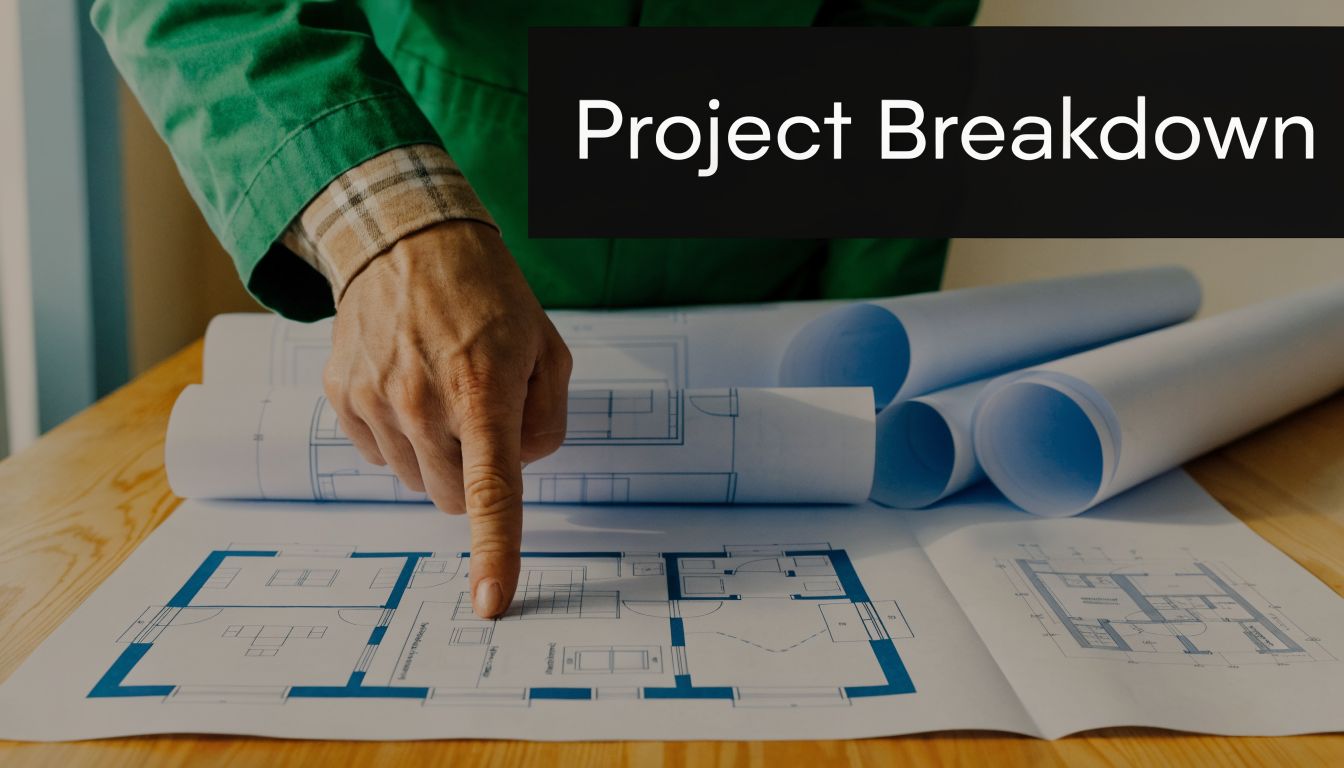
A Bill of Quantities, usually prepared by a Quantity Surveyor, is an itemised document that sets out the measured quantities of materials, labour, and services required to complete a project. It is more than a shopping list. It is the commercial breakdown of the works in a format that contractors can price consistently.
Why owners and contractors rely on it
The first purpose of a BOQ is tender clarity. If every bidder prices the same measured items, the employer can compare tenders on a consistent basis. Without that structure, one contractor may include full temporary works, another may exclude part of the MEP scope, and a third may make assumptions that only become visible after award.
The second purpose is cost control after award. Once the contract starts, the BOQ becomes the reference point for valuation, variations, forecasting, and commercial reporting. In UAE practice, that’s where many companies either gain discipline or lose margin.
According to BIM Associates on BOQ and BOM differences, 85% of projects experience cost overruns without proper BOQ use in the UAE construction sector. The same source notes that detailed BOQs were used on Burj Khalifa, including over 500,000 cubic metres of concrete and 31,400 tonnes of steel, and that BOQ use contributed to a 20 to 30% improvement in bid accuracy under Dubai Municipality guidelines.
What a BOQ does in real project life
A useful way to read a BOQ is to see it as serving four parties at once:
- For the client: It creates a controlled basis for tender comparison and contract pricing.
- For the contractor: It gives estimators, buyers, and commercial staff a common pricing structure.
- For the consultant: It supports valuation of executed work and assessment of variations.
- For finance teams: It anchors progress billing and cost tracking to measurable work items.
A BOQ also reduces friction. When a project team can point to an item description, a unit, and a quantity, arguments become narrower and easier to resolve.
Practical rule: If the team can’t identify a cost, purchase, or progress claim against a BOQ item, control weakens immediately.
The Structure and Measurement Rules of a BOQ
A professional BOQ follows a hierarchy. When it doesn’t, tenderers fill gaps with assumptions, and those assumptions become claims later.
Typical BOQ structure
Most BOQs begin with preliminaries. These cover project-wide requirements such as mobilisation, site management obligations, temporary arrangements, and compliance items. After preliminaries, the BOQ moves into measured work sections such as earthworks, concrete, masonry, finishes, MEP, external works, and specialist systems.
Each line item normally includes:
- Item number
- Description
- Unit of measurement
- Quantity
- Rate
- Amount
The quality of the description matters as much as the quantity. A vague line item invites a vague price. A precise line item produces a more reliable rate and cleaner valuation later.
Why measurement standards matter
In the GCC, BOQ preparation often follows recognised methods such as SMM7 or CESMM4. According to PESF’s discussion of BOQ practice in the region, CESMM4 was adopted in the UAE in 2012, and this standardisation of units such as m² for cladding has reduced errors in up to 70% of contracts. The same source states that 90% of Abu Dhabi’s 2023 public tenders required a BOQ and that this resulted in 25% fewer variation claims.
That point matters commercially. Standard rules mean everyone measures the same work in the same way. If the consultant measures openings differently from the contractor, or one bidder prices linear metres where another assumes square metres, the tender comparison is already distorted.
Firm and provisional thinking
Not every item in a BOQ carries the same certainty. Some are firm measured quantities. Others are provisional because the design is incomplete or the final requirement depends on later information. The discipline is not in pretending uncertainty doesn’t exist. The discipline is in showing clearly where it exists.
Below is a simple example of how one section may look.
| Item No. | Description | Unit | Quantity | Rate (AED) | Amount (AED) |
|---|---|---|---|---|---|
| 1.1 | Reinforced concrete to foundations | m³ | |||
| 1.2 | Formwork to foundation sides | m² | |||
| 1.3 | Reinforcement to foundations | kg | |||
| 1.4 | Concrete blinding | m³ |
Standard measurement rules don’t make a BOQ perfect. They make it interpretable, auditable, and contract-ready.
The BOQ Preparation and Pricing Process
A good BOQ isn’t assembled casually. It is measured, checked, structured, and then priced. When owners rush this stage, they usually pay for that speed later through claims, delayed approvals, or unstable cost reports.
How a Quantity Surveyor prepares it
The process starts with the full review of drawings, specifications, schedules, and contract requirements. The Quantity Surveyor performs a quantity take-off from architectural, structural, and MEP information. That means measuring what the design requires, not what someone assumes the site might need.
The measured items are then written into a standard format with proper descriptions, units, and grouping by trade or element. The stronger the description, the easier the pricing and administration become later.
A disciplined preparation process usually includes:
Drawing and specification review
The QS checks whether the design information is coordinated enough to measure reliably.Quantity take-off
Concrete, blockwork, rebar, finishes, doors, piping, cabling, and other components are measured item by item.Description drafting
Each item is described so the contractor understands exactly what standard and scope are included.Internal checking
Quantities are cross-checked before issue. This is one of the most important controls and one of the most skipped.Tender issue and contractor pricing
The employer issues the BOQ, and bidders insert rates and amounts.
How contractors turn quantities into priced tenders
Contractors don’t just “fill in rates”. Their estimators convert each line into a commercial judgement about materials, labour, plant, subcontractor exposure, overhead, and margin. A line item that looks simple on paper may carry site access constraints, procurement risk, or sequencing cost.
For firms trying to connect estimating to operations, a clean digital handover matters. Instead of re-entering commercial data after award, the BOQ should move directly into the live project environment. That’s why many UAE contractors look for systems with structured contracting workflows that can carry estimate data into execution without rebuilding budgets manually.
How a BOQ Governs Tendering Variations and Payments
The true test of a BOQ starts after award. Tender comparison is important, but monthly administration is where BOQ quality shows its value.

Tendering becomes comparable
When bidders receive a structured BOQ, their offers become easier to analyse. Commercial teams can see where a rate is aggressive, where a bidder has loaded preliminaries, and where pricing assumptions may create future tension. Without a BOQ, comparisons often collapse into a single lump sum review, which hides risk.
Variations become measurable
On almost every project, the scope changes. A revised façade detail, a relocated service route, a specification change, or a new authority requirement can all affect cost. The BOQ provides the base rates and item logic for valuing these changes.
If an item is added or omitted, commercial staff can work from related BOQ rates rather than negotiate from zero each time. That doesn’t eliminate disagreement, but it narrows it and gives both sides a contractual reference.
Where adjustments need structured calculation, teams often rely on documented addition and deduction processes so that revised values remain traceable back to the contract basis.
Payments become defensible
Monthly valuations depend on measuring completed work against BOQ quantities and rates. That is how progress claims should be built. Site confirms progress, commercial staff value it, finance bills it, and management sees whether revenue and cost are moving in line.
In practical terms, a BOQ helps answer questions like these:
- How much concrete work has been earned this month?
- Are material purchases ahead of certified progress?
- Which trade packages are over-consuming against budget?
- Is a variation already instructed, or is site building at risk?
The most useful BOQ is the one the project manager, QS, buyer, and accountant all trust enough to use every week.
When that shared reference is missing, payment applications become manual narratives, and finance loses confidence in project numbers.
Common BOQ Mistakes and GCC Best Practices
Poor BOQs usually fail in ordinary ways. The description is incomplete. The unit is wrong. A scope item is omitted. A provisional allowance is left unclear. Then everyone discovers the weakness at the stage when correction is expensive.
Mistakes that cause avoidable disputes
One of the most common problems in GCC projects is incomplete specification in the item description. According to Flex’s BOQ preparation guidance for GCC projects, incomplete item descriptions such as omitting “BS 4449 Grade B500B rebar” specifications can lead to 10 to 15% cost overruns from material substitutions. The same source notes that a Saudi Society of Engineers report found BOQ discrepancies caused 12% of average arbitration claims, while FIDIC-based remeasurement contracts valued against a BOQ can reduce payment delays by 30%.
Those are not theoretical issues. They appear in daily site administration:
- Vague material definitions: Procurement buys one quality level, while the consultant expects another.
- Missing work items: The contractor prices the omission as a variation after award.
- Incorrect units: A rate built for m² is applied to an item that should have been measured by linear metre or weight.
- Weak coordination: Architectural and MEP information don’t align, so quantities understate the actual interface work.
What disciplined companies do differently
The best commercial teams don’t assume the consultant’s BOQ is flawless. They interrogate it during tender and maintain structure after award.
A practical checklist looks like this:
- Reference a recognised standard: Use the stated method of measurement and don’t mix rules casually.
- Interrogate descriptions: If the item doesn’t state grade, pressure class, finish standard, or inclusion scope, raise an RFI.
- Cross-check with specifications and drawings: The BOQ should never be read in isolation.
- Track dependencies across departments: Procurement, site, QS, and accounts must work from related coding logic, not separate spreadsheets. Integrated module relationships in ERP workflows are useful here because commercial data doesn’t stay trapped inside one department.
Field observation: Most serious BOQ disputes begin before site starts. The team simply failed to challenge ambiguity while the tender window was still open.
Automating BOQ Management with Hinawi ERP
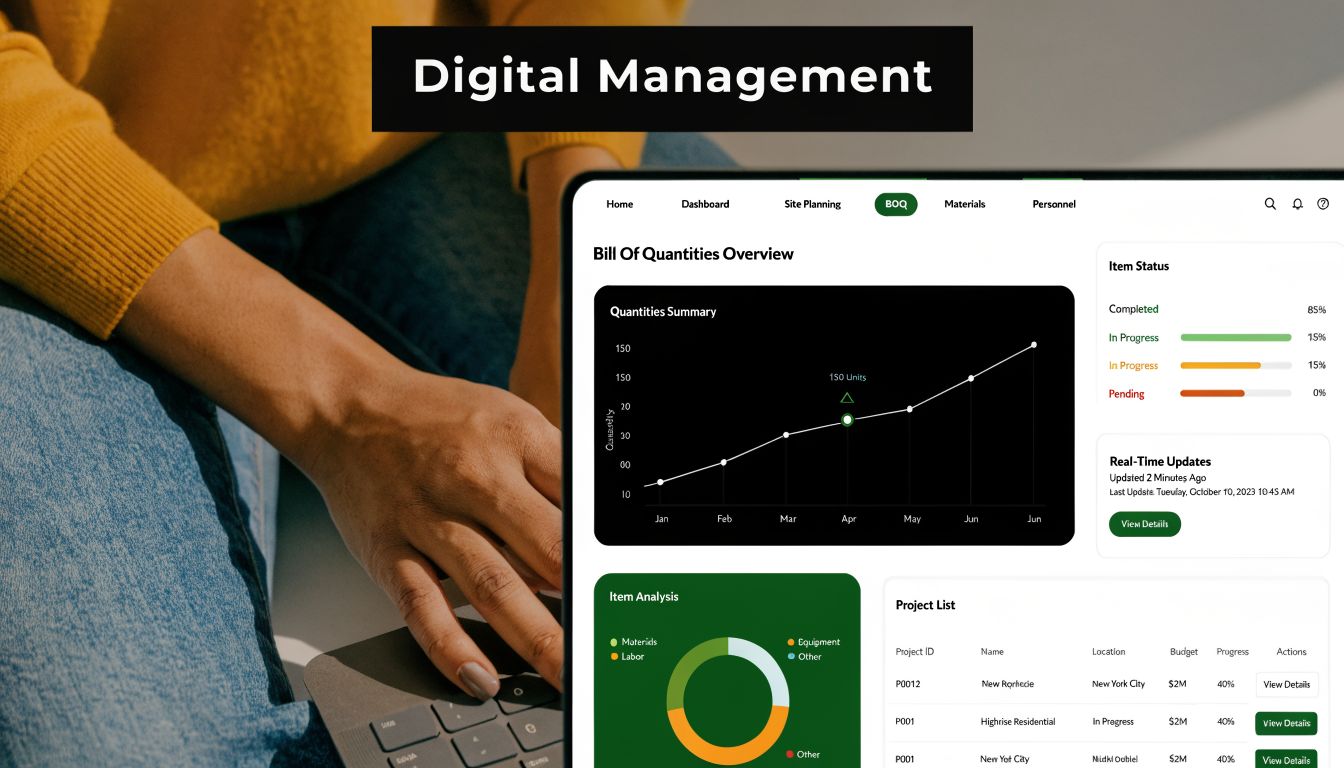
A BOQ in spreadsheet form is still common. It is also where many contractors lose control. Excel can hold quantities, rates, and revisions, but it doesn’t automatically connect procurement, payroll, stock issue, subcontract billing, progress certification, and accounting. Once each department creates its own tracking sheet, the business stops running one commercial story.
Why a static BOQ is no longer enough
In the UAE, commercial speed matters. Procurement teams need to know what remains to be bought. Project managers need current committed cost. Finance needs actual cost by project code. Payroll teams need labour cost to land in the right project. VAT and e-invoicing processes need transaction accuracy, not end-of-month reconstruction.
According to Procore’s article cited in the provided verified data context, 70% of projects in the UAE face delays due to manual cost variances. The same verified data states that a PwC Middle East survey found 62% of GCC contractors using ERP-integrated BOQ reduced cost overruns by 25%. That same source context also notes that BOQ import into project modules supports VAT compliance and mandatory digital submissions.
This is the practical gap many generic guides ignore. They explain what a BOQ is, but not how the BOQ should behave inside the company after the contract is won.
What integration changes operationally
When BOQ data sits inside an ERP environment, the company can use one commercial structure across functions. That means:
- Budget control improves because purchase orders, supplier invoices, and subcontract values can be checked against BOQ-related budgets.
- Procurement becomes cleaner because buyers can see what quantity has been budgeted, committed, received, and consumed.
- Progress billing becomes faster because executed quantities can feed valuation workflows rather than being rebuilt from disconnected files.
- VAT treatment becomes more reliable because billing and cost capture remain tied to project transactions rather than manual summaries.
- Management reporting becomes usable because cost-to-complete and variance reviews rely on a common coding structure.
A UAE-focused systems approach
For contracting firms that want BOQ data to flow through project execution, Hinawi ERP’s contracting module help shows the type of workflow needed. The practical value isn’t the label “ERP”. It’s the ability to import BOQ structures into a live project environment where procurement, accounting, payroll, and reporting are connected.
Explorer Computer LLC’s Hinawi ERP, developed in Abu Dhabi, is one example of this UAE-oriented approach. In practical terms, that means the BOQ can move from estimate into project modules, while accounting integration, bilingual operation, WPS payroll support, fixed assets, and VAT-related controls remain part of the same system rather than separate tools.
That matters for a Dubai contractor running multiple jobs at once. If site labour is paid through one system, purchases are booked in another, and valuations sit in Excel, management won’t get timely project truth. If those functions share one structure, the BOQ becomes a live control mechanism rather than a tender archive.
Take the Next Step with Hinawi ERP
For construction companies in the UAE and GCC, the BOQ should not end at tender submission. It should drive execution, cost visibility, billing discipline, and compliance. That requires more than spreadsheets and disconnected departmental software.
Hinawi ERP has been developed in Abu Dhabi since 1998 as a fully integrated ERP platform for businesses that need connected operations across Accounting, HR & Payroll, Real Estate Management, Fixed Assets, Manufacturing, Garage & Maintenance, School Management, CRM, and broader business automation. It supports VAT and e-Invoicing compliance, UAE WPS payroll, Arabic and English bilingual operation, flexible company policy settings, and real-time accounting integration across modules.
That makes it relevant not only for contracting companies managing BOQs, but also for factories, real estate businesses, schools, garages, trading companies, and manufacturers that need stronger control over cost, payroll, inventory, assets, and reporting.
If your business is still relying on manual entries, duplicate spreadsheets, and delayed reconciliations, this is the right time to modernise the process. You can review product details through Hinawi ERP information pages and then speak with the team for a discussion specific to your workflows, reporting, and compliance requirements.
A well-prepared BOQ gives a construction project commercial order. A well-integrated ERP turns that order into daily control. For owners in Dubai, Abu Dhabi, Saudi Arabia, and the wider GCC, that combination is no longer optional if the goal is clean reporting, tighter procurement, faster valuations, and fewer surprises at project close.
Category
Real Estate
Explorer Computer LLC – Hinawi Software ERP supports UAE and GCC companies that want tighter control over construction, finance, payroll, assets, and operations. Visit www.hinawierp.com to review the system or request a personalised demo with the Hinawi ERP team.