
Category: Accounting
You’re probably already feeling the problem.
Your accountant is checking VAT figures in one system, HR is preparing payroll in another, operations is tracking stock in spreadsheets, and management still can’t get one clean view of what the business is earning. Month-end becomes a scramble. WPS preparation feels risky. Arabic and English records don’t always match cleanly. One wrong filing can create a compliance issue you didn’t need.
That setup works for a while. Then the business grows. A second branch opens. Inventory moves between locations. Property contracts, service jobs, or manufacturing costs need tracking. Suddenly, generic software stops being “good enough” and starts becoming expensive.
That’s exactly why Arabic ERP software UAE has become a serious decision for business owners, not just an IT purchase. The UAE ERP software market is valued at approximately USD 2.1 billion, and over 60% of UAE companies are planning ERP implementations to cut costs and boost productivity, driven by digital transformation and government investment in smart technologies, according to Ken Research’s UAE ERP software market analysis.
A proper localised ERP gives you one operating system for the business. Accounting, HR, payroll, inventory, fixed assets, CRM, maintenance, and reporting all work from the same data. That matters even more in the UAE, where VAT, e-invoicing readiness, bilingual documentation, and payroll compliance aren’t optional.
If you’re reviewing software now, stop asking only whether it can post invoices or generate reports. Ask whether it’s built for the way UAE businesses operate. That includes tax rules, Arabic document handling, WPS workflows, and local reporting expectations. Businesses dealing with tax changes should also keep an eye on new tax considerations in the UAE when evaluating software.
If you want a practical benchmark, Hinawi ERP is one example of a local system developed in Abu Dhabi since 1998 around those exact operational realities.
Take the Next Step with Hinawi ERP
If your business is still running critical work through disconnected software, now is the time to fix it. Hinawi ERP helps UAE and GCC companies bring Accounting, HR & Payroll, Real Estate Management, Fixed Assets, Manufacturing, Garage & Maintenance, School Management, CRM, and business automation into one integrated system.
It supports VAT and e-Invoicing compliance, UAE WPS payroll, Arabic and English bilingual operation, flexible company policy settings, and real-time accounting integration across all modules. It suits factories, contracting companies, real estate firms, schools, garages, trading businesses, and manufacturers that need better control and less manual work.
Visit www.hinawierp.com or request a personalised demo to see how your workflows can be automated in a practical, localised ERP.
Chat on WhatsApp +971506228024 Quotation – Demo RequestIntroduction Why Your UAE Business Can No Longer Ignore a Localized ERP
A trading company in Dubai often starts with familiar tools. QuickBooks for accounts. Excel for stock. Another sheet for PDCs. A payroll file prepared manually before salary day. It looks manageable until one person is absent, one VAT review starts, or one branch sends the wrong numbers.
Then the main issue shows up. The problem isn’t only software. It’s fragmentation.
When finance, HR, inventory, operations, and management all work from separate files, your business loses control in quiet ways. Reports arrive late. Payroll checking takes too long. Arabic invoice data gets handled inconsistently. Property, asset, or project costs don’t flow cleanly into the accounts. You spend time reconciling instead of deciding.
That’s why localised ERP is no longer a “later” project for UAE businesses. It’s the control layer that stops routine work from turning into operational risk.
Localised means more than translated
A lot of software claims to support Arabic. That claim means very little if the system can’t handle Arabic data entry properly, generate bilingual documents cleanly, and support local workflows without awkward workarounds.
A UAE business doesn’t need a translated menu. It needs a system that fits the market. That includes tax compliance, payroll rules, bilingual forms, operational approval flows, and reporting that management can trust.
Practical rule: If your ERP needs constant manual correction to fit UAE processes, it isn’t localised enough.
Generic ERP creates hidden cost
Owners often focus on licence price first. That’s understandable, but it’s the wrong first filter. The hidden cost comes later through staff time, filing mistakes, duplicate entries, disconnected reporting, and delayed decisions.
A proper Arabic ERP software UAE decision should reduce manual dependency across the business. If it doesn’t, you’re buying a database, not a management system.
The Unbreakable Foundations of an Arabic ERP in the UAE
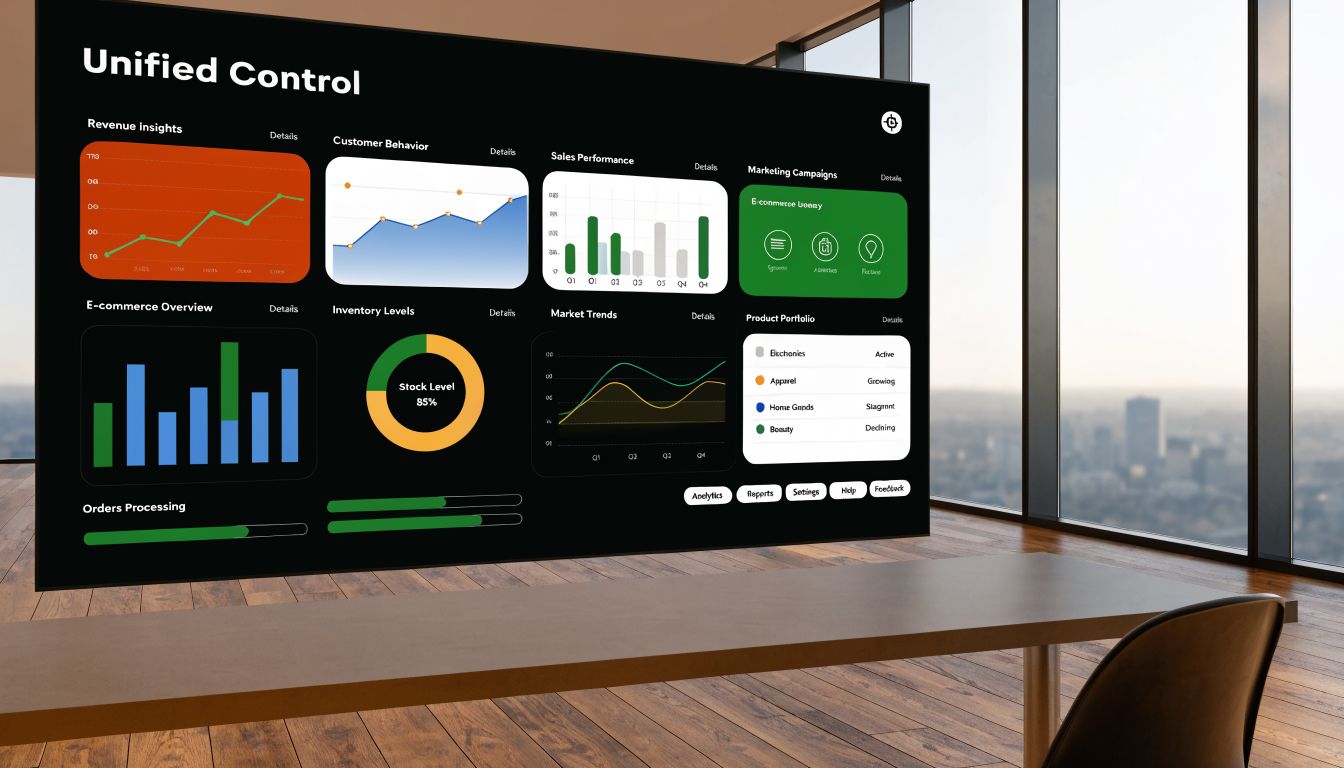
There are plenty of ERP checklists online. Most of them are too soft. In the UAE, two things are essential: True bilingual operation and built-in compliance.
If a system is weak in either area, reject it early.
Bilingual operation must be native
A lot of products offer Arabic labels and call that localisation. That’s not enough.
A UAE-ready ERP must handle Arabic and English where it matters most:
- Data entry: Names, addresses, item descriptions, employee records, and contract details should work cleanly in both languages.
- Documents: Invoices, quotations, receipts, payslips, tenancy records, and official printouts should support bilingual output without manual redesign.
- Search and reporting: Teams should be able to retrieve records even when entries were created in Arabic by one department and reviewed in English by another.
- Daily usability: Finance may work mostly in English while administration or customer-facing teams need Arabic-first operation.
If the system struggles with Arabic character handling, layout consistency, or bilingual print formats, the pain will show up every day. Staff will start keeping shadow spreadsheets. That always damages data quality.
Reviewing module depth matters more than vendor slides. You need to see the live forms, live reports, and live printed documents. A proper review of software modules in Hinawi software shows the right way to think about ERP selection. Module names are not enough. Workflow fit is what matters.
Compliance must be built into the workflow
Tax and payroll compliance shouldn’t depend on staff memory. It should be embedded in the system.
A compliant Arabic ERP can achieve 100% compliance with UAE Federal Tax Authority regulations for VAT and e-invoicing, while reducing tax filing errors by up to 40-60% and cutting compliance processing time from weeks to hours through automated, FTA-approved formats, according to Gear Up Technology’s ERP compliance overview.
That matters because compliance in the UAE isn’t static. Businesses need software that can support VAT handling, document standards, and e-invoicing readiness without turning every update into a manual project.
Compliance is not a finance department feature. It’s an operating requirement that affects sales, purchasing, inventory, payroll, and reporting.
What proper compliance looks like in practice
A good ERP should handle compliance inside ordinary business work, not as an afterthought at month-end.
Look for this:
- VAT-aware transactions: The system should calculate tax correctly during invoicing, purchasing, returns, and adjustments.
- E-invoicing readiness: The software should support structured output and local document requirements in a way your team can operate.
- Audit trail discipline: Changes should be traceable. That protects the business during reviews.
- Bilingual documentation: Official records often need to be understandable across mixed-language teams.
Why these two foundations come first
Businesses often get distracted by dashboards, mobile apps, or fancy analytics. Those features matter later.
The first decision is simpler. Can the ERP run your UAE business legally and clearly in both Arabic and English? If the answer is uncertain, don’t move forward.
Here’s the hard truth. A weak bilingual setup creates user resistance. Weak compliance creates risk. Put both together and your implementation becomes expensive, slow, and fragile.
Take the Next Step with Hinawi ERP
If you’re comparing systems now, focus on what will protect and simplify your business from day one. Hinawi ERP is built for companies in the UAE and GCC that need integrated Accounting, HR & Payroll, Real Estate Management, Fixed Assets, Manufacturing, Garage & Maintenance, School Management, CRM, and full business automation in one platform.
It supports VAT and e-Invoicing compliance, WPS payroll processing, Arabic and English bilingual operation, and real-time accounting integration across departments. It also allows flexible company policy settings, which matters when your approval flows, payroll rules, or operational processes don’t match generic software defaults.
Visit www.hinawierp.com or request a personalised demo to evaluate how a localised ERP should work for your company.
Chat on WhatsApp +971506228024 Quotation – Demo RequestEssential Modules for Complete Business Control
A UAE business usually discovers its ERP gaps in the middle of a problem. Payroll is due, a tenant cheque needs tracking, a machine repair cost is missing from the books, or management asks for branch profitability and gets three different numbers from three departments.
That is why module selection matters. You are not buying screens. You are choosing how the business will control money, staff, assets, stock, contracts, and day-to-day execution.
Accounting must sit at the core
Every serious ERP in the UAE should run through accounting. Sales, purchasing, payroll, assets, inventory, maintenance, and property collections should all hit the same financial structure automatically.
That gives management clean reporting and finance teams a clear audit trail.
You should expect:
- Real-time posting from operational transactions into the ledger
- Multi-branch and multi-company visibility without spreadsheet consolidation
- Drill-down audit trails from summary reports to the source transaction
- VAT-ready transaction handling that reduces manual correction work at filing time
If accounting is isolated from the rest of the system, month-end stays slow and error-prone.
HR and payroll must reflect UAE rules
Generic payroll is a bad fit for this market. You need a setup that handles WPS output, leave, attendance, overtime, deductions, end-of-service benefits, and approval controls inside the system.
Test payroll with real cases, not a polished demo:
- An employee joins in the middle of the month
- An employee takes unpaid leave
- A final settlement includes gratuity and deductions
- Attendance affects payroll automatically
- WPS files can be prepared without offline rework
Singleclic’s UAE ERP guide highlights the value of ERP systems that automate local payroll processing and compliance workflows. That should be the baseline, not an extra.
Fixed assets deserve more scrutiny than buyers usually give them
Many UAE companies carry significant assets but still manage them poorly. Vehicles, machinery, buildings, fit-outs, equipment, furniture, and tools often sit in disconnected records with weak control over depreciation, transfers, and utilisation.
That creates reporting problems fast.
Your ERP should manage the full asset lifecycle:
- Acquisition and categorisation
- Depreciation by policy
- Transfers between branches or departments
- Repairs and maintenance history
- Ledger impact and reporting
Weak fixed asset control distorts profitability. It also complicates audits and budgeting.
Real estate capability is often the deciding factor
This is one of the most overlooked buying criteria in the UAE. Many systems handle standard accounting and inventory acceptably, then fall apart when the business needs tenant records, lease renewals, PDC tracking, rent collection, unit-wise reporting, and direct posting into accounts.
If you own, manage, or lease property, do not accept a generic workaround. Ask for a real estate module that handles:
- Tenant and unit records
- Lease start, expiry, and renewal workflows
- Rent schedules and collection tracking
- PDC management
- Property-wise income and expense reporting
- Direct accounting integration
The same logic applies to fixed assets. These areas are usually under-scoped during evaluation, then become the reason the project disappoints after go-live.
Manufacturing and stock control need costing discipline
Inventory visibility alone is not enough. UAE manufacturers, distributors, and trading companies need stock control tied directly to purchasing, sales, production, and finance.
The ERP should support bills of materials, production orders, material consumption, wastage, warehouse transfers, reorder logic, and product costing. If the system cannot show what stock moved, why it moved, and what it did to margin, management is still guessing.
For businesses assessing warehouse and procurement depth, review how supply chain management software for UAE operations fits into the wider ERP structure.
CRM and maintenance affect revenue more than many owners expect
CRM should connect enquiries, quotations, follow-up, approvals, invoicing, and collections. A contact list is not CRM. It is an address book.
Maintenance needs the same discipline. Garages, workshops, service firms, equipment businesses, and internal facility teams should be able to raise work orders, assign labour, issue parts, capture costs, and bill customers without leaving the ERP. If service activity happens outside the system, profitability analysis becomes guesswork.
Use this table during vendor demos:
| Module | Bad sign | Good sign |
|---|---|---|
| Accounting | Manual posting from operations | Transactions post automatically to the ledger |
| Payroll | Offline calculations and spreadsheet uploads | UAE payroll rules and WPS handling inside the system |
| Fixed Assets | Asset register only | Depreciation, transfers, maintenance, and ledger impact |
| Real Estate | Unit list only | Lease, tenant, collection, PDC, and accounting workflows |
| Manufacturing | Stock in and stock out only | BOM, costing, production, wastage, and finished goods control |
| CRM | Basic contact storage | Quotations, follow-up, billing, and collection visibility |
| Maintenance | Job cards outside ERP | Work orders, parts, labour, and accounting links |
You do not need every module on day one. You do need a system that can add them later without breaking your chart of accounts, approval logic, reporting structure, or bilingual workflows.
One local option businesses often review is Hinawi ERP, developed by Explorer Computer LLC in Abu Dhabi since 1998. It includes modules for accounting, HR and payroll, real estate management, fixed assets, manufacturing, CRM, garage and maintenance, school management, and business automation.
If your company is replacing disconnected tools, ask for a live demo built around your own operating model. That means payroll with WPS, property collections with PDCs, asset depreciation by branch, and stock movement tied to accounting. Generic demos hide local weaknesses. Real scenarios expose them.
Visit www.hinawierp.com or request a personalised demo to evaluate how the modules work in an actual UAE business setup.
Chat on WhatsApp +971506228024 Quotation – Demo RequestThe Hidden Challenge Migrating from Legacy Systems
Most ERP failures don’t start after go-live. They start during migration.
Business owners often assume the hard part is choosing the software. It isn’t. The hard part is moving years of real business history into the new system without damaging your records, your compliance position, or your daily operations.

A major underserved angle in ERP selection is the complexity of migrating from legacy systems like QuickBooks or Tally. Key challenges include consolidating multi-year Arabic invoices, maintaining VAT audit compliance during transition, and ensuring zero data loss across free zone and mainland entities, as highlighted in this discussion of ERP migration challenges for UAE small businesses.
Why migration gets underestimated
Legacy systems usually hold more than accounting balances.
They contain customer records, supplier data, old invoice patterns, payroll details, item masters, branch histories, chart of accounts structures, and operational habits built over many years. Some of that data is clean. A lot of it isn’t.
The moment you migrate, these questions appear:
- Which historical data must move fully, and which should stay archived
- How will Arabic text fields behave after import
- How do opening balances tie back to audited records
- What happens to unpaid invoices, post-dated cheques, or leave balances
- How will payroll history align with the new WPS-driven structure
A vendor who treats migration like a simple Excel upload is warning you, even if they don’t realise it.
Audit trail matters during transition
A badly handled migration creates a dangerous gap. Your old system no longer reflects current operations, and your new system doesn’t fully explain historical ones.
That becomes a serious problem when finance needs to justify VAT records, payroll calculations, asset values, or tenant balances. The transition has to preserve trust in the numbers.
Don’t approve an implementation plan until the vendor explains exactly how opening balances, outstanding transactions, and historical references will be validated.
Local migration support is not optional
Here, local experience matters more than product branding.
A UAE business with bilingual invoices, multiple entities, payroll obligations, property records, or warehouse data needs someone who understands how that information behaves in practice. The migration plan should include data mapping, validation, trial imports, user checking, and a controlled cutover.
If you’re replacing older tools, reviewing a structured migration path such as switch your current software to Hinawi ERP helps frame the right questions to ask any vendor.
What a sensible migration plan looks like
You don’t need drama. You need discipline.
| Migration area | What should happen |
|---|---|
| Master data | Clean customers, suppliers, items, employees, assets, and property records before import |
| Financial balances | Reconcile opening figures to prior reports and ledgers |
| Historical transactions | Decide what needs full import and what remains in archive access |
| Arabic records | Test encoding, printing, and search behaviour before final cutover |
| Payroll | Validate employee data, leave balances, and salary structures carefully |
| Go-live control | Run parallel checks and final sign-off before full switchover |
Businesses that respect migration usually achieve better adoption. Staff trust the new system because the starting data is credible. That trust matters more than any dashboard.
Your Vendor Selection Checklist
A polished demo proves nothing.
Vendors know how to show dashboards, charts, and clean screens. Your job is to find out whether the system will survive daily work in a UAE business with Arabic and English users, VAT obligations, WPS payroll, approval bottlenecks, fixed assets, and old data that never migrated cleanly in the past.
Use a scorecard. Push every vendor through the same tests. The right choice is the one that handles your real transactions with the fewest workarounds, not the one with the best sales presentation.
Use this checklist during every demo
Keep the scoring simple, but do not soften the questions.
| Evaluation Criteria | What to Look For | Vendor A Score (1-5) | Vendor B Score (1-5) |
|---|---|---|---|
| Bilingual capability | Native Arabic and English data entry, reports, and documents | ||
| UAE compliance fit | VAT, e-invoicing readiness, WPS workflow, audit trail | ||
| Accounting integration | Real-time posting from all operational modules | ||
| Payroll depth | End-of-service handling, deductions, approvals, payslips | ||
| Real estate and fixed assets | Lease handling, tenant records, depreciation, asset controls | ||
| Industry relevance | Manufacturing, contracting, trading, school, garage, or service fit | ||
| Migration support | Legacy import plan, validation process, data integrity method | ||
| Local support presence | UAE-based implementation, Arabic-speaking support, training access | ||
| Customisation flexibility | Ability to adapt to company policy without breaking the system | ||
| Long-term practicality | Upgrade path, reporting quality, user adoption confidence |
How to use the checklist properly
Do not let the vendor answer in theory.
Ask for live workflows from your business. If you manage properties, ask them to show tenant onboarding, lease renewal, rent collection, and linked accounting entries. If you hold significant assets, ask for asset creation, depreciation, transfer, disposal, and reporting. If payroll is sensitive in your company, ask for a leave settlement, final settlement, and WPS file preparation.
Then test the area many businesses underweight. Migration. A vendor that cannot explain legacy data mapping, opening balance validation, Arabic text handling, historical transaction logic, and go-live controls will create expensive problems later. This matters even more if you are moving from disconnected accounting tools, spreadsheets, or old custom software.
Specialized modules deserve the same scrutiny. Many generic ERPs look acceptable until you ask for lease accounting, tenant tracking, unit-level reporting, depreciation by asset category, or fixed asset audit history. If your business relies on properties, equipment, vehicles, or large capital assets, reject any system that treats these functions as afterthoughts.
You should also compare products based on operating fit, not brand familiarity. A practical reference is this comparison of Hinawi ERP vs other ERP systems for UAE businesses.
A strong vendor answers with process steps, controls, and outputs. A weak vendor answers with promises.
My recommendation
Shortlist three vendors at most.
Run the same script with each one. Use your own sample data. Include one finance user, one operations user, and one person who will own the project internally. Score the demo immediately after it ends, while the gaps are still clear.
The winner should handle bilingual work, local compliance, legacy migration, and specialized modules without forcing your team into manual patches.
Take the Next Step with Hinawi ERP
If you are actively comparing ERP options, use a checklist that reflects how UAE and GCC businesses operate. Hinawi ERP gives decision-makers a practical system for Accounting, HR & Payroll, Real Estate Management, Fixed Assets, Manufacturing, Garage & Maintenance, School Management, CRM, and complete business automation in one integrated environment.
It supports VAT and e-Invoicing compliance, UAE WPS payroll, Arabic and English bilingual operation, flexible company policy settings, and real-time accounting integration across all modules. That makes it a practical fit for factories, contracting companies, real estate groups, schools, garages, trading businesses, and manufacturers that want better control over operations and reporting.
Chat on WhatsApp +971506228024 Quotation – Demo RequestConclusion Moving from Manual Work to Strategic Advantage
The fundamental decision isn’t whether your business needs software. You already have software. The fundamental decision is whether you want a business that runs on disconnected effort or on integrated control.
That’s why choosing Arabic ERP software UAE should be treated as a management decision, not a back-office purchase. The right system gives you compliance discipline, cleaner payroll operations, better financial visibility, stronger reporting, and less dependence on manual correction. The wrong system gives you another layer of admin.
For UAE businesses, the strongest ERP choices are the ones built around local reality. Bilingual operation. VAT and e-invoicing readiness. WPS support. Real estate and fixed asset depth where needed. Sensible migration from legacy systems. Local implementation support.
If you’re still managing accounts in one place, payroll in another, and operations in spreadsheets, the cost is already showing up in delays, uncertainty, and wasted time. A proper ERP changes that. It moves the business from reactive work to organised decision-making.
My advice is simple. Choose the system that fits how your company operates in the UAE. Test it with real scenarios. Challenge the migration plan. Reject anything that needs too many workarounds.
That’s how ERP becomes a strategic advantage instead of another software problem.
If your company is ready to move beyond spreadsheets, disconnected systems, and manual reconciliation, speak with Explorer Computer LLC – Hinawi Software ERP. Hinawi ERP has been developed since 1998 in Abu Dhabi as a fully integrated business management platform for companies in the UAE and GCC. It supports Accounting, HR & Payroll, Real Estate Management, Fixed Assets, Manufacturing, Garage & Maintenance, School Management, CRM, and complete business automation in one system. With VAT and e-Invoicing compliance, UAE WPS payroll support, Arabic and English bilingual operation, flexible company policy settings, and real-time accounting integration across modules, it gives business owners better control, stronger financial accuracy, and less manual work. If you run a factory, contracting business, real estate company, school, garage, trading company, or manufacturing operation, visit www.hinawierp.com or request a personalised demo to see how your business can modernise with a localised ERP built for the region.